

Why in news?
New research highlights the Southern Ocean’s crucial role in absorbing excess heat and carbon dioxide produced by human activities. Scientists warn that changes in wind patterns and ocean storms could alter this vital service, affecting global climate targets.
Background
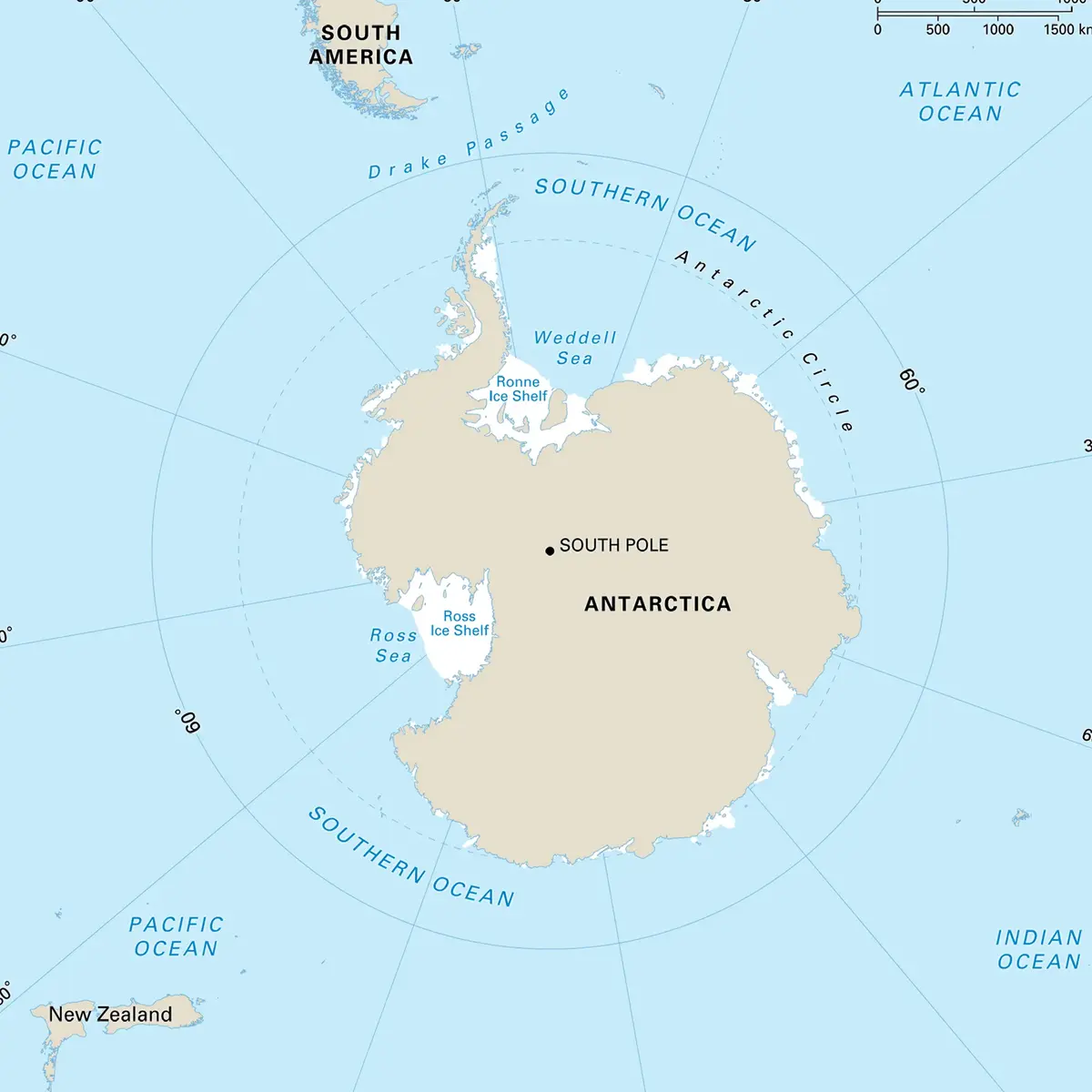
The Southern Ocean encircles Antarctica and is connected to the Atlantic, Indian and Pacific Oceans. It is unique because strong westerly winds drive the Antarctic Circumpolar Current, the world’s most powerful ocean current. This region covers about one‑quarter of the global ocean area yet has absorbed roughly half of the heat and about 40 percent of the carbon dioxide taken up by the world’s oceans since the start of the industrial era.
Heat and carbon uptake
- Heat sink: The Southern Ocean absorbs more than 75 percent of the excess heat trapped by greenhouse gases. Storms mix the surface waters with cold, deep waters, allowing the ocean to take up heat from the atmosphere. This process delays warming but also leads to sea‑ice melt and ocean acidification.
- Carbon sink: Approximately 40 percent of the human‑generated carbon dioxide absorbed by oceans enters the Southern Ocean. The physical pump—where cold water sinks and carries dissolved CO2 into the deep ocean—and the biological pump—where plankton take up carbon during photosynthesis—both contribute to this sequestration.
- Uncertainty and modelling: Observations from aircraft, ships and satellites suggest the Southern Ocean may absorb more carbon and heat than earlier climate models predicted. Scientists stress that storm strength and wind patterns, which are changing due to global warming, play key roles in determining the region’s uptake capacity.
Why it matters
- Without the Southern Ocean acting as a large sink, atmospheric CO2 concentrations and global temperatures would be higher, accelerating climate change.
- Changes in the ocean’s ability to absorb heat and carbon could affect sea‑level rise, the stability of Antarctic ice shelves and the health of marine ecosystems.
- Researchers call for increased monitoring and more refined climate models to better predict future changes and guide international climate policy.
Source: TH