
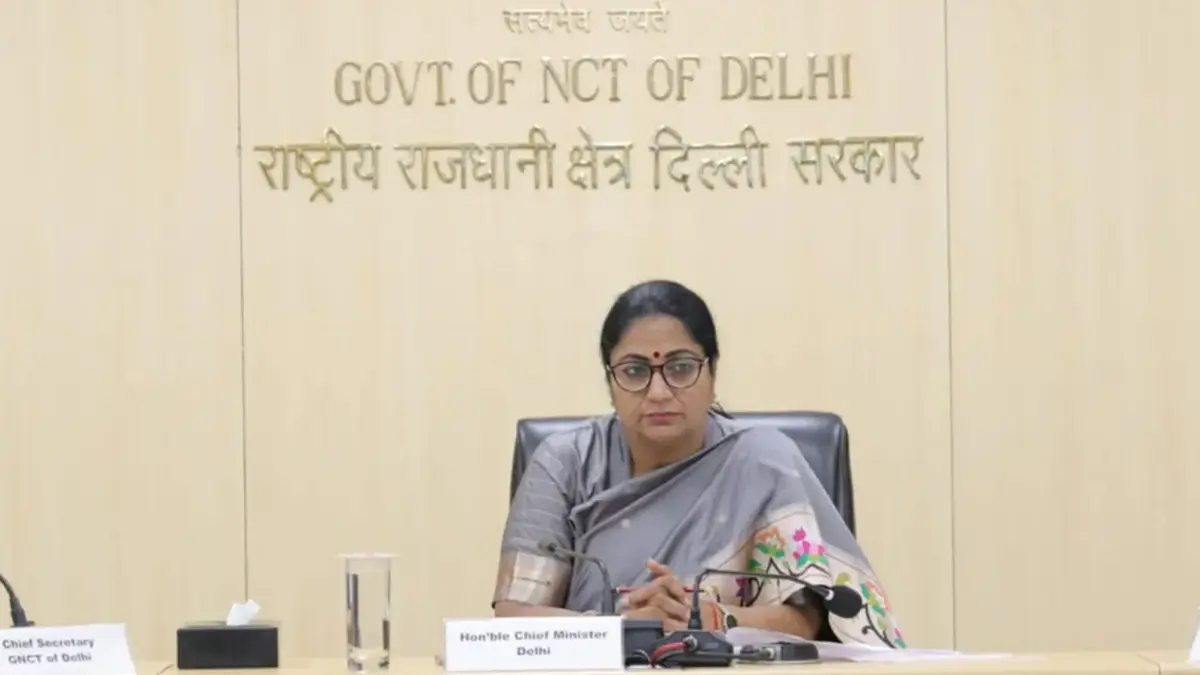
Why in news?
The Centre approved all 28 major projects proposed by the Delhi government under this scheme. Their combined project cost is ₹1,647 crore. Delhi also qualified for an additional ₹756 crore capital-spending incentive. Together, the announced components amount to ₹2,403 crore, but they serve different purposes.
Background
The Union Government began special capital support during 2020–21 to revive investment after the pandemic slowdown.
The Special Assistance to States for Capital Investment Scheme is commonly shortened to SASCI after its full name.
The Finance Ministry’s Department of Expenditure administers the programme, whose detailed structure can change with each Union Budget.
The main state window provides 50-year interest-free capital loans, while other parts reward reforms or additional investment.
What is capital expenditure?
Capital expenditure creates an asset or reduces a long-term liability, and roads, bridges, hospitals and water systems are common examples.
Revenue expenditure mainly supports recurring operations, and salaries, routine maintenance, subsidies and office expenses commonly fall within this category.
The distinction depends upon accounting purpose, not simply project size. Buying equipment may be capital spending, while repairing it may be revenue spending.
Remember: Capital expenditure builds or improves durable assets, and revenue expenditure generally supports current services and recurring needs.
Why does the Centre support state capital spending?
States build much public infrastructure, but salaries, welfare commitments and debt payments can pressure their budgets.
During a slowdown, states may reduce new projects first, and long-term interest-free support protects investment without immediate interest costs.
Construction creates demand for cement, steel, transport and labour, and better assets can later improve productivity and public services.
Economists call these wider effects a capital expenditure multiplier, and the final gain depends upon project quality and timely completion.
How does the scheme generally work?
- The Union Budget provides an annual allocation.
- Guidelines divide assistance into stated parts or reform windows.
- States submit eligible project proposals and supporting documents.
- The Department of Expenditure examines those proposals.
- Approved amounts are released against scheme conditions.
- States report progress, spending and asset creation.
- Unspent or misused funds can affect later releases.
The scheme is not a permanent constitutional entitlement, and eligibility, deadlines, reform conditions and sector windows may change annually.
Is the assistance a grant?
The main state assistance is a long-term interest-free loan, whose principal remains repayable under the stated terms.
Some incentive components or Union Territory transfers follow different budget treatment. Therefore, every approved amount should not automatically be called a grant.
This is not a normal Centrally Sponsored Scheme, which usually follows fixed Centre-state sharing patterns for recurring programmes.
Do not confuse: “Interest-free” does not always mean “free money”. A state loan remains repayable even when no interest is charged.
What is special about Delhi?
Delhi is a Union Territory with a legislature and is called the National Capital Territory. Its financial arrangements differ from full states.
The Union Budget separately records capital transfers for Delhi, Puducherry and Jammu and Kashmir, which have legislatures.
For 2026–27, that combined capital-transfer head is ₹15,380 crore. It includes capital support under this scheme but covers more than Delhi.
The main national loan allocation for states is ₹1,85,000 crore in 2026–27. Delhi’s latest approval is not the entire national allocation.
Which Delhi projects were approved?
- Delhi Metro projects form part of the approved group.
- The Barapullah Elevated Corridor is included.
- A flyover at Karawal Nagar is included.
- Road infrastructure projects will receive support.
- Electric-vehicle charging stations are planned at transport depots.
- The Delhi Transport Corporation manages those depots.
The stated total cost of the 28 projects is ₹1,647 crore. The announcement did not mean every project had already been completed.
The Centre separately approved a ₹756 crore incentive, and it recognised Delhi’s increase in capital expenditure from its own resources.
Adding both figures gives ₹2,403 crore. The arithmetic is correct, but one figure covers projects and the other covers an incentive.
Why are reform incentives included?
Financial incentives can encourage states to improve systems beyond individual construction projects, and past windows have supported several policy priorities.
- States may receive incentives for increasing their own capital expenditure.
- Some windows support urban planning or land-related reforms.
- Others may encourage scrapping old government vehicles.
- Digital systems can improve project monitoring and transparency.
- Exact reform areas must be checked for the relevant financial year.
What determines whether the spending succeeds?
- Projects should solve a clearly identified public need.
- Land and required legal approvals should be available before construction.
- Purchasing and contract awards should remain competitive and transparent.
- Departments must coordinate utilities, traffic and local permissions.
- Assets need maintenance funding after completion.
- Public reporting should compare physical progress with expenditure.
Rapid spending alone does not guarantee good infrastructure, and poor planning can create delays, cost increases or underused assets.
Conclusion
The scheme protects public investment during fiscal pressure, but Delhi’s approvals matter only when timely construction creates useful, maintained assets.