
Why in news?
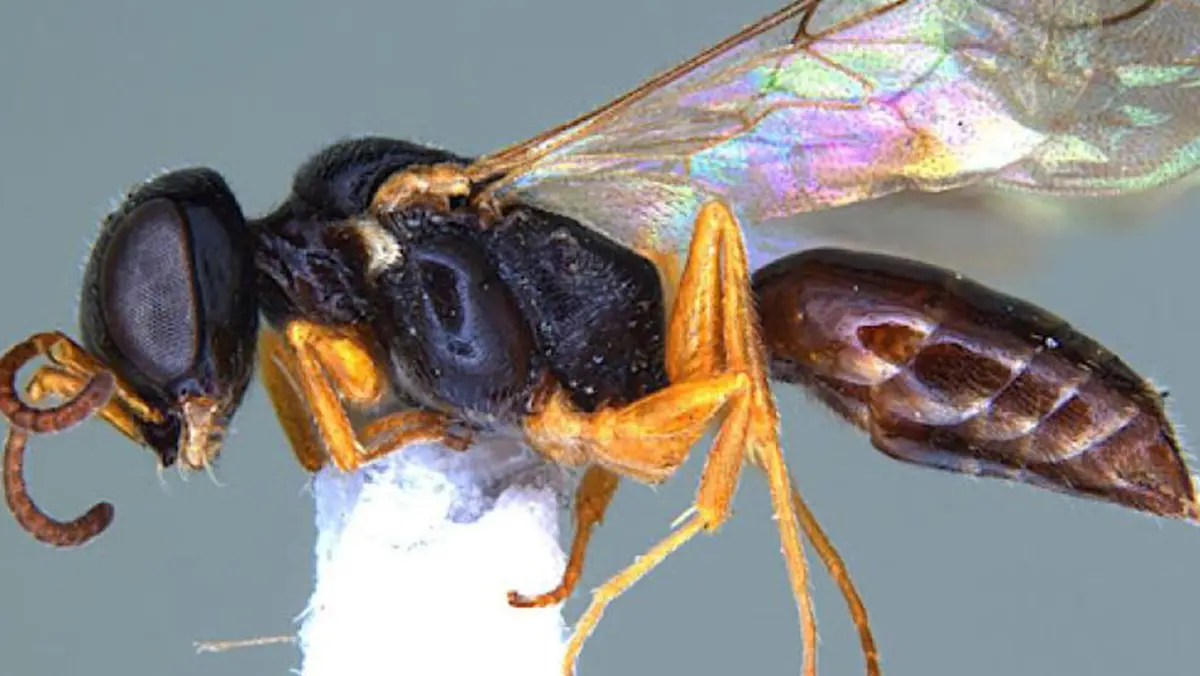
Entomologists in Kozhikode district, Kerala, have discovered a new species of aphid‑hunting wasp. Named Spilomena malabarica, it was collected using a yellow pan trap and officially described in June 2026. The discovery marks the 11th species of this genus recorded in India and the 98th worldwide【265802040795622†L85-L100】.
Background
Aphid wasps in the genus Spilomena are small insects that prey on plant‑sap‑sucking pests. Researchers S. Amal and P. Girish Kumar from the Zoological Survey of India identified the new species while surveying the historic Malabar region【265802040795622†L85-L100】. They named it after the region to honour its biodiversity heritage【265802040795622†L103-L105】. The specimen was collected by a researcher who placed brightly coloured traps filled with liquid to attract and capture insects【265802040795622†L106-L109】.
Distinctive features
- Size and colour: The wasp is about 3.5 mm long and has a black‑and‑brown body【265802040795622†L92-L94】.
- Wing pattern: It has only one submarginal cell in its front wing—a rare trait within the genus【265802040795622†L94-L97】. This enclosed area formed by veins helps taxonomists distinguish species.
- Head shape: The wasp’s head is well proportioned, with a flatter face (less convex clypeus) than its closest relatives【265802040795622†L97-L100】. These subtle features separate it from Spilomena unus, its nearest cousin.
Significance
- Pest control: Aphid wasps prey on sap‑sucking insects that damage crops. Discovering new species expands knowledge of natural enemies and may aid biological control programmes.
- Taxonomic insight: The species blurs the boundary between the genera Spilomena and Arpactophilus, raising questions about their classification【265802040795622†L112-L118】. Future DNA studies may refine the evolutionary tree.
- Regional pride: Naming the wasp after Malabar highlights the area’s biodiversity and encourages further research in under‑studied ecosystems.
Conclusion
Spilomena malabarica exemplifies how careful fieldwork can uncover tiny but important creatures. Documenting such species not only enhances our understanding of biodiversity but also helps develop sustainable pest‑management strategies.