

Why in news?
Temple authorities submitted a ₹114.06-crore visitor-infrastructure proposal to the Union Government. The proposal had not received sanction at the reporting date.
Proposal and scheme status
The plan was prepared with Andhra Pradesh’s Tourism Department. It seeks support under the Pilgrimage Rejuvenation and Spiritual Heritage Augmentation Drive.
The central programme uses the acronym PRASHAD. Current reporting shortened its spelling to PRASAD.
Proposed works include queue improvements, an amenities centre and riverbank development. They also include a cultural plaza, lighting and bus shelters.
A ropeway to Kailasagiri and a stone mahaprakaram are also proposed. These components remain proposals, not approved construction.
Temple and geographical context
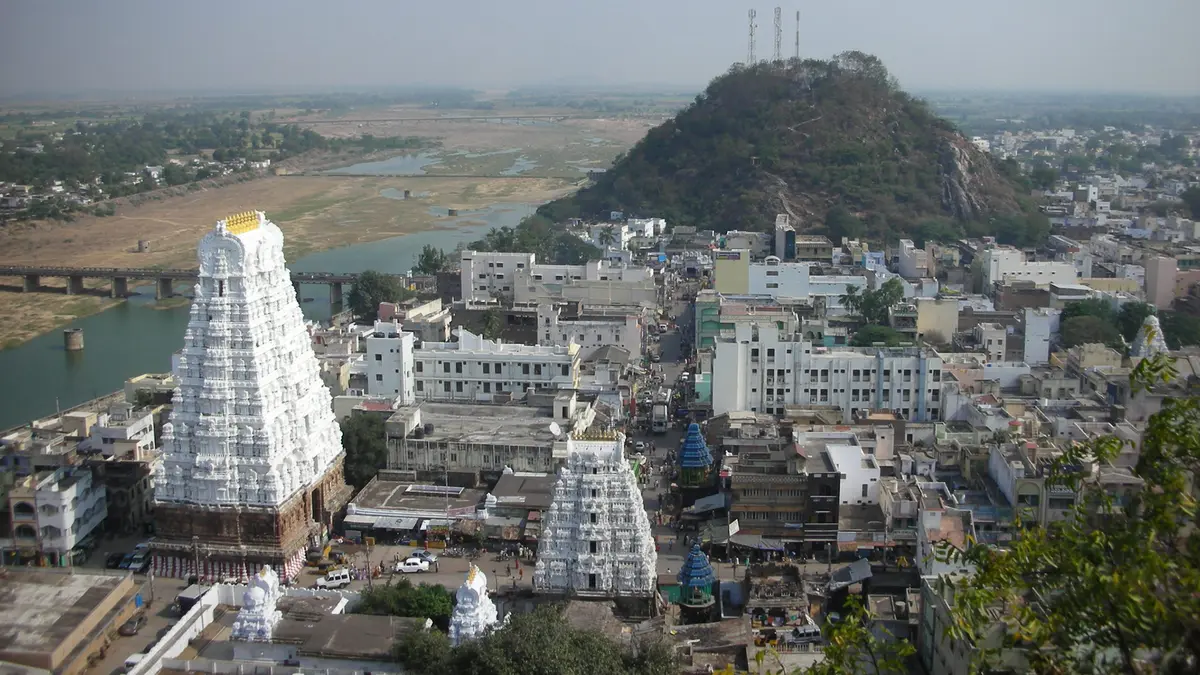
Srikalahasti lies in Tirupati district of Andhra Pradesh. The temple stands beside the Swarnamukhi River and close to a rocky hill.
Tirupati lies to its south-west, while the coastal plain extends eastwards. This position places the town on a major southern pilgrimage circuit.
The shrine is dedicated to Shiva as Kalahasteeswara. Shaiva tradition associates its linga with vayu, or wind.
It is therefore counted among the five elemental Shiva shrines. Goddess Gnanaprasunambika is the principal associated deity.
The complex carries Pallava, Chola and Vijayanagara-period layers. Inscriptions and later structures record centuries of patronage and alteration.
Heritage works need safeguards
Visitor facilities can improve access, but new construction must respect archaeology, river processes and the temple’s visual setting.
What good pilgrimage planning requires
Queue reform should improve shade, water, sanitation and emergency movement. It should also protect access for older and disabled visitors.
Riverbank work needs flood and wastewater assessment. Hard landscaping can transfer erosion unless the entire reach is studied.
A ropeway requires slope, wind and evacuation analysis. It also needs a careful visual-impact assessment near a historic sacred landscape.
Spending should separate conservation from tourism construction. Qualified conservation architects must guide any work on historic fabric.
Local transport and longer visitor stays may support livelihoods. Benefits should include small vendors without displacing established users.
Approval is only the first gate
The strongest plan will combine visitor comfort with conservation, river safety and transparent maintenance responsibilities.
Conclusion
Srikalahasti needs better visitor management, but heritage character cannot be recreated after damage. Appraisal should test every proposed component carefully.