
Why in news?
The Union government released a detailed review of farm mechanisation support. Since 2014–15, SMAM has received ₹9,404.47 crore. It has supported 21.61 lakh machines for individual farmers. The review also highlighted Custom Hiring Centres and agricultural drones.
Background
Indian farming has traditionally depended on human labour and draught animals. This method can be slow during sowing and harvesting, and delays may reduce output and increase crop losses.
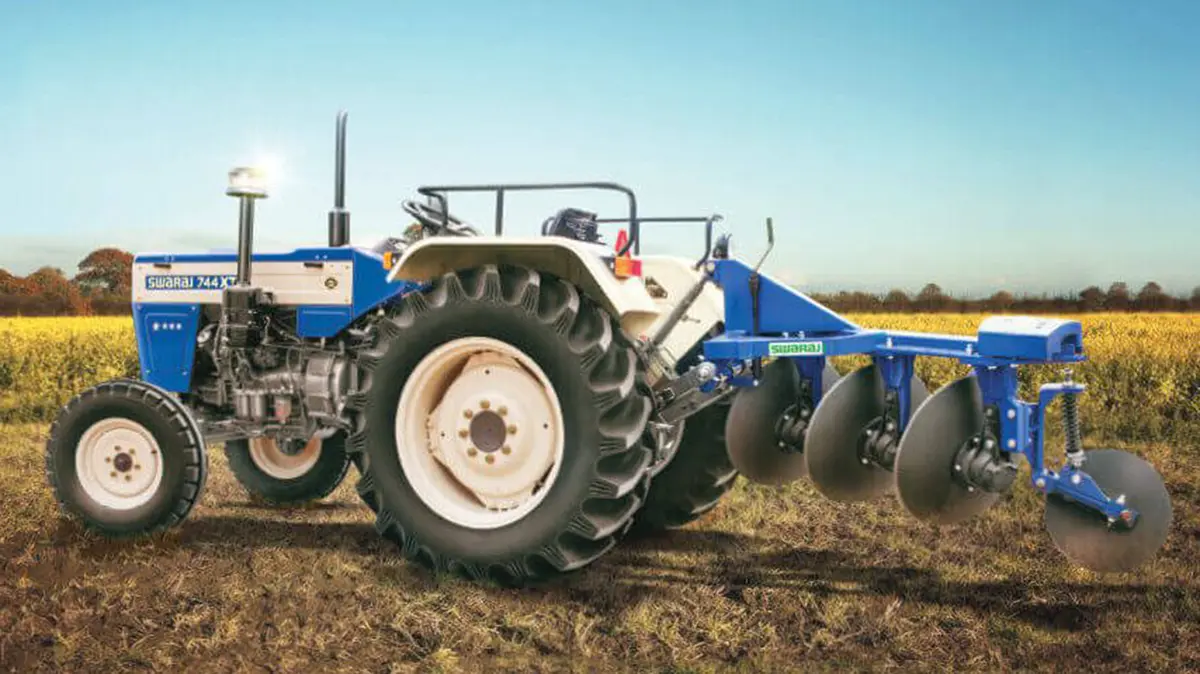
Farm mechanisation means using machines during agricultural operations, and these operations begin with land preparation. They continue through sowing, irrigation, spraying, harvesting and post-harvest handling.
Large farmers can purchase costly machines more easily, and small farmers often cannot justify such an investment. Their holdings may be too small for regular machine use.
India therefore promotes shared access alongside individual ownership, and a farmer can hire a machine only when required. This approach lowers the cost of mechanisation.
How did the scheme develop?
- The government launched SMAM during 2014–15, and SMAM means the Sub-Mission on Agricultural Mechanization.
- It is a Centrally Sponsored Scheme under the broader Rashtriya Krishi Vikas Yojana (RKVY) framework.
- Rashtriya Krishi Vikas Yojana began in 2007. It gives states flexibility for agricultural projects.
- The scheme was restructured as RKVY-RAFTAAR during 2017–18.
RAFTAAR means Remunerative Approaches for Agriculture and Allied Sector Rejuvenation, and SMAM now works within this flexible agricultural development structure.
Who receives special attention?
The scheme follows the idea of “reaching the unreached”, and it focuses on farmers facing financial or regional barriers.
- Small and marginal farmers receive targeted support.
- Women farmers receive special attention. Thirty per cent of scheme funds are earmarked for them.
- Scheduled Caste and Scheduled Tribe farmers receive higher support rates, and Farmer Producer Organisations can create shared machinery services.
- Self-Help Groups and rural entrepreneurs can also operate hiring centres.
- North-Eastern and Himalayan regions receive a more favourable funding pattern.
Important delivery mechanisms
- Individual assistance: Farmers receive subsidies for approved machinery and equipment.
- Custom Hiring Centre: A centre rents several machines to nearby farmers.
- Farm Machinery Bank: A local group maintains machines for shared village use.
- Hi-tech hub: The hub provides costly and specialised agricultural equipment; Demonstration: Field events show farmers how a machine works.
- Testing: Approved institutions test safety, quality and performance.
A Custom Hiring Centre differs from a machinery dealer, and the centre provides a service for a limited period. Ownership remains with the centre.
Funding pattern
The Centre and most states generally share costs in a 60:40 ratio. The ratio is 90:10 for North-Eastern and Himalayan states, and Union Territories receive full central assistance.
General beneficiaries can receive support covering 40% of a machine’s cost, and priority groups can receive 50% support. Exact ceilings depend on the machine and current guidelines.
Higher support is available for group-owned machinery banks, and this encourages community ownership where individual purchase is uneconomic.
Progress reported up to 2025–26
- Central assistance reached ₹9,404.47 crore, and the scheme supported 21.61 lakh machines for individual farmers.
- It supported 27,554 Custom Hiring Centres, and it also supported 25,608 Farm Machinery Banks.
- A further 646 hi-tech hubs received assistance.
How are drones being used?
Agricultural drones can spray nutrients, fertilisers and permitted crop-protection chemicals. They can cover fields quickly and reduce direct human exposure.
During 2023–24 to 2025–26, institutions conducted 40,928 Kisan Drone demonstrations, and these demonstrations covered 40,918 hectares. The financial support totalled ₹52.50 crore.
The Indian Council of Agricultural Research worked with agricultural universities and Krishi Vigyan Kendras. Approved procedures guided the demonstrations.
Prelims distinction: SMAM supports access to machinery, and it does not require every farmer to own a machine.
Benefits and limitations
Machines can complete time-sensitive work quickly, and they may reduce labour drudgery and post-harvest loss. However, unsuitable machines can damage soil or exclude workers.
Small fields need compact and affordable equipment, and centres also require trained operators, repairs and spare parts. Mechanisation works best when technology matches local farming conditions.
Conclusion
SMAM makes farm machinery more accessible through subsidies and shared services, and its main strength is inclusion. Future success depends on reliable centres, training and locally suitable machines.