
Why in news?
United Nations agencies reported in mid‑April 2026 that conflict‑related sexual violence and other human rights abuses in Sudan had escalated dramatically amid ongoing fighting between rival armed groups. The reports prompted calls for humanitarian aid and international pressure on the warring parties.
Background
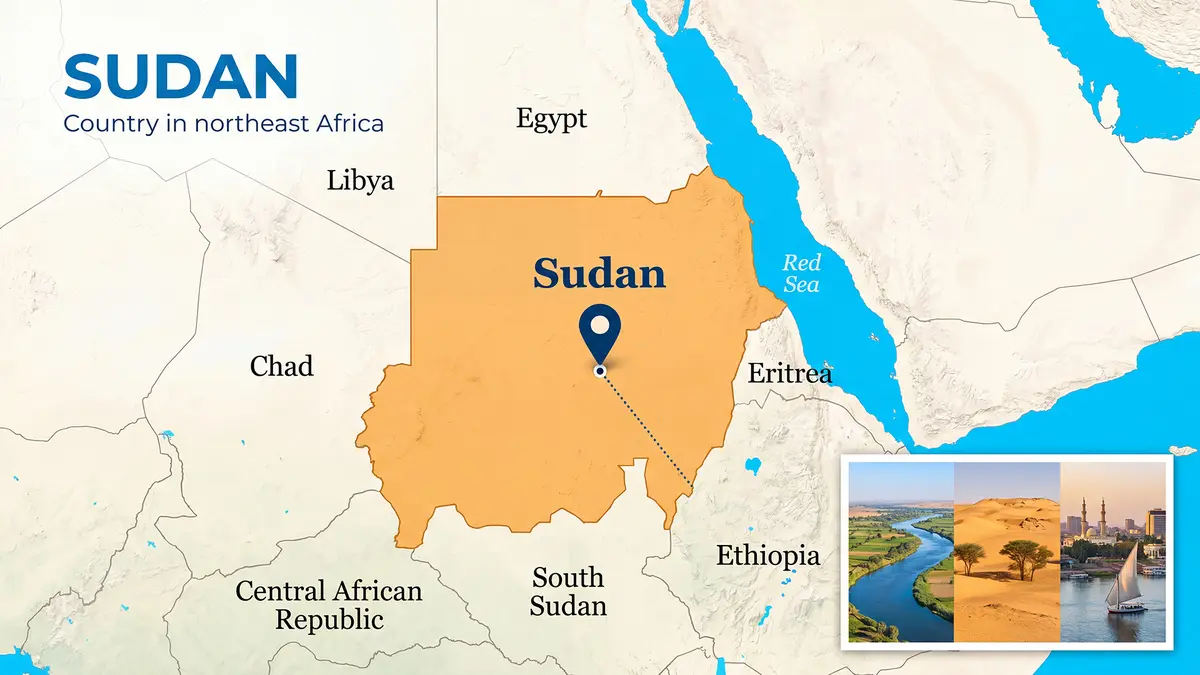
Sudan is located in north‑eastern Africa. Until the secession of South Sudan in 2011, it was the continent’s largest country. Today, it remains one of Africa’s largest states, covering about 1.86 million square kilometres. Sudan borders Egypt and Libya to the north, Chad and the Central African Republic to the west, South Sudan to the south and Eritrea and Ethiopia to the east; it also has a coastline along the Red Sea. Much of the country consists of flat arid plains and desert, with the exception of the Marrah Mountains in the west, where the highest point, Jabal Marrah (3 042 m), is located. The White and Blue Nile rivers meet at Khartoum and flow northward to Egypt, providing fertile land along their banks. Sudan has a tropical climate in the south and desert conditions in the north, with most rain falling between June and October. Its natural resources include petroleum, gold, iron ore, copper and other minerals, but decades of political instability, civil wars and sanctions have hindered development. Sudan gained independence from joint British‑Egyptian rule in 1956 and has since experienced multiple coups and conflicts, culminating in the loss of South Sudan after a long civil war. Today it is embroiled in a power struggle between the military and paramilitary forces.
Key features
- Geography: Mostly flat plateau and desert with some mountain ranges; the Nile and its tributaries support agriculture and human settlement.
- Climate: Arid in the north, with tropical savannah and seasonal rains in the south. Periodic droughts contribute to food insecurity.
- Natural resources: Petroleum, gold and other minerals offer economic potential but are unevenly distributed and contested by rival groups.
- Political history: Independence in 1956 was followed by military coups, civil wars and the secession of South Sudan in 2011. Governance remains unstable, with ongoing fighting between the army and Rapid Support Forces since 2023.
Conclusion
Sudan’s rich natural endowments are undermined by chronic instability and conflict. Resolving the current crisis will require inclusive political dialogue and respect for human rights alongside humanitarian relief.
Source: ThoughtCo

