
Why in news?
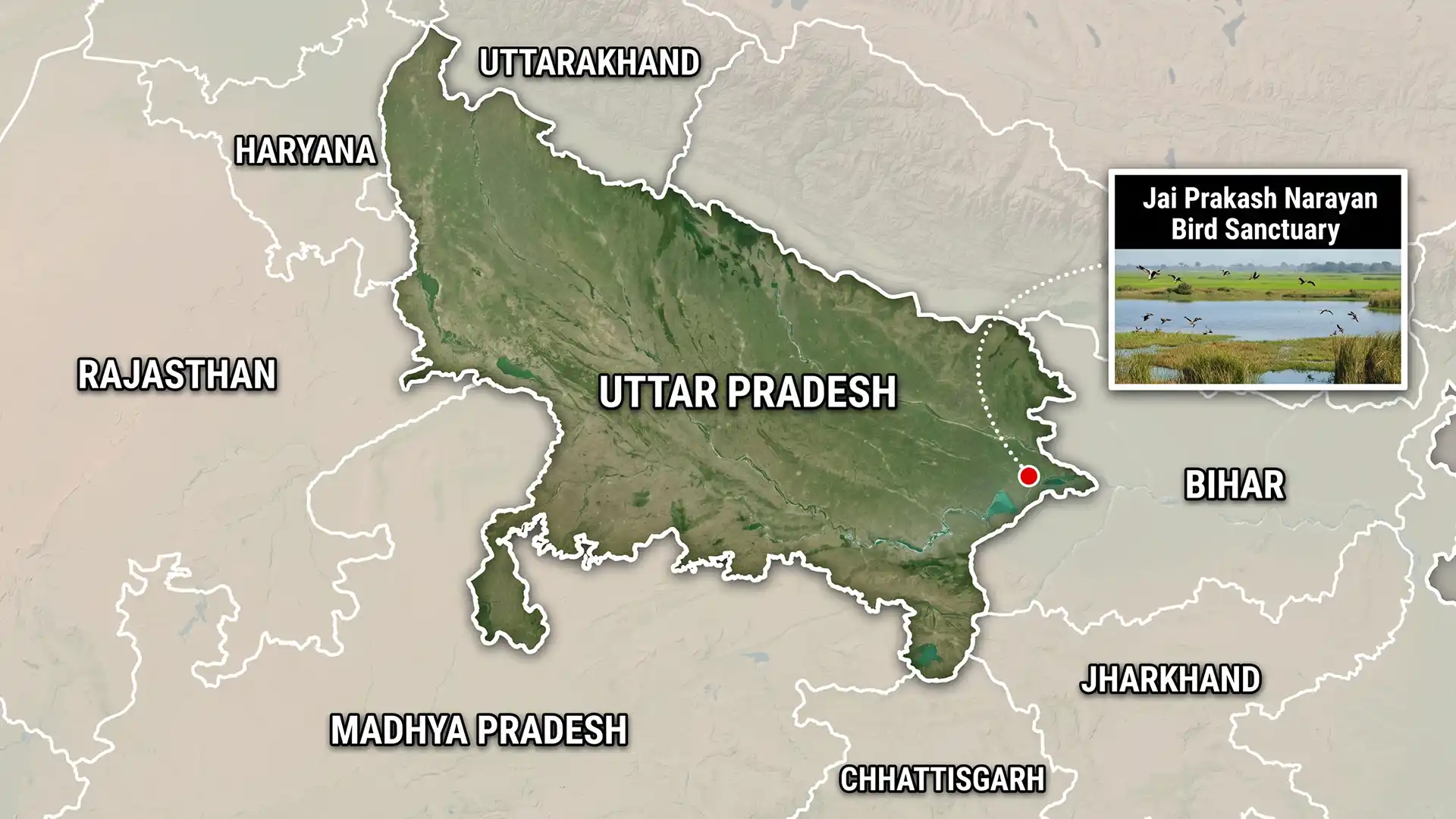
On World Environment Day (5 June 2026) the Prime Minister announced that the Jai Prakash Narayan Bird Sanctuary, also known as Surha Tal, in Ballia district of Uttar Pradesh had been added to the list of Wetlands of International Importance under the Ramsar Convention. It became India’s 100th Ramsar site, marking a major milestone in the country’s wetland conservation efforts.
Background
Surha Tal is a natural freshwater oxbow lake formed from a former meander of the Ganga river. Located near Basantpur village in Ballia, it was declared a bird sanctuary in 1991 to protect the diverse waterfowl and marshland species that depend on it. The lake receives freshwater through three channels and supports floodplains, marshes, seasonal wetlands and even rice paddies. During the dry season smaller wetlands in the region shrink; Surha Tal provides a refuge for resident and migratory birds. The Ramsar Convention, an international treaty adopted in 1971 in the Iranian city of Ramsar, promotes the conservation and wise use of wetlands. India joined the convention in 1982 and has steadily increased the number of designated sites.
Ecological features
- Biodiversity hotspot: Surha Tal supports around 221 plant species, 66 fish species, seven species of reptiles and three species of amphibians. Fish such as Wallago attu and Bagarius bagarius inhabit its waters.
- Important bird habitat: Its wetlands host resident species like purple swamphen and migratory birds such as pintail ducks. Vulnerable species such as the fishing cat use adjoining marshes.
- Flood buffer: By absorbing floodwaters from the Ganga, the lake reduces downstream flooding and recharges groundwater.
- Livelihood support: Local communities depend on the lake for fishing, irrigation and paddy cultivation. The Ramsar designation encourages sustainable use so that conservation and livelihoods can coexist.
Significance of Ramsar status
- International recognition: Being listed as a Ramsar site brings global attention to Surha Tal and may open avenues for technical and financial assistance.
- Management planning: The designation requires a comprehensive management plan that addresses conservation, pollution control, invasive species and community participation.
- Awareness and ecotourism: Highlighting the site can attract birdwatchers and students, promoting awareness about wetlands while providing income opportunities for local people.
Conclusion
Surha Tal’s inclusion as India’s 100th Ramsar site underscores the importance of protecting wetlands for biodiversity, flood control and community livelihoods. Sustained management and community engagement will be essential to preserve its ecological character.