

Why in news?
India temporarily restricted certain suspension-grade polyvinyl chloride resin imports.
The trade directorate issued Notification 25/2026–27 on 24 July 2026.
The measure applies to imports at or below a stated value.
Higher-valued and specified export-linked imports remain conditionally free.
Background
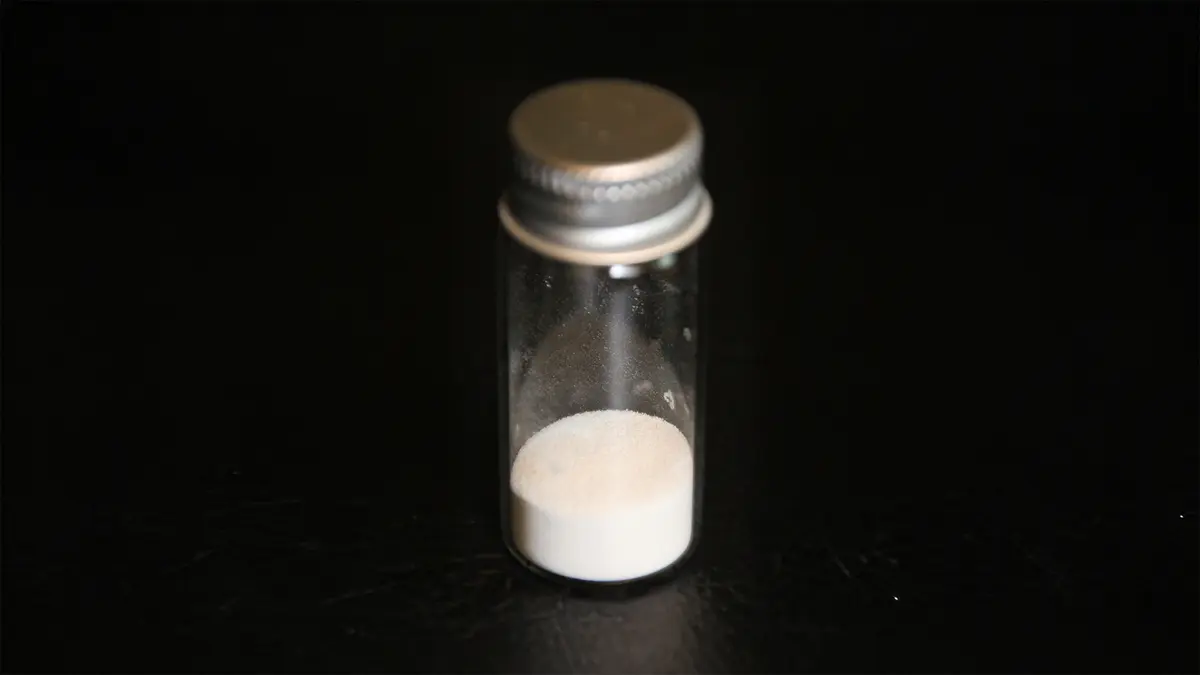
Polyvinyl chloride is commonly abbreviated as PVC after its first full reference. It is a synthetic thermoplastic produced from vinyl chloride monomer. A thermoplastic softens when heated and can be reshaped repeatedly; manufacturers produce PVC through suspension, emulsion or bulk processes.
Suspension polymerisation supplies most general-purpose PVC resin used worldwide.
How is suspension-grade PVC manufactured?
- Vinyl chloride monomer enters a sealed reactor containing water; agitation disperses the monomer as many small suspended droplets.
- Protective agents prevent those droplets from joining together; an initiator starts polymerisation inside each monomer droplet.
- Cooling systems remove heat released by the chemical reaction; processors remove unreacted monomer after conversion reaches the desired level.
- The resin is separated, washed, dried and classified by particle properties.
Polymerisation joins many small monomer molecules into long molecular chains. The resulting white resin needs additives before most commercial applications. Stabilisers improve heat resistance during processing and later product use; plasticisers create flexibility, while pigments provide colour and opacity.
Suspension grade and emulsion grade
| Feature | Suspension-grade PVC | Emulsion-grade PVC |
|---|---|---|
| Production medium | Monomer droplets suspended in water | Fine particles formed through an emulsion |
| Typical form | Relatively larger porous grains | Very fine powder or paste resin |
| Common uses | Pipes, profiles, cables and sheets | Coatings, artificial leather and specialised pastes |
| Notification coverage | Covered under the specified tariff line | Not automatically covered by that suspension-grade line |
What exactly changed?
The Directorate General of Foreign Trade administers India's import policy; its notification covered suspension-grade PVC under code 39041020. This code belongs to the Indian Trade Classification system. The notified policy moved relevant imports from Free to Restricted temporarily.
The restriction lasts six months from the notification's effective date. Imports above 0.766 United States dollars per kilogram remain Free. The threshold uses Cost, Insurance and Freight, commonly abbreviated as CIF.
Imports at or below the threshold require formal authorisation.
Exemptions
- Specified Export Oriented Units may use the notification's exemption; eligible Special Economic Zone units also receive conditional relief.
- Advance Authorisation imports can remain Free for permitted export production.
- Exempt material cannot simply enter the domestic market without applicable controls.
Export Oriented Units produce mainly for foreign markets under special rules. Special Economic Zones provide designated customs treatment for authorised activities. Advance Authorisation permits duty-free inputs needed for specified export products.
Restricted does not mean prohibited
| Policy status | Meaning |
|---|---|
| Free | Import normally needs no specific licence, subject to other laws |
| Restricted | Import requires authorisation or compliance with stated conditions |
| Prohibited | Import is not legally permitted except any express exception |
| State trading | Import proceeds through designated government-linked agencies |
Why might government impose such a threshold?
Very low-priced imports can place strong pressure upon domestic resin producers. A value threshold can discourage under-invoicing or unusually cheap consignments. It can also provide temporary adjustment space for domestic industry.
However, PVC users may face higher costs if cheaper supplies disappear. The balance affects producers and thousands of downstream manufacturers differently.
Economic importance of suspension-grade PVC
- Rigid grades support water pipes, irrigation lines and electrical conduits.
- Profiles are used in windows, doors and other building products; flexible compounds support cables, flooring, hoses and medical products.
- Agriculture depends upon affordable pipes for irrigation and water delivery; construction demand strongly influences national PVC consumption.
Legal and policy distinctions
The notification changes import policy under foreign-trade law; it is not itself an anti-dumping duty imposed through customs law. It is also separate from mandatory product-quality standards; different legal instruments may operate together, but they remain distinct.
Conclusion
The six-month measure targets price-sensitive imports rather than all PVC trade. Its effects should be judged across both resin producers and downstream users.