

Why in news?
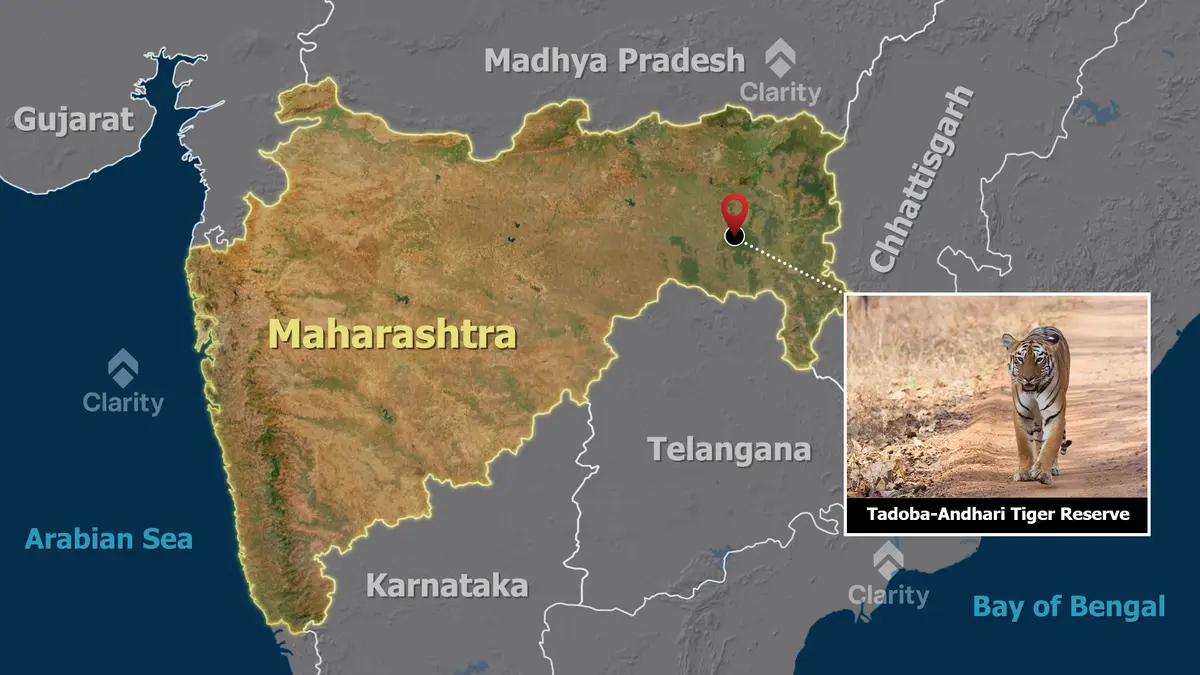
Odisha prepared a second phase of tiger supplementation for Similipal. Tadoba–Andhari Tiger Reserve remained the preferred source after the first phase produced four cubs.
The two landscapes
Tadoba–Andhari Tiger Reserve lies in Maharashtra’s Chandrapur district. It combines Tadoba National Park with the Andhari Wildlife Sanctuary and surrounding forests. Similipal Tiger Reserve lies in Odisha’s Mayurbhanj district; its tiger population has an unusually high frequency of pseudo-melanistic, dark-striped animals.
Long isolation can reduce genetic diversity in a small population. Harmful variants may become more common when closely related animals repeatedly breed.
Genetic rescue introduces unrelated animals to improve diversity and population fitness. It is more targeted than simply increasing headcount.
The first phase
The National Tiger Conservation Authority approved interstate transfers from Tadoba to Similipal. Tigresses Jamuna and Zeenat arrived during 2024. Zeenat temporarily moved outside Similipal and crossed state boundaries. Intensive tracking eventually enabled her return to the reserve.
In May 2026, Zeenat gave birth to four cubs. Odisha officials treated the litter as visible progress towards genetic supplementation.
Birth alone does not prove complete success. Cub survival, dispersal and later reproduction will determine the genetic effect.
Why Tadoba is preferred
Tadoba supports a substantial breeding population within the central Indian tiger landscape. Its animals also offer genetic differences from Similipal’s isolated population. Source selection must protect the donor reserve; authorities need demographic models before removing breeding adults from any population.
Candidate animals require health screening, behavioural assessment and secure transport. Release planning must also consider prey, territorial tigers and nearby settlements.
The second phase and its safeguards
Odisha officials said another proposal would follow state and Union approvals. Reports differed on the final number and sex of animals. This edition therefore treats those details as unsettled. The National Tiger Conservation Authority’s final permission should govern any transfer.
Soft-release enclosures can help an animal adjust before full release. Satellite collars and field teams are vital during the early movement period.
Local communities need timely warnings and compensation systems; a translocation programme loses legitimacy if it shifts costs onto surrounding villages.
Genetics cannot replace habitat protection
New genes will not secure tigers without prey, connected habitat and protection from conflict. Supplementation must support, not substitute, landscape conservation.
Conclusion
Tadoba has become important to an ambitious genetic intervention in Similipal. Careful approvals and long-term monitoring must now match the programme’s early biological promise.