

Why in news?
South Korea lodged a formal protest after a prefecture in Japan held a government‑backed “Takeshima Day” ceremony in February 2026. Seoul said the event unjustly asserts Japan’s sovereignty over the islets that Koreans know as Dokdo. A senior Japanese official’s attendance heightened tensions, prompting South Korea to summon Japan’s diplomat and demand an end to the ceremony.
Background
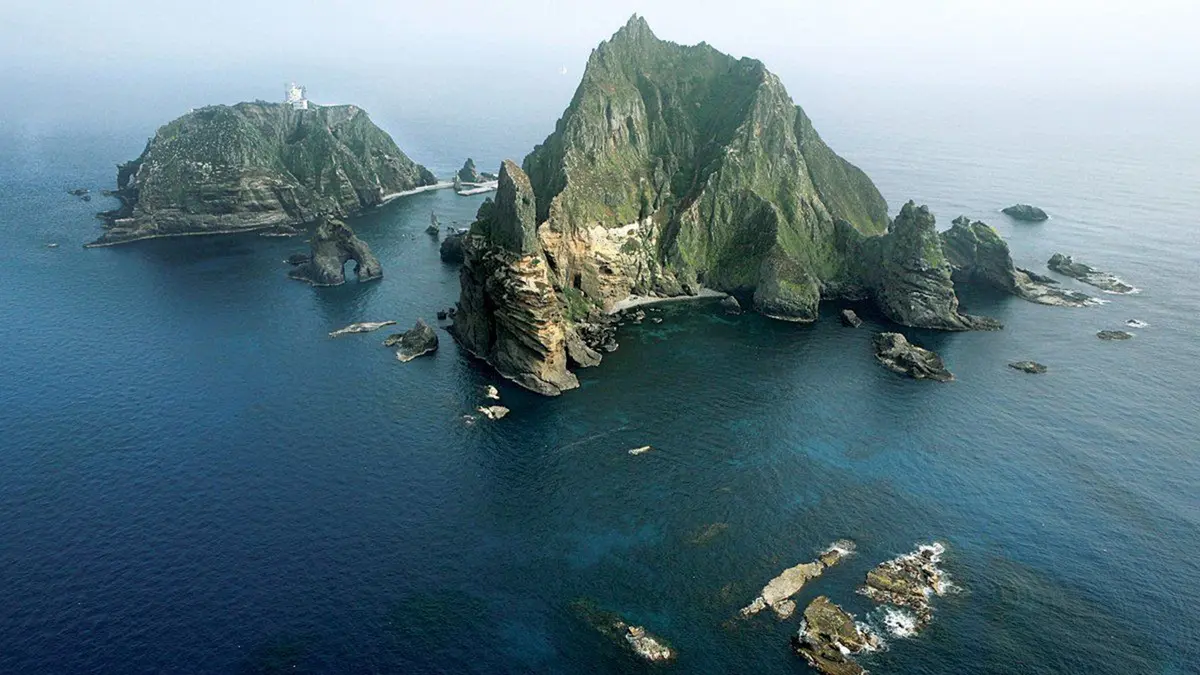
The disputed territory consists of two small islets and around thirty rocks in the Sea of Japan (called the East Sea in Korea). They lie roughly halfway between the Korean Peninsula and Japan. The islets are known as Dokdo in South Korea, Takeshima in Japan and Liancourt Rocks internationally (named after a French whaling ship). During Japan’s colonial rule of Korea (1910–1945), Tokyo incorporated the islets; after World War II South Korea stationed a coastguard detachment there and has administered them ever since.
Key facts about the islands
- Geography: The islets are volcanic outcrops with steep cliffs. They cover less than 0.2 km² in total and support a small helipad and lighthouse for the South Korean police detachment.
- Naming: “Dokdo” means “solitary island” in Korean, while “Takeshima” means “bamboo island” in Japanese. The French name “Liancourt Rocks” comes from the ship Liancourt, which charted them in 1849.
- Administrative control: South Korea administers the islands and maintains a police detachment. Japan claims sovereignty and argues that its incorporation of the islets in 1905 was legal. Both countries cite historical documents to support their claims.
- Economic and strategic value: The surrounding waters contain abundant fish stocks and may hold natural gas hydrates. Control over the islets also influences exclusive economic zone (EEZ) boundaries in the Sea of Japan.
Significance
- The dispute remains a recurring source of tension in Japan–South Korea relations. Annual events like “Takeshima Day” provoke protests and diplomatic notes from Seoul.
- For South Korea, Dokdo is a symbol of independence from Japanese colonialism. Japan views Takeshima as part of its Shimane prefecture, citing historical records and modern maps.
- Resolving the dispute will likely require political will on both sides and could involve international legal arbitration, though neither country has brought the case to the International Court of Justice.
Conclusion
The simmering Dokdo/Takeshima dispute shows how historical grievances and resource competition can inflame relations. By protesting the ceremony, Seoul reasserts its sovereignty claim, while Japan maintains its own. Dialogue and confidence‑building are essential to manage the issue and avoid escalation.
Source: Reuters