
Why in news?
The Department of Telecommunications has released revised guidelines for the Technology Development and Investment Promotion (TDIP) scheme for the period 2026–2031. With an outlay of ₹203 crore, the scheme seeks to expand India’s participation in global telecom standards bodies and encourage indigenous research.
Background
TDIP was launched in 2014 to support Indian industry and academia in contributing to international standard‑setting organisations such as the International Telecommunication Union (ITU), the 3rd Generation Partnership Project (3GPP) and oneM2M. Standards developed in these forums shape the technical specifications of mobile networks, broadband and emerging technologies like 6G. By funding travel, membership fees and pilot demonstrations, TDIP enables Indian engineers to attend meetings, propose technical contributions and test prototypes.
Revised guidelines
- Broader eligibility: Start‑ups, micro‑ and small enterprises, academic institutions, research labs, telecom service providers and manufacturing companies can now apply for support. Earlier, assistance was limited mainly to large firms.
- Financial support: The scheme will reimburse expenses related to attending international meetings, submitting technical papers, hosting standardisation events in India, conducting proof‑of‑concept demonstrations and pilot projects that validate indigenous technologies.
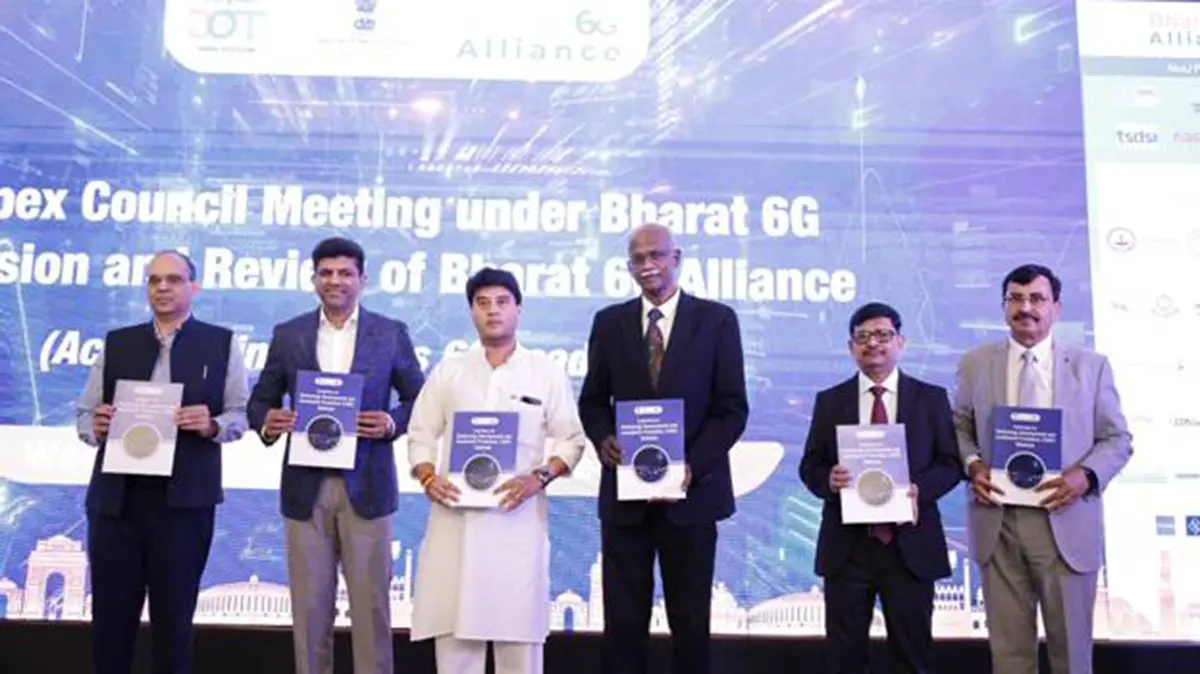
- Implementing agencies: The Telecommunications Standards Development Society, India (TSDSI), the Telecom Centres of Excellence (TCoE) and Telecommunications Consultants India Limited (TCIL) will manage various components of the scheme. They will coordinate with the Bharat 6G Mission and the Telecom Technology Development Fund to avoid overlap.
- Focus areas: Besides 5G and 6G, TDIP encourages work on the Internet of Things, machine‑to‑machine communication, optical networks and satellite broadband. Special emphasis will be placed on energy‑efficient designs and rural connectivity solutions.
Significance
- Influencing global standards: Active participation ensures that Indian requirements—such as low‑cost devices, multilingual interfaces and resilience in remote areas—are incorporated into international specifications.
- Promoting innovation: Funding allows universities and start‑ups to test prototypes and develop intellectual property that can be commercialised in the telecom sector.
- Boosting exports: Compliance with global standards helps Indian products gain acceptance overseas, supporting the vision of making India a telecom manufacturing hub.
Source: Press Information Bureau

