
Why in news?
Tetanus cases have surfaced recently in parts of the United States. Public health experts worry that waning vaccination and booster coverage could lead to more infections. The news highlights the need to remain vigilant about routine immunisation.
Background
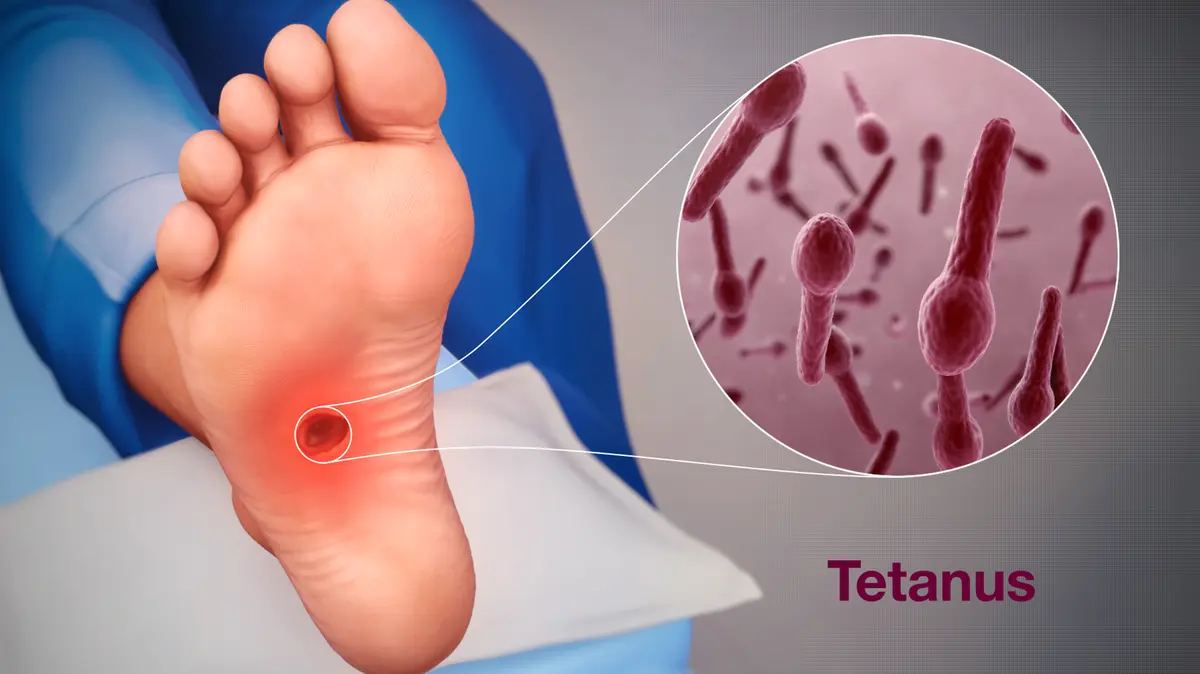
Tetanus, also called lockjaw, is a serious illness caused by the Clostridium tetani bacterium. The bacteria live in soil and animal waste. They enter the body through puncture wounds or burns and produce a toxin that affects the nervous system. This toxin causes painful muscle stiffness, particularly in the jaw and neck. Without early treatment the disease is often fatal.
Vaccination has made tetanus rare. In the United States fewer than 50 cases occur each year, but the fatality rate remains high. The World Health Organisation reports that neonatal tetanus still kills thousands of infants worldwide due to unclean delivery practices. The only way to acquire immunity is through the tetanus–diphtheria–pertussis (Tdap) vaccine. Booster shots are recommended every ten years to maintain protection because immunity declines over time.
Key points
- Tetanus is not contagious; it develops when spores enter broken skin.
- Symptoms include jaw stiffness, muscle spasms, difficulty swallowing and seizures.
- Infants and mothers in areas with poor sanitation are especially vulnerable.
- Vaccination protects against tetanus, diphtheria and pertussis. Booster shots every decade are essential.
- There is no cure once symptoms appear; treatment focuses on controlling spasms and removing the toxin.
Conclusion
Tetanus can be deadly but is entirely preventable. Recent cases remind us that vaccines and boosters are crucial throughout life. Ensuring clean delivery practices and routine immunisation can save lives and prevent this painful disease from returning.