
Why in news?
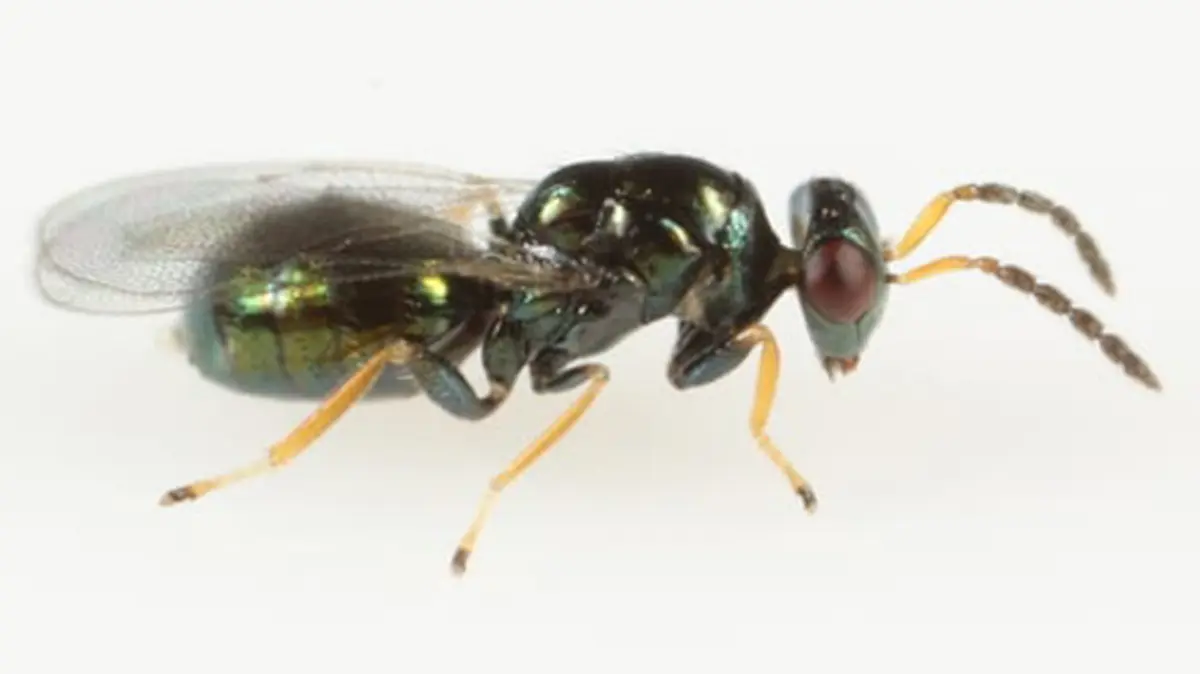
Scientists from Kalyani University and Cairo University recently reported a new species of tiny wasp in West Bengal. The wasp, named Tetrastichus narayandebnathi, emerged from the pupa of a tortoise beetle. It honours the late Bengali cartoonist Narayan Debnath and highlights India’s rich insect diversity.
Background
Parasitoid wasps are small insects that lay their eggs on or inside other insects. The young larvae feed on the host and eventually kill it. The genus Tetrastichus belongs to the family Eulophidae and contains roughly five hundred known species around the world. These wasps often parasitise moths, beetles and other insect groups and can be useful for controlling agricultural pests.
Key details
- The new species was collected near Rajarhat, on the outskirts of Kolkata.
- Eight parasitoids—five females and three males—emerged from a single pupa of a tortoise beetle. This behaviour is known as gregarious parasitism.
- It is only the third recorded case of a Tetrastichus wasp parasitising a Cassidinae (tortoise beetle) host worldwide and the second such record from India.
- Researchers observed several differences from other Tetrastichus species, such as the arrangement of antennal segments and the shape of the ovipositor (egg‑laying organ).
- The species name honours Narayan Debnath, creator of famous Bengali comic characters like “Bantul the Great”, in recognition of his contribution to Indian art and literature.
- The discovery underscores the importance of documenting lesser‑known insects, which could play a role in natural pest control.
Conclusion
The discovery of Tetrastichus narayandebnathi highlights India’s continuing role in biodiversity research. By studying parasitoid wasps and their hosts, scientists can develop environmentally friendly methods for controlling crop pests. Naming the insect after a beloved cartoonist also helps popularise science and fosters pride in indigenous discoveries.
Sources: TOI