

Why in news?
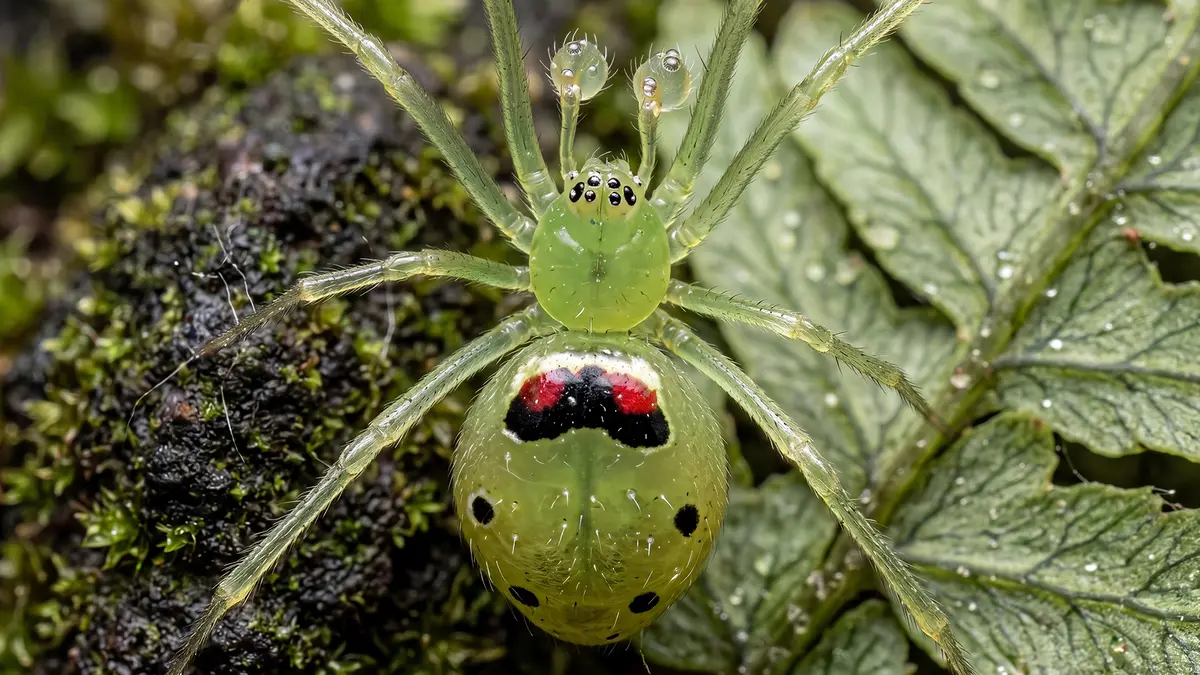
Researchers have discovered a new species of “happy‑face spider” in the western Himalayas. The species has been named Theridion himalayana and adds to India’s growing catalogue of spider diversity.
Background
The new spider belongs to the family Theridiidae. It was found in the Makku, Tala and Jagpura areas of Rudraprayag district in Uttarakhand by scientists Devi Priyadarshini and Ashirwad Tripathy from the Regional Museum of Natural History in Bhubaneswar. Their research paper highlights how the species differs from its relatives.
Distinctive features
- Polymorphism: Both male and female spiders show 32 different colour patterns that resemble a smiling face, with red, black and white dots arranged in various ways. This is why they are nicknamed happy‑face spiders.
- Reproductive structures: The species has long, strongly curved copulatory ducts that run forward almost parallel before bending downward. The fertilisation ducts are short and point upward in a V‑shape. These features distinguish it from other Theridion species.
- Genetic uniqueness: Genetic analysis indicates that T. himalayana differs by about 8.5 percent from the Hawaiian happy‑face spider (Theridion grallator), showing that it evolved separately.
- Ecological role: The spider preys on small flies and insects, helping to control pest populations. Scientists also suggest it may play a role in pollination, although this requires further study.
Significance
- Biodiversity: With more than 1,990 known spider species in India, the discovery of a new species demonstrates that Indian ecosystems still hold many secrets. Each discovery adds to our understanding of evolution and ecology.
- Evolutionary questions: The polymorphic markings raise questions about why such colour diversity exists and whether it offers advantages such as predator avoidance or mate selection.
Conclusion
The identification of Theridion himalayana underscores the importance of exploring understudied habitats. Protecting Himalayan forests and supporting taxonomic research will reveal more about India’s rich wildlife.
Source: The New Indian Express