
Why in news?
During Prime Minister Narendra Modi’s state visit to Slovakia in June 2026, he presented the Slovak President with cufflinks featuring Thewa motifs. This gift drew attention to Rajasthan’s centuries‑old Thewa art and its artisans.
Background
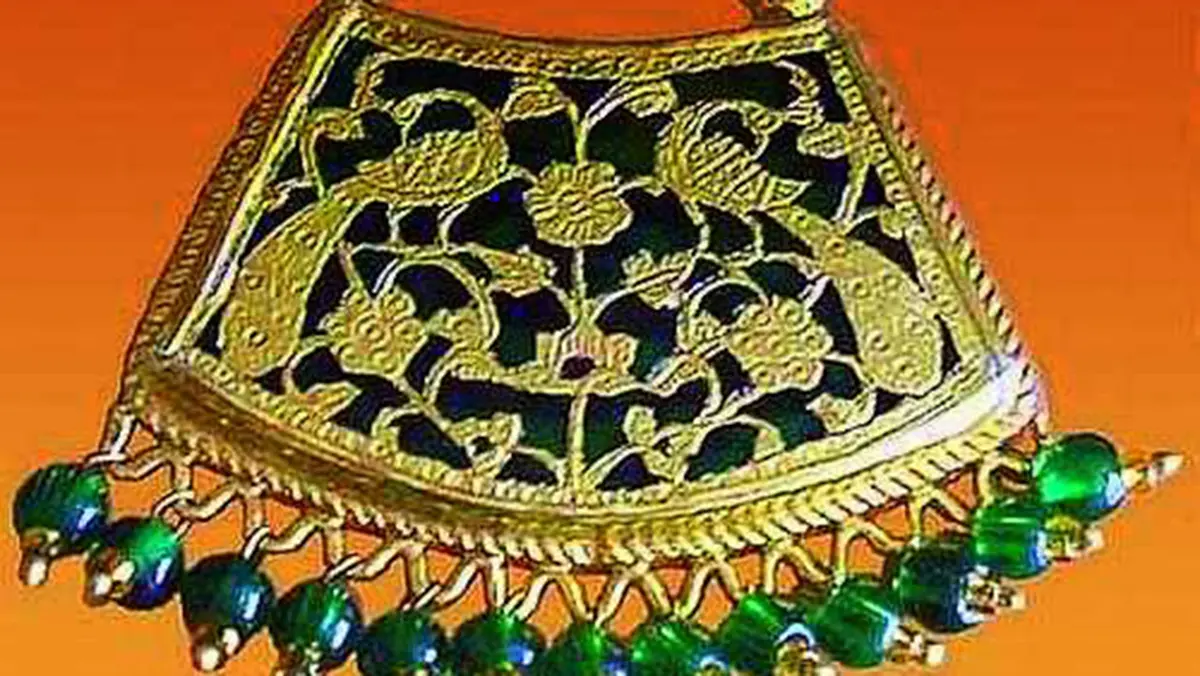
Thewa art originated in Pratapgarh, Rajasthan, around the 17th century during the Mughal period. Artisans create intricate designs with 23‑carat gold strips fused onto coloured glass. The designs often depict royal processions, mythological scenes or flora and fauna. The craft has been passed down within families and is recognised with a Geographical Indication (GI) tag.
Crafting process
- Designing: Artisans first prepare a detailed sketch on paper. The design is transferred onto a thin sheet of pure gold.
- Cutting and etching: Using fine chisels and needles, they cut out the pattern from the gold sheet, creating delicate filigree.
- Fusing: The gold pattern is carefully fused onto coloured molten glass, usually red or green. Once cooled and polished, the piece is set into jewellery such as pendants, cufflinks or bangles.
Significance
- Cultural heritage: Thewa art reflects India’s rich tradition of combining precious metals with glass. It is unique to Pratapgarh and represents local identity.
- Livelihood: Only a handful of families continue this labour‑intensive craft. International recognition can boost demand and provide sustainable income.
- Gift diplomacy: Presenting Thewa jewellery to foreign leaders promotes cultural diplomacy and showcases India’s handicrafts on the world stage.
Conclusion
The spotlight on Thewa art during a state visit highlights the importance of preserving traditional crafts. Support from the government and public can ensure that young artisans continue this heritage, turning it into a source of pride and livelihood.