

Why in news?
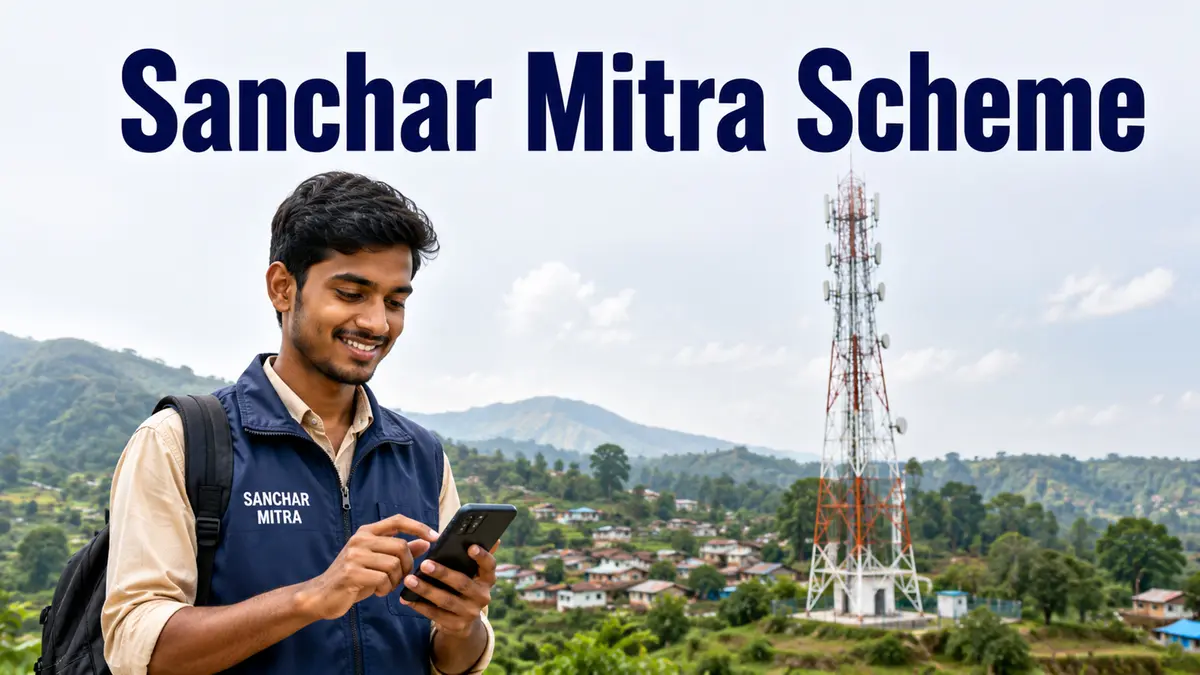
Three Indian Sanchar Mitras were selected as Generation Connect Youth Envoys. They will serve with the International Telecommunication Union from 2026 to 2030.
The selected volunteers
The envoys are Ankit Kumar Pal from Delhi and Manish Kumar Mandal from Bengaluru. Susmita Sain from Guwahati is the third selection.
They belong to a student-volunteer programme of the Department of Telecommunications. Its volunteers promote digital safety and awareness of public telecom services.
The programme began in selected technical institutions. It now covers more than 200 institutions across all states and Union Territories.
How the network works
Eligible institutions teach telecommunications, electronics, computing or cybersecurity. Departmental Licensed Service Area offices coordinate participation across regions.
Students conduct awareness activities on fraud prevention, mobile security and responsible use. Their campus and community links can improve local reach.
The International Telecommunication Union is the United Nations specialised agency for digital technologies. Its youth initiative brings younger voices into policy discussions.
An envoy is not a regulator
Youth envoys can communicate and advise. They do not exercise statutory powers over networks, platforms or telecom companies.
Public value and limitations
Peer communication can make technical safety advice easier to understand. It may also reach first-time users who distrust unfamiliar official messages.
Volunteers need current and verified material. Fraud methods change rapidly, and inaccurate advice can create false confidence.
Awareness should include clear reporting channels. People need to know what action follows after they identify suspicious communication.
Language and accessibility affect reach. Messages should work for people with disabilities and users outside English-speaking campuses.
The envoy role can connect local experience with international debate. It should bring evidence from diverse Indian users, not only major cities.
Programme evaluation should measure understanding and safer behaviour. Event counts cannot alone show reduced harm.
Students also need a route to escalate systemic problems. Repeated scam patterns may require action by operators, regulators or law-enforcement agencies.
Feedback should flow in both directions. International discussions can inform local sessions, while field experience can improve national digital policy.
Participation must remain voluntary and supervised. Institutions should protect students from handling sensitive complaints beyond their competence.
Youth participation needs public purpose
The recognition is valuable when it improves real digital safety. Accurate guidance and inclusive reach are the core tests.
Conclusion
The selections give Indian student volunteers an international platform. Their impact will depend on informed, practical engagement with users.