
Why in news?
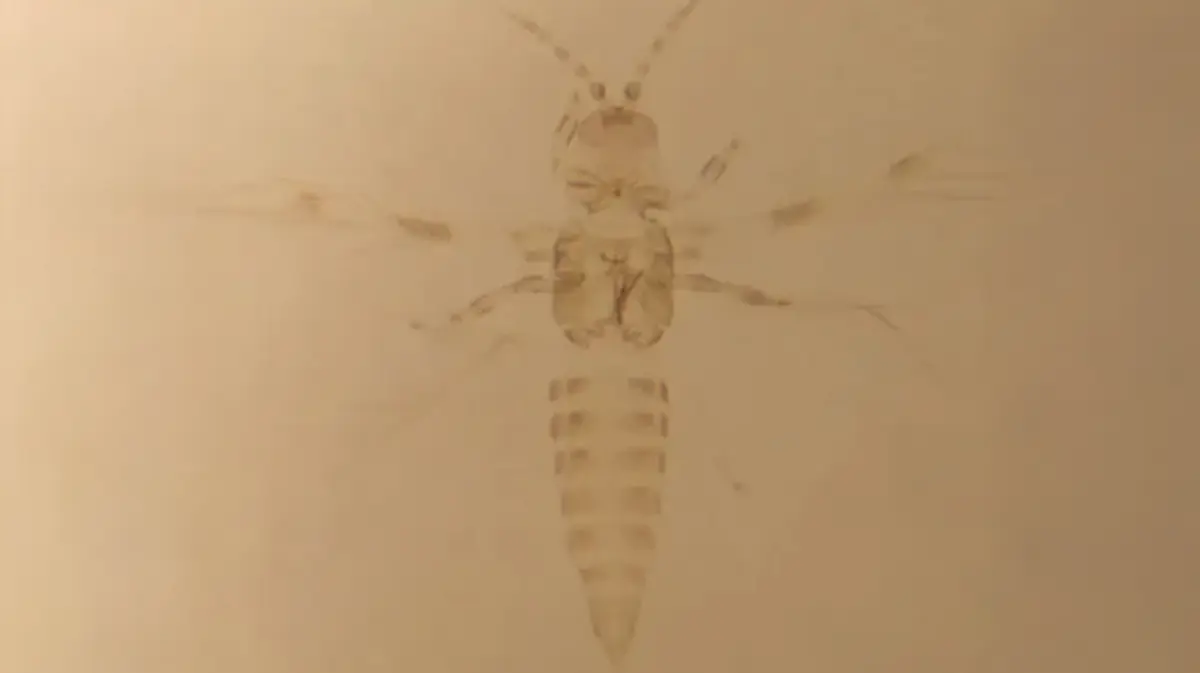
Indian entomologists described a new coastal Karnataka thrips named Trachynotothrips vyaghravahini. They collected it from flowers at Pilikula Nisargadhama. The study also recorded another thrips species in India for the first time.
Background
Thrips are very small insects belonging to the order Thysanoptera. Their narrow wings usually have distinctive fringes of long hairs.
Most adult thrips measure between one and two millimetres, and their small size makes collection and identification difficult.
They pierce plant cells and suck the released contents, and this feeding can leave silver patches, scars or distorted growth.
Where was the species found?
Researchers collected the insect at Pilikula Nisargadhama in Dakshina Kannada district, and the site lies near Mangaluru in Karnataka.
The specimens were feeding or resting inside flowers of a Lagerstroemia tree, and this genus includes ornamental crape-myrtle trees.
The locality falls near the Western Ghats region. However, one collection site does not prove a range across all Western Ghats.
Who conducted the study?
The researchers came from two Indian agricultural institutions, and one was Keladi Shivappa Nayaka University of Agricultural and Horticultural Sciences.
The other was the National Bureau of Agricultural Insect Resources. The study appeared in Annales Zoologici on 20 June 2026.
How was it identified as new?
Taxonomists compare tiny body structures under powerful microscopes, and reliable identification depends upon combinations of several characters.
- The new insect has a uniformly pale middle body region.
- It lacks the brown bands found in some close relatives.
- Its hind legs are pale.
- Its abdominal sides lack certain spine-like hairs.
- Its body bristles follow a distinctive arrangement.
These combined differences separated it from all described relatives, and scientists then prepared a formal description and identification key.
What does its name mean?
The name combines two Sanskrit words, and Vyaghra means tiger, while vahini means a flowing river or carrier.
The words refer to Pilikula’s local history and name. Scientific names can therefore preserve regional ecological and cultural connections.
Are all thrips harmful pests?
No. Many plant-feeding thrips damage crops, flowers and fruits, while some also transmit serious plant viruses.
However, other species eat fungi, mites or smaller insects, and some may even contribute to pollination.
The new species was collected from flowers, and current evidence does not establish that it causes agricultural damage.
Avoid an assumption: Finding a thrips on a plant does not prove it is a crop pest. Feeding damage needs separate evidence.
What else did the paper report?
The authors also recorded another thrips species from India for the first time. That species was previously known from Japan and China.
A first national record differs from a new species. The organism was already known to science, but not previously documented in India.
Important distinction: A “new species” is new to science. A “new record” extends the known geographical distribution of an existing species.
Why does insect taxonomy matter?
- Correct names help distinguish pests from harmless insects.
- Distribution records can reveal ecological and climate-related changes.
- Early identification supports plant-quarantine decisions.
- Reference collections allow later scientists to verify findings.
- Local surveys expose biodiversity hidden by an insect’s tiny size.
Conclusion
The new thrips demonstrates the Western Ghats region’s overlooked insect diversity. Careful taxonomy prevents harmless species from being confused with crop pests.