
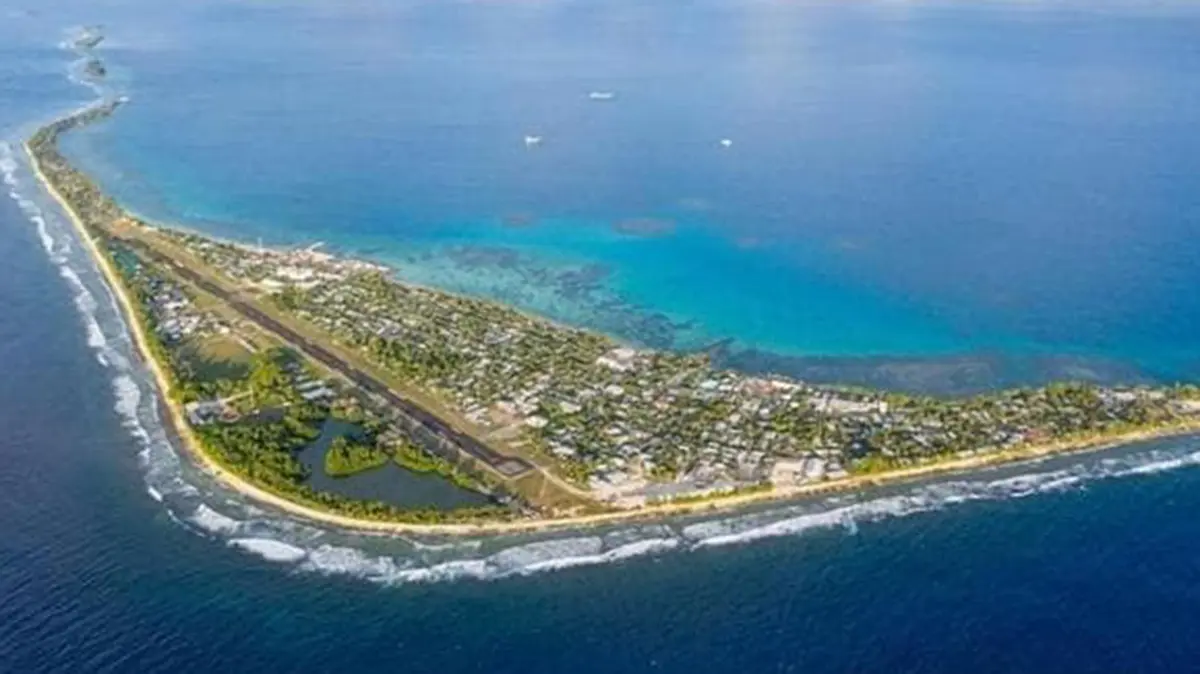
Why in news?
The Pacific island nation of Tuvalu continues to highlight its existential battle against climate change. Rising sea levels threaten to submerge most of its land, prompting the government to create a digital version of the country in the metaverse and to negotiate migration pathways for its citizens. Recent reports note that sea levels around Tuvalu have risen about 21 centimetres over the past 30 years, nearly twice the global average, and projections suggest that 95 percent of the islands could be underwater by 2100.
Background
Tuvalu consists of nine low‑lying atolls and islands in the central Pacific with a total land area of roughly 26 square kilometres. Its highest point is only about 4.6 metres above sea level. The country’s population depends heavily on rainwater, imported goods and subsistence agriculture. Tuvalu’s Exclusive Economic Zone spans about 900,000 square kilometres, giving it control over valuable fisheries despite its tiny landmass. However, its atolls are extremely vulnerable to storm surges, saltwater intrusion and erosion.
Major developments
- Digital preservation: In 2022 the government announced plans to create a digital nation in the metaverse to preserve Tuvalu’s culture and statehood if its islands become uninhabitable. This includes digitising government services and cultural heritage.
- Migration agreements: Tuvalu signed the Falepili Union with Australia, allowing up to 280 citizens per year to live and work there. Over 90 percent of Tuvaluans applied for this programme between 2025 and 2026, underscoring the urgency of climate migration.
- Land reclamation projects: The Tuvalu Coastal Adaptation Project is dredging sand to build elevated land. Phase one created about seven hectares, and phase two aims to create more, costing roughly US $55 million. This new land is raised above projected sea‑level rises and will house homes and infrastructure.
Why Tuvalu matters
- Symbol of climate justice: Tuvalu’s plight illustrates the disproportionate impact of climate change on small island developing states. These countries contribute little to global greenhouse‑gas emissions but face the severest consequences.
- Legal precedent: A 2025 advisory opinion from the International Court of Justice clarified that loss of territory due to sea‑level rise does not automatically negate statehood. Tuvalu may continue to claim maritime zones and resources even if its islands become uninhabitable.
- Migration with dignity: By negotiating migration pathways and creating digital governance models, Tuvalu seeks to ensure that its citizens maintain national identity and access to education, healthcare and employment abroad.
Source: UN News

