
Why in news?
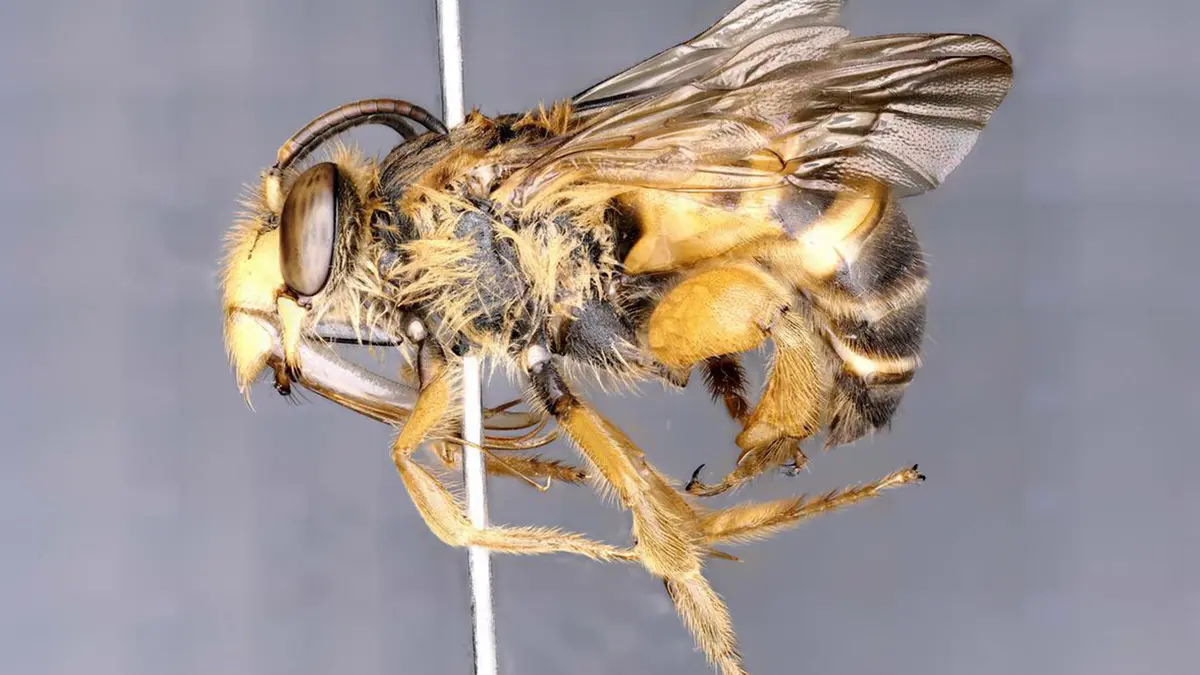
Researchers described two new solitary bee species from Arunachal Pradesh. The scientific paper appeared on 6 July 2026. Each species is presently known from only one male specimen. The discovery reveals how little is known about Himalayan insect diversity.
Background
The newly described bees are Elaphropoda triangulata and Habropoda adi, and both belong to the family Apidae.
Apidae also includes honey bees, bumblebees and many solitary bees, but all members do not form large colonies.
Most solitary females build and provision their own nests, but they do not have worker groups like honey-bee colonies.
These two bees belong to the subfamily Anthophorinae, and members are usually robust, hairy and fast-flying flower visitors.
Many have long tongues for reaching nectar inside deep flowers, and their body hairs can also carry pollen between flowers.
Meaning of “new species”: The bees are newly described by science, but they did not evolve during 2026.
Who made the discovery?
Femi Ezhuthupallickal Benny and Dharma Rajan Priyadarsanan described both species. They work with the Ashoka Trust for Research in Ecology and the Environment.
Their paper appeared in the European Journal of Taxonomy, and taxonomy identifies, names and classifies living organisms.
How were the specimens collected?
Researchers used Malaise traps during biodiversity surveys, and a Malaise trap is a tent-like passive trap for flying insects.
Flying insects strike its fabric and move upward towards a collecting container. This method records small insects that observers may miss.
- The Habropoda adi specimen was collected during May 2022.
- It came from Yingku at about 706 metres above sea level.
- The Elaphropoda triangulata specimen was collected during May 2023.
- It came from Pasighat at about 227 metres above sea level.
- Researchers compared both specimens with known members of their genera.
- Distinct body structures supported their recognition as separate species.
What is special about Elaphropoda triangulata?
The recorded male measures about 16.7 millimetres, and it bears triangular dark markings on its first three abdominal segments.
Those triangular markings inspired the name triangulata, and its other body structures also differ from close relatives.
The low collection altitude is noteworthy, and many known members of this genus occur in higher mountain habitats.
The specimen came from Pasighat’s forested foothill landscape, and this region lies near several biologically rich mountain systems.
What is special about Habropoda adi?
The recorded male measures about 12.3 millimetres, and researchers found it near Yingku in the Upper Siang landscape.
The name honours the Adi Indigenous community of Arunachal Pradesh, and scientific names often recognise places, people or distinctive features.
Its combination of colour, hair and reproductive structures separates it from related species, and female features remain unknown.
Prelims facts: Both species belong to Apidae. Habropoda adi honours the Adi community, while E. triangulata refers to triangular markings.
Why does one specimen still support a species description?
Taxonomists may describe a species from one specimen when its diagnostic features are clear. That specimen becomes the name-bearing holotype.
A holotype provides the permanent reference for that species name, and future specimens can be compared with it.
However, one specimen cannot reveal population size, seasonal variation or the female’s appearance, and further surveys are therefore essential.
Why are these bees ecologically important?
Bees move pollen while visiting flowers for nectar or pollen, and this movement enables fertilisation and seed production.
Wild bees often pollinate plants that honey bees visit less efficiently, and different tongue lengths and behaviours support different flowers.
Healthy pollinator communities improve wild plant reproduction, and they can also support nearby farming and forest regeneration.
What are the possible conservation concerns?
Neither species has a published global threat assessment. Their discovery from single specimens does not prove that they are rare.
It also does not prove that they are common, and their known ranges remain extremely limited because surveys remain incomplete.
The scientific paper notes roads, infrastructure and changing land use, and it also mentions the proposed Upper Siang Multipurpose Project.
These pressures may change vegetation, soil and flowering patterns. Yet the study did not measure direct project impacts on either bee.
- Researchers should survey nearby elevations and flowering seasons.
- Female bees and nesting sites still require identification.
- Pollinated plants should be recorded through field observations.
- Development assessments should include small and poorly known insects.
- Natural vegetation corridors should connect fragmented flower habitats.
Conclusion
The two bees expand India’s known pollinator diversity, and continued surveys can reveal their ranges before local habitats change irreversibly.