
Why in news?
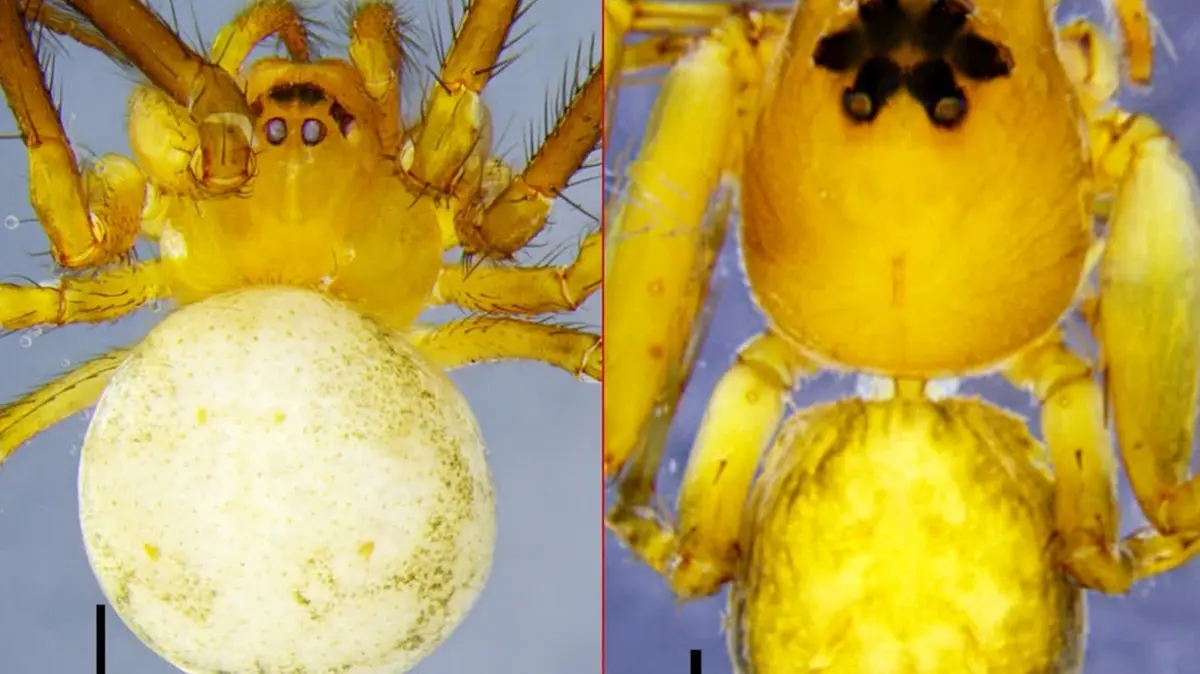
Indian scientists formally documented two new spider species. One came from the dark Krem Lawbah Cave in Meghalaya. The other came from an Andhra Pradesh forest canopy. Their contrasting habitats reveal India’s still-hidden small-animal diversity.
Background
A species is a basic scientific unit for classifying living organisms.
Closely related species form a genus; related genera are grouped into a family.
Researchers do not declare a species from appearance alone; they compare body structures, existing descriptions, locations and preserved reference specimens.
The findings then undergo expert review before publication in a scientific journal.
A recognised name has two parts; the genus comes first and the species name follows.
Both words are italicised; only the genus begins with a capital letter.
What did the Zoological Survey of India document?
The Zoological Survey of India is shortened to ZSI; ZSI scientists documented Simonia lawbah and Hamataliwa papikonda.
The two studies appeared in peer-reviewed zoological journals during 2026.
The first appeared in Zootaxa; the second appeared in ZSI’s own scientific journal.
Precise claim: These are new species; they are not the first spiders ever found in either state.
The important first records concern their genera within particular geographical areas.
| Feature | Simonia lawbah | Hamataliwa papikonda |
|---|---|---|
| Family | Theridiosomatidae, called ray spiders | Oxyopidae, called lynx spiders |
| Place | Krem Lawbah Cave, Meghalaya | Papikonda National Park, Andhra Pradesh |
| Habitat | Subterranean cave | Mixed deciduous forest canopy |
| Approximate size | Below two millimetres | Below five millimetres |
| Hunting method | Tensioned cone-shaped web | Active hunting without a capture web |
| Key first | First Indian record of genus Simonia | First Andhra Pradesh record of genus Hamataliwa |
What is special about Simonia lawbah?
Scientists found this minute spider inside Krem Lawbah Cave in Meghalaya.
Its species name refers to Lawbah, the locality containing the cave.
It belongs to Theridiosomatidae, a family commonly called ray spiders.
The record brings the genus Simonia into India’s documented fauna for the first time.
The spider measures less than two millimetres and lives in the cave environment.
Researchers describe it as troglophilic; this word means cave-loving.
A troglophile can maintain populations inside caves; it is not necessarily restricted permanently to caves.
Prelims distinction: Troglophilic does not automatically mean an obligate, cave-only species.
How does its ray web work?
- The spider first builds a small, cone-shaped web from fine silk.
- It pulls the web backwards and keeps the silk under tension.
- An approaching insect triggers the spider’s rapid release.
- The web springs forward and helps capture the insect.
This mechanism resembles a tiny biological slingshot; the web is useful in dark spaces where visual hunting is difficult.
What is special about Hamataliwa papikonda?
This species was recorded in Papikonda National Park’s mixed deciduous canopy.
The national park lies in the Eastern Ghats of Andhra Pradesh.
The species name connects the spider with Papikonda, its recorded landscape.
It belongs to Oxyopidae, whose members are commonly called lynx spiders.
The discovery is Andhra Pradesh’s first documented record of genus Hamataliwa; the yellow-bodied spider measures slightly below five millimetres.
It does not build a web for trapping prey; instead, it runs across vegetation and directly attacks small insects.
Its spiny legs help hold prey during an attack; its eight eyes form a distinctive, broadly hexagonal arrangement.
That eye pattern supports accurate tracking in a complex forest canopy.
Why do the habitats matter?
- Caves have darkness, stable temperatures and limited food supplies.
- Forest canopies receive light, wind and rapidly changing moisture.
- Small animals develop different hunting strategies under these conditions.
- Such species can disappear before science records them.
- Taxonomy provides the first step for later ecological protection.
Neither discovery alone proves the entire habitat is secure; it shows why surveys must cover caves and upper forest layers.
What is the role of ZSI?
ZSI began in 1916 and works under the Union Environment Ministry; it surveys, identifies and documents India’s animal diversity.
It also maintains the National Zoological Collections; type specimens are preserved reference specimens for scientifically named species.
Future researchers use them when checking an identification or revising a classification.
Conclusion
The two spiders show how careful taxonomy reveals biodiversity across sharply different Indian habitats.