

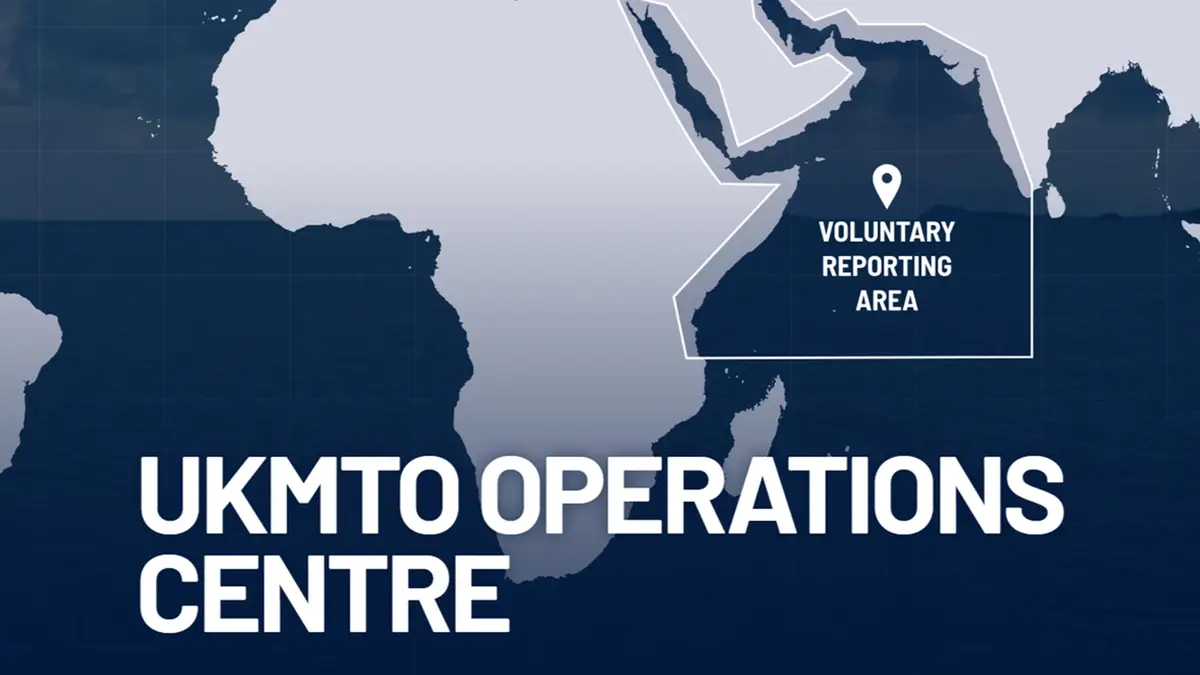
Why in news?
United Kingdom Maritime Trade Operations (UKMTO) received a tanker’s distress report on 20 August 2026. Six armed people had reportedly boarded it about 136 nautical miles east of Al-Mukalla, Yemen. They then directed the vessel towards Somalia, according to the initial report. The episode renewed concern about piracy around the Gulf of Aden and western Arabian Sea. Later statements must still establish the complete sequence and responsibility.
What UKMTO does
UKMTO is the main contact point between merchant shipping and military forces in its reporting area. It operates from the United Kingdom and is linked to the Royal Navy. Its role is informational and operational. It is not a court, regulator or commercial rescue company.
Merchant vessels can report positions, route changes, suspicious activity and security incidents. UKMTO verifies available information before publishing graded advisories. It also shares relevant reports with the Maritime Security Centre Indian Ocean. This common picture helps ships and naval forces respond faster.
How voluntary reporting works
The Voluntary Reporting Scheme covers the designated Voluntary Reporting Area. Ships may submit an initial report when entering it. Daily position reports help maintain their track. A final report closes the voyage record. Masters can send an incident report whenever danger develops.
The service is free and open to ships of every flag. Commercial details receive protected handling. Participation remains voluntary, but regular reports improve situational awareness. A distress message can also direct nearby vessels away from danger. It may guide military assistance when forces are available.
What is known about the boarding
The first alert described six armed people boarding a tanker. It placed the incident far offshore, east of Yemen’s Hadramaut coast. The assailants reportedly changed the vessel’s course towards Somalia. Public accounts did not immediately settle every detail about the ship, crew or attackers.
That uncertainty matters during a live maritime incident. Early reports can change after crew contact, tracking data or naval inspection. Responsible reporting should preserve the original attribution. It should not convert a security alert into a final finding of piracy or state involvement.
Geography of the incident
Al-Mukalla is a port on Yemen’s southern coast. Waters east of it open into the Arabian Sea. The Gulf of Aden lies farther west and narrows towards Bab-el-Mandeb. That strait links the Indian Ocean route with the Red Sea and Suez Canal.
Somalia faces the Gulf of Aden to the north and Indian Ocean to the east. Puntland occupies much of Somalia’s north-eastern coastline. These long coasts stand beside shipping routes joining Asia, Europe and East Africa. Distance from shore can delay patrol, rescue and law-enforcement responses.
Piracy and armed robbery are not identical
International law defines piracy through specific conditions. It generally covers private violence on the high seas against another ship. Armed robbery at sea usually occurs within a state’s internal, archipelagic or territorial waters. The location and evidence therefore determine the correct legal description.
The International Maritime Organization (IMO) supports cooperation against both threats. Coastal states retain responsibilities within their waters. Naval forces may deter attacks and assist endangered crews. Prosecution still needs lawful arrest, evidence preservation and jurisdiction. An operational warning does not decide criminal guilt.
Why the route remains important
Tankers and container ships use these waters while moving between the Indian Ocean and Europe. Energy cargoes from the Gulf also cross nearby routes. An attack can raise insurance, crew and security costs. Diversions around Africa add time, fuel use and freight expense.
The IMO reported renewed piracy pressure during 2026. It urged ships to follow current protective guidance and maintain vigilant watches. Naval coordination remains important, but ships also need practical defences. These include controlled access, secure communication and trained emergency teams.
An alert is not a final investigation
UKMTO circulates time-sensitive safety information for mariners. Its initial notice records what was reported at that stage. Later evidence may refine the location, vessel status or legal classification. That process makes cautious attribution essential.
Conclusion
The boarding shows why rapid, trusted maritime reporting remains necessary. UKMTO connects an isolated ship with a wider security network. However, alerts work best when later updates clearly correct or confirm early details. Regional states also need patrol coordination, lawful prosecution and safer port access. Protecting this route supports seafarers, energy flows and global trade.