

Why in news?
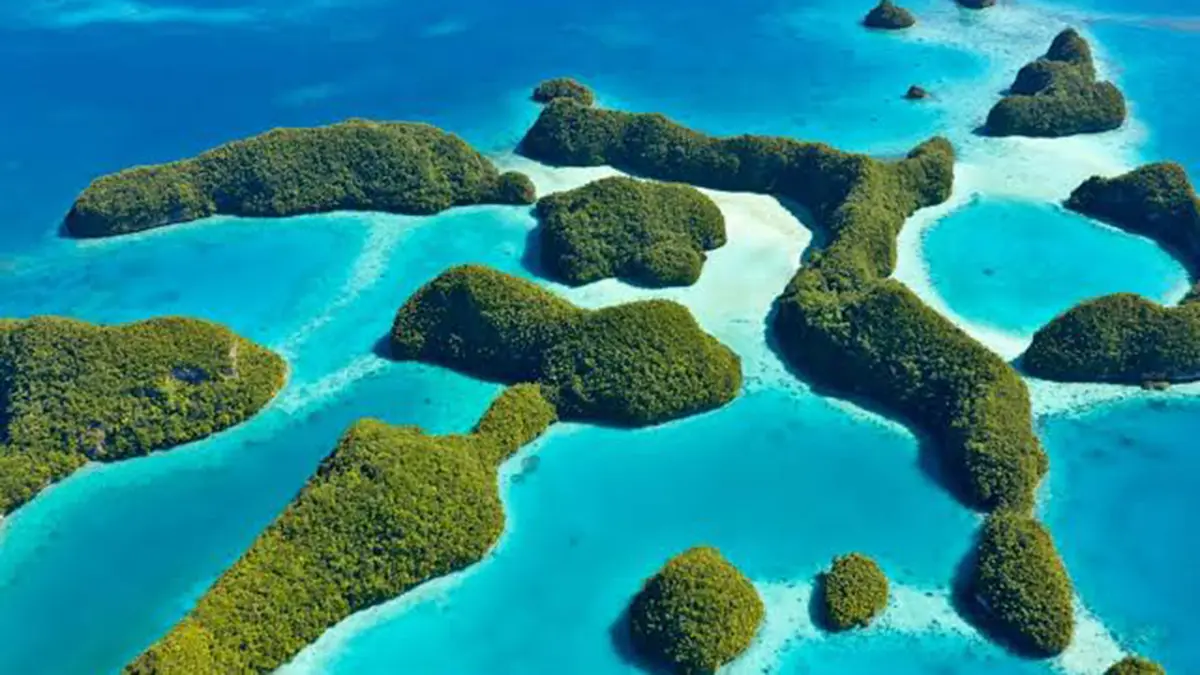
Early monitoring on Ulong Island reported ecological changes after invasive rats were removed. The island lies within Palau’s Rock Islands landscape. Project data suggested returning seabirds, rising leaf nitrogen and greater fish biomass at one monitored site.
Where Ulong fits
Palau is an island country in the western Pacific Ocean. Ulong belongs to Koror State and the Rock Islands group. The Rock Islands Southern Lagoon is a mixed natural and cultural World Heritage property. The United Nations Educational, Scientific and Cultural Organization (UNESCO) inscribed it in 2012.
The property contains hundreds of limestone islands, marine lakes and rich coral habitats. Ulong also holds important archaeological evidence.
Land and sea function together in this setting. What happens in an island forest can change nutrients reaching the surrounding reef.
Why rats were removed
People accidentally spread invasive rats across many oceanic islands. Rats eat eggs, chicks, seeds and small native animals. Ground-nesting and burrow-nesting seabirds are especially vulnerable; their colonies may shrink even when suitable nesting habitat remains.
Conservation teams removed rats from Ulong during 2023. Monitoring compared conditions before and after that intervention.
A nearby island, Ngeruktabel, retained invasive rats and served as a comparison; this strengthened the monitoring design.
The method is called Before-After-Control-Impact monitoring; it helps separate intervention effects from wider seasonal or regional change.
What the early data showed
Project monitoring recorded a 286 per cent increase in bridled tern calls. Brown noddy and white tern calls rose roughly 50 per cent; those comparisons were made against the control island. Acoustic detections indicate activity, but do not equal complete population counts.
Detections of the endangered Palau ground dove also increased. Continued surveys must determine whether this represents sustained population recovery.
One localised site showed about 80 per cent more leaf nitrogen. Total fish biomass there increased by 183 per cent.
These are striking results, but they came from one site. They should not describe every reef around Ulong.
Promising evidence, not a finished verdict
The figures came from an ongoing conservation project’s early monitoring. Wider analysis and longer observation are still needed. The project release should not be confused with a completed, peer-reviewed ecosystem assessment.
How seabirds connect land and sea
Seabirds feed at sea and deposit guano on land; that process transfers marine nutrients into island soils. Rain and groundwater can carry part of this nitrogen toward coastal waters. Nutrients may then influence algae, invertebrates and fish.
More nutrients are not always beneficial in every coastal setting; the amount, timing and ecological context determine their effect.
On relatively intact island reefs, natural seabird inputs can restore a disrupted nutrient pathway. This differs from untreated sewage or farm runoff.
Governance and wider meaning
The work involved Koror State, Palauan teams, scientists and conservation organisations. More than 100 local participants supported field monitoring; local leadership matters because eradication requires long-term biosecurity. A reinvasion could undo ecological gains quickly.
Boats, cargo and visitor gear therefore need practical controls. Public cooperation becomes part of conservation infrastructure.
Palau already uses protected areas and marine policy to manage connected ecosystems. Ulong adds evidence for integrating terrestrial and marine decisions.
The approach may inform other islands, but ecological results cannot be copied mechanically. Island size, species and ocean conditions differ.
Conclusion
Ulong offers an encouraging example of ridge-to-reef restoration. Removing one invasive predator may restart several ecological relationships; its strongest lesson is methodological caution. Early gains deserve protection, continued monitoring and honest reporting about their geographic limits.