
Why in news?
Volcanic eruptions in recent months brought the term tephra into news reports. People often confuse ash and other ejecta; understanding these materials is crucial for assessing hazards.
Background
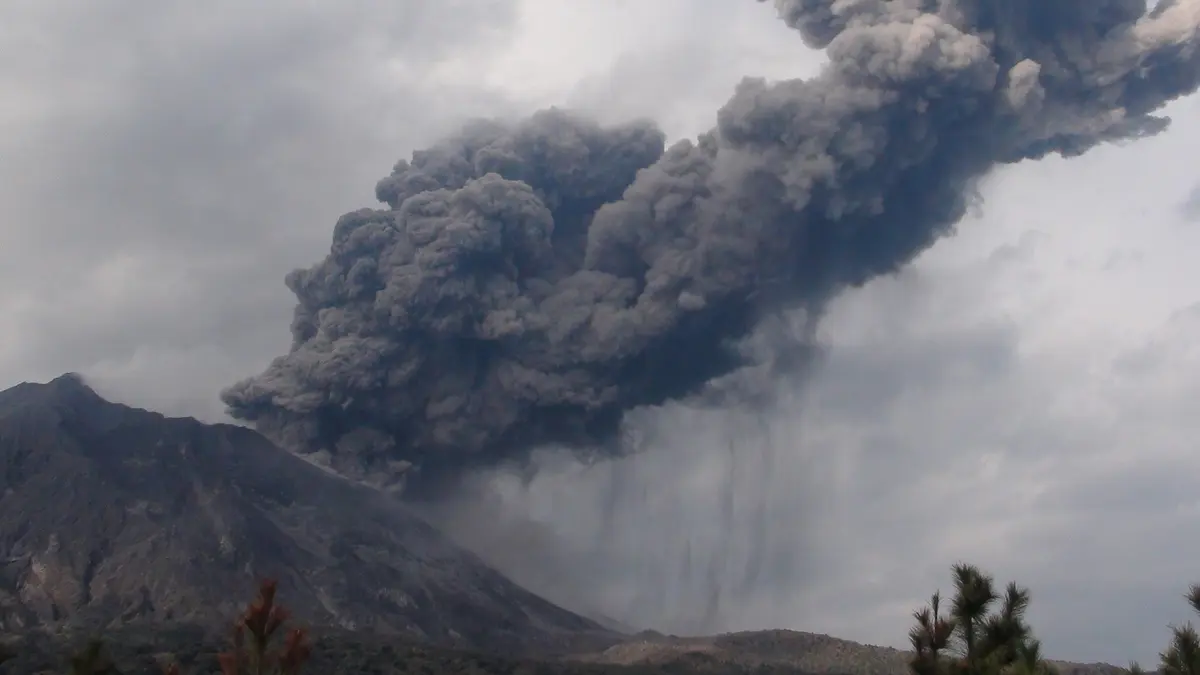
The word tephra comes from a Greek term meaning “ash.” In volcanology it refers to all solid material thrown into the air during an eruption, regardless of size. When magma rises towards the surface, expanding gas shatters it into fragments. These fragments solidify in the atmosphere and fall back to the ground as tephra.
Key facts
- Size classes: Tephra is categorised by grain size. Volcanic ash is the finest material (less than 2 millimetres) that feels like powdered stone. Lapilli are gravel‑sized (2–64 mm) and may be molten when ejected. Larger blocks and bombs (>64 mm) are chunks of solidified lava or ripped‑up rock.
- Hazards: Tephra can blanket landscapes like gritty snow, damaging crops, contaminating water and collapsing roofs. Ash is abrasive and can clog machinery, short‑circuit power lines and impair aircraft engines. Fine particles can travel thousands of kilometres in the atmosphere.
- Deposition patterns: Tephra thickness decreases with distance from the vent. Near the volcano, deposits may be metres thick with coarse lapilli; farther away only fine ash settles. Wind direction during the eruption determines where tephra falls.
- Environmental impacts: Ash and other tephra can enrich soils with nutrients but also cause respiratory problems in people and animals. Ash clouds may disrupt aviation and reduce sunlight, affecting climate in the short term.
- Monitoring and response: Volcano observatories monitor ash emissions using seismic, satellite and radar instruments. Warning systems help communities prepare by shutting down airports, covering machinery and staying indoors when ashfall is expected.
Why is it important?
Understanding tephra helps authorities anticipate hazards following explosive eruptions. Clear terminology also improves public awareness so that warnings are not misinterpreted. Studies of tephra layers in sediments provide clues to past eruptions and help scientists estimate the frequency of large volcanic events.
Sources: USGS.

