

Why in news?
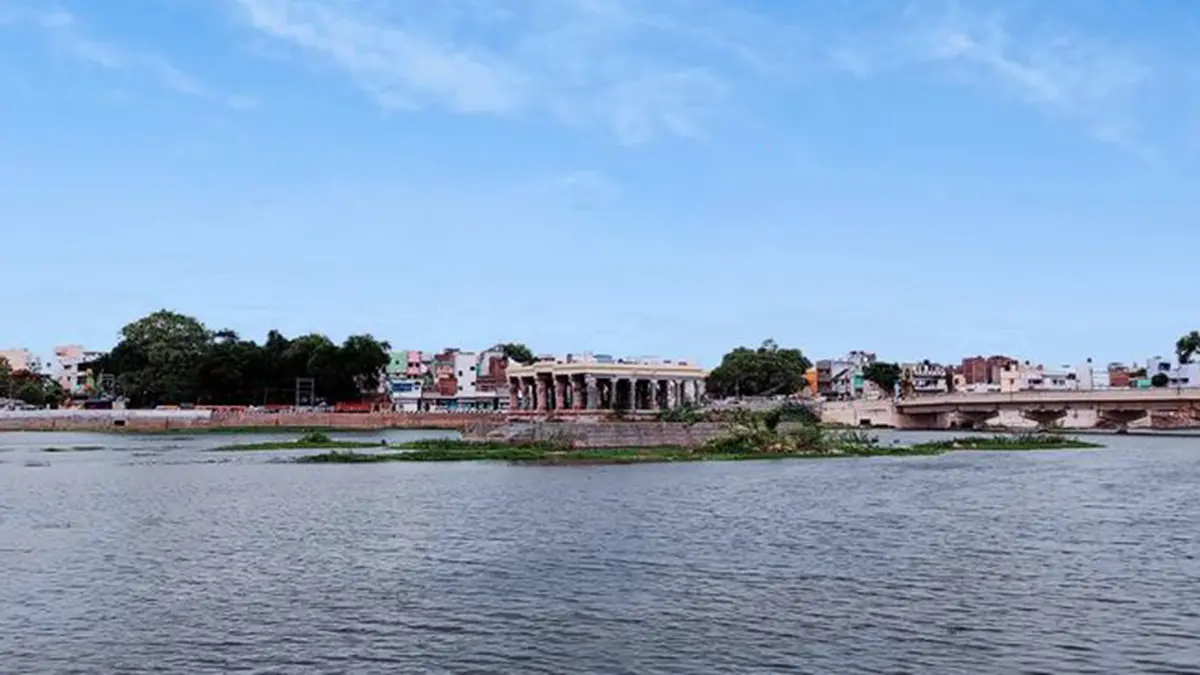
The Madras High Court in June 2026 directed local bodies in five districts to prepare a comprehensive plan to reduce pollution in the Vaigai River. The court acted after petitions highlighted untreated sewage and industrial waste contaminating the waterway.
Background
The Vaigai originates on the eastern slopes of the Varusanadu hills in the Western Ghats at about 1,200 metres elevation. It flows roughly 258 kilometres east and south‑east through the districts of Theni, Dindigul, Madurai, Sivaganga and Ramanathapuram before emptying into the Palk Bay. The river drains a basin of about 7,741 square kilometres and receives major tributaries such as the Suruliyar and Manjalar on its left bank. The Vaigai Dam, built downstream of the Suruliyar confluence, provides irrigation and drinking water to Madurai. Historically, the river nourished the ancient city of Madurai and features in Sangam literature. A popular legend links its origin to the divine marriage of Goddess Meenakshi and Lord Sundareswarar, celebrating the river during the annual Chithirai festival.
Key points
- Pollution concerns: Untreated sewage, plastic waste and industrial effluents have degraded water quality. Deforestation in the Megamalai forests, which feed the river, reduces rainfall infiltration and has caused sections to dry up. The court asked authorities to install sewage treatment plants and enforce waste‑management rules.
- Action plan: Local bodies in Theni, Dindigul, Madurai, Sivaganga and Ramanathapuram must coordinate with state agencies to restore natural flow, prevent illegal sand‑mining and remove encroachments from the riverbanks.
- Cultural importance: The Vaigai is central to the identity of Madurai. Festivals such as the Chithirai procession and the dip of Lord Kallalagar in the river depend on sufficient water flow. Reviving the river supports cultural practices as well as agriculture.
- Need for conservation: Experts stress that restoring forest cover in the catchment, controlling pollution and promoting water harvesting will be essential to revive the river. Community participation and awareness campaigns can complement legal directives.
Conclusion
Revitalising the Vaigai is critical for the ecology and heritage of southern Tamil Nadu. A combination of legal enforcement, scientific management and public engagement is needed to bring the river back to health.