
Why in news?
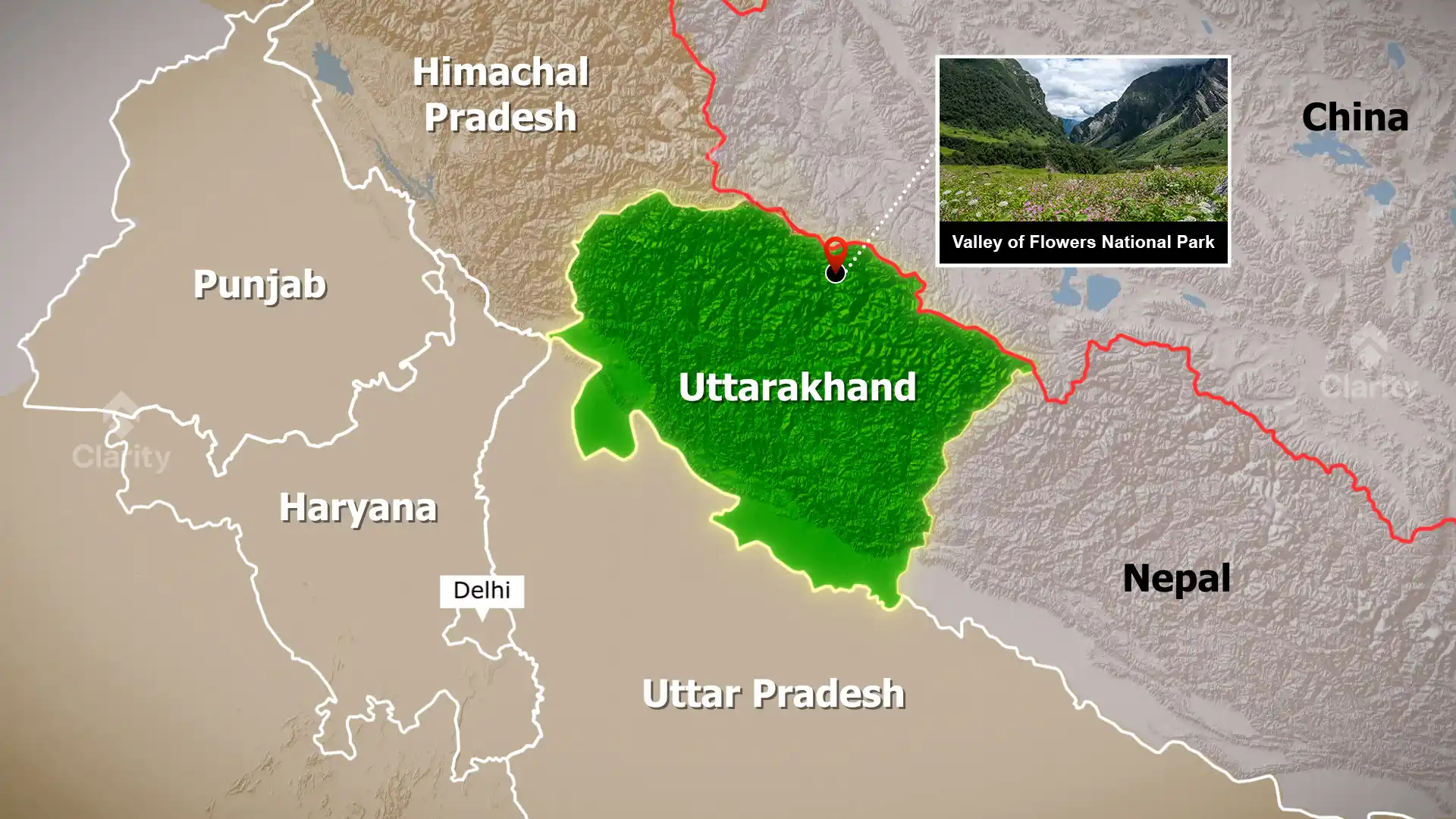
The Valley of Flowers National Park in Uttarakhand, part of the Nanda Devi and Valley of Flowers World Heritage Site, opened to tourists for the summer season. On the first day of opening, 49 visitors obtained permits through the park’s online and offline systems. The park remains open to tourists until early October.
Background
Nestled in the high Garhwal Himalayas of Chamoli district, the Valley of Flowers was popularised by British mountaineer Frank Smythe, who stumbled upon its alpine meadows in 1931. It was declared a national park in 1982 and, together with the nearby Nanda Devi National Park, was inscribed on the UNESCO World Heritage list in 1988 (the valley was formally added in 2005). The valley is renowned for carpets of endemic alpine flowers and outstanding natural beauty. It forms a transition zone between the Zanskar range and the Greater Himalaya. Rare animals such as the Asiatic black bear, snow leopard, brown bear and blue sheep find refuge in its meadows.
Visiting guidelines and highlights
- Season and permits: The park is open from June to early October when snow has melted and flowers bloom. Visitors must obtain entry permits, available online and at the entry gate. Only day visits are allowed; camping within the park is prohibited.
- Biodiversity: More than 300 species of flowering plants bloom in succession, including blue poppies, primulas and Himalayan bellflowers. Medicinal herbs grow on slopes, and the valley supports butterflies and pollinating insects.
- Ecotourism practices: Tourists are advised to stay on designated trails, avoid plucking flowers and carry their waste out of the valley. Local porters and guides offer services, providing livelihoods to nearby villages while ensuring minimal environmental impact.
- Access: The trek to the valley begins at Govindghat. Visitors hike from Ghangaria, a small settlement with accommodation facilities. The journey passes through lush forests, waterfalls and mountain streams.
Conclusion
The opening of the Valley of Flowers invites nature lovers to witness the Himalayas’ floral spectacle. Responsible tourism, respecting park rules and supporting local communities, will help preserve this fragile ecosystem for future generations.