

Why in news?
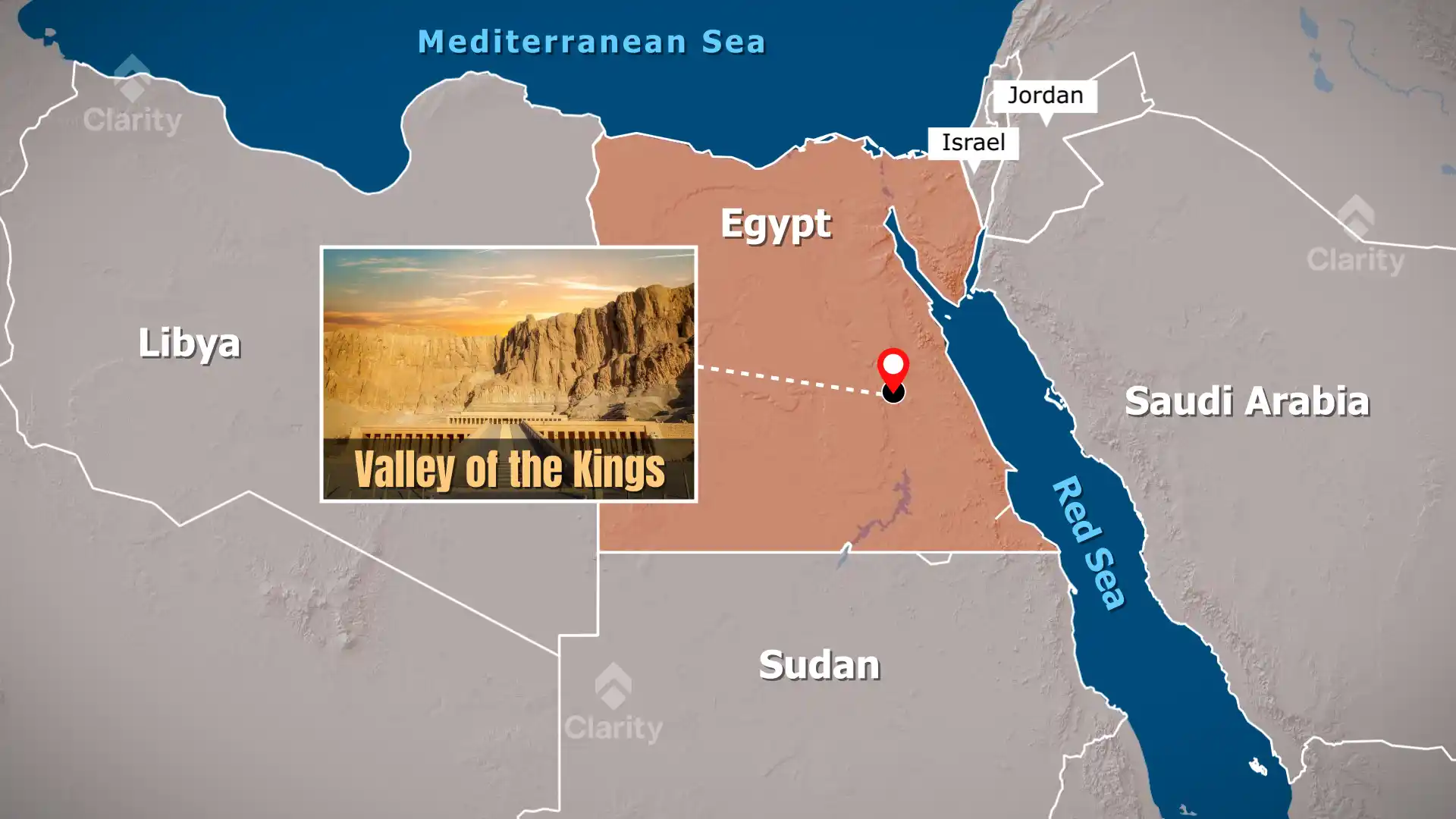
Researchers announced the discovery of nearly 30 inscriptions written in Tamil Brahmi, Prakrit and Sanskrit inside tombs at Egypt’s famed Valley of the Kings. The inscriptions, dated between the 1st and 3rd centuries CE, shed light on ancient trade links between Tamilakam (present‑day Tamil Nadu and Kerala), other parts of India and the Roman Empire.
Background
The Valley of the Kings, located near Luxor in southern Egypt, served as the burial ground for pharaohs of the New Kingdom (18th‑20th dynasties). Traditionally only royal tombs were carved into rocky hillsides, but visitors from various lands left graffiti on the walls. French scholar Jules Baillet catalogued more than 2 000 Greek graffiti marks in 1926.
Key findings
- Interdisciplinary study: Scholars Charlotte Schmid (French School of Asian Studies) and Ingo Strauch (University of Lausanne) documented the inscriptions across six tombs during fieldwork in 2024–25. They presented their research at the International Conference on Tamil Epigraphy.
- Names of visitors: Many inscriptions simply record personal names, indicating that Indian travellers followed the local custom of carving their names inside tombs. The name Cikai Koṟraṉ appears eight times on five tombs. Other names like Kopāṉ varata kandan, Cātaṉ and Kiraṉ are also inscribed.
- Cultural connections: Scholars note that the name Koṟraṉ appears in Sangam literature and other finds from Berenike, suggesting links between Chera‑era traders and Egypt. The inscriptions support archaeological evidence of Indian trade through Red Sea ports to the Nile valley.
Significance
These inscriptions provide direct evidence of Indian presence deep inside royal Egyptian tombs. They illustrate the cosmopolitan nature of the ancient trade networks and highlight how merchants and pilgrims from Tamilakam left their mark alongside Greek and Latin visitors. Historians see the findings as a reminder of India’s long‑standing maritime connections with the Mediterranean world.
Sources: The Hindu