

Why in news?
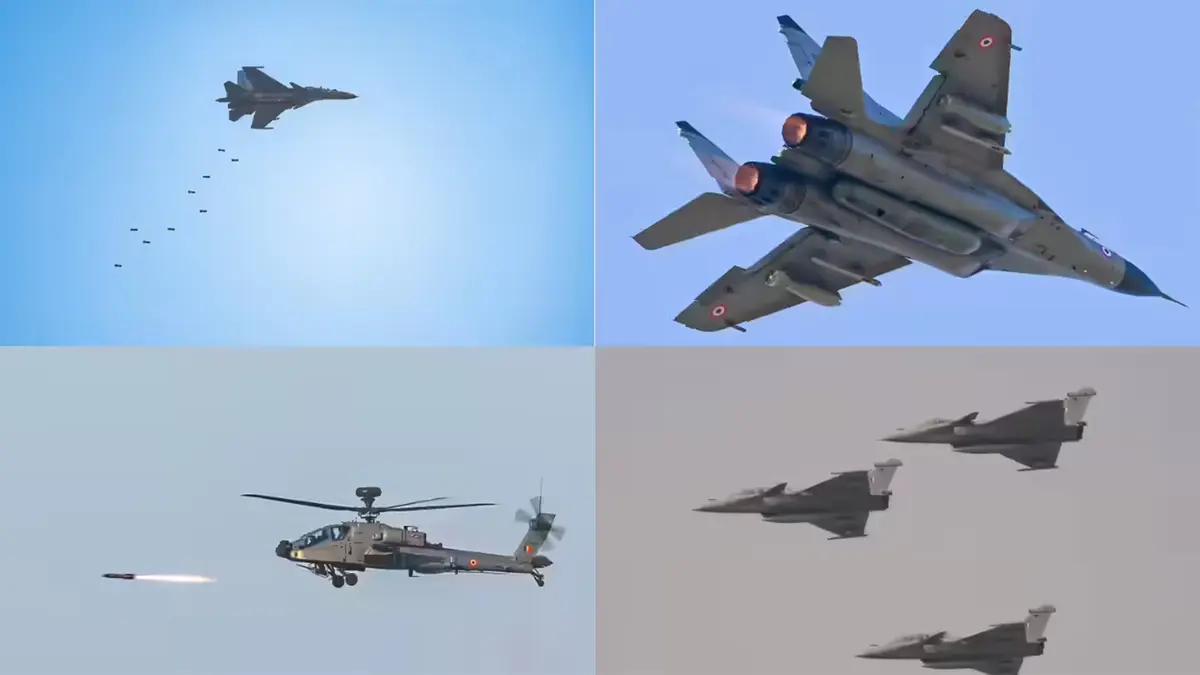
The Indian Air Force (IAF) has announced that its biennial Vayu Shakti exercise will be held on 27 February 2026 at the Pokhran range near Jaisalmer. The drill will showcase the IAF’s ability to deliver firepower day and night and test its integrated air‑defence systems. This year’s edition will feature more than a hundred aircraft – from Rafale fighters to Prachand attack helicopters – and will include the first night assault landing by the new C‑295 transport aircraft. Senior military leaders and civilian authorities are expected to witness the demonstration.
Background
Vayu Shakti is a large‑scale aerial gunnery and firepower exercise conducted by the IAF every two years. It began in 1989 to display the force’s offensive capabilities and to rehearse complex missions over desert terrain. During the drill, aircraft launch from bases across India and converge on the Pokhran range to attack simulated targets. The exercise helps pilots practise coordinated strikes, testing weapons ranging from precision‑guided munitions to free‑fall bombs. It also allows air‑defence units to integrate radar, missile and gun systems under the Integrated Air Command and Control System (IACCS).
Major features of the 2026 edition
- Wide range of aircraft: Fighters such as Rafale, Su‑30 MKI, MiG‑29, Mirage‑2000 and indigenous Tejas will conduct bombing and strafing runs. Heavy lift Chinook helicopters, Prachand (LCH), Mi‑17 and Mi‑35 attack helicopters will perform assault manoeuvres, while C‑295 and C‑130 transport planes will carry out tactical landings.
- Integrated air‑defence drills: Surface‑to‑air missiles like the Akash system and anti‑aircraft guns such as the L‑70 will fire at practice targets. The IACCS will oversee the real‑time coordination between airborne and ground‑based assets, demonstrating how the IAF detects, tracks and neutralises threats.
- Night operations: A highlight of the 2026 exercise will be a night assault landing by the indigenously assembled C‑295 aircraft. Night bombing and helicopter assaults will also be demonstrated to show round‑the‑clock readiness.
- Drones and loitering munitions: Unmanned aerial vehicles will join manned aircraft to mark targets and deliver precision strikes, illustrating the growing role of drones in modern warfare.
Significance
- Operational readiness: By rehearsing complex missions with multiple aircraft types, Vayu Shakti ensures that pilots and ground crews can execute coordinated strikes during war or crises.
- Integration with air defence: The exercise tests the synergy between offensive air power and defensive systems, helping the IAF refine its doctrine for networked warfare.
- Public confidence: Demonstrating firepower in front of national leaders and citizens reassures the public about India’s preparedness and deters potential adversaries.
Conclusion
With its focus on joint operations, new aircraft and real‑time command systems, Vayu Shakti 2026 will highlight how the IAF is adapting to evolving threats. The drill serves both as training for aircrews and as a message of strength aimed at safeguarding India’s skies.
Sources: India Today