

Why in news?
On 26 February 2026, thirteen Class XI students from Ariyakudi Government Higher Secondary School in Tamil Nadu’s Sivagangai district successfully launched a mini satellite named Vikko Sat‑1. Their achievement drew praise from scientists and showcased the creativity of rural students.
Background
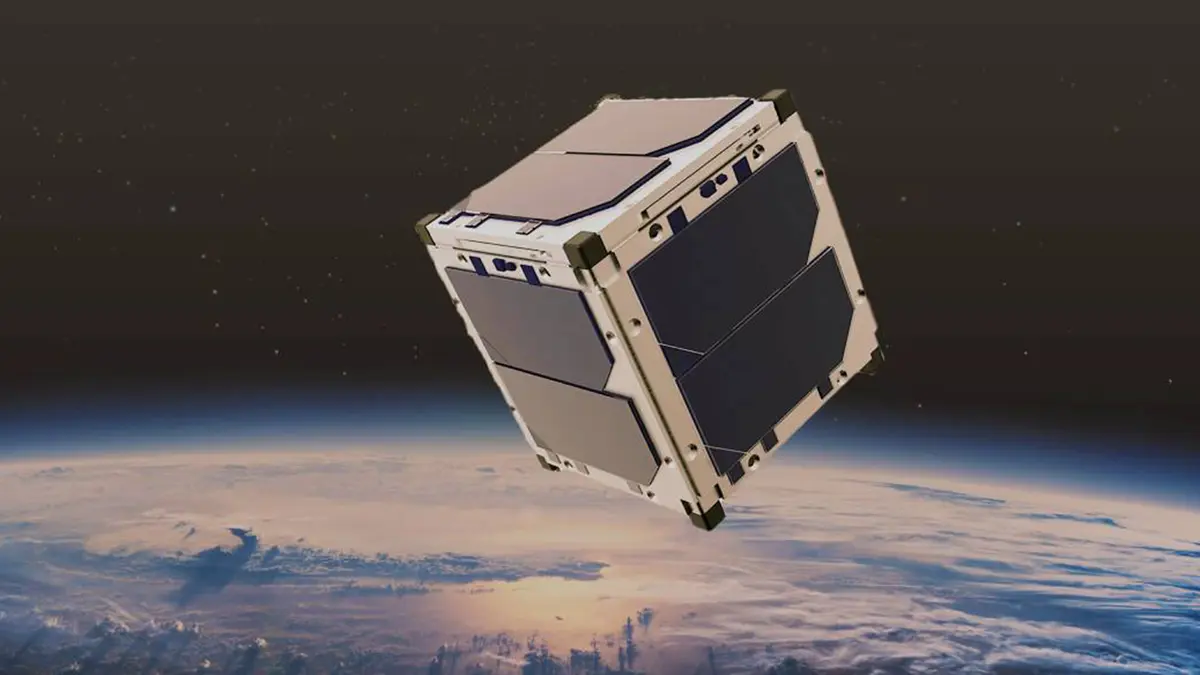
Vikko Sat‑1 is a 600‑gram mini satellite designed to study biological particles high in the atmosphere. The students developed the device over six months with guidance from teachers and mentors. It was carried into the stratosphere by a helium balloon to a height of about 22 km. At that altitude the air is thin and cold, making it difficult for researchers on the ground to collect samples.
How it works
- Scientific goal: The satellite is equipped with five specialised sensors and adhesive surfaces to capture fungal spores in the stratosphere. These spores can drift long distances and may affect agricultural crops when they descend to lower layers.
- Low‑cost design: By building the device themselves, the students demonstrated that meaningful scientific experiments can be conducted with limited resources. The project emphasised hands‑on learning and problem‑solving.
- Data collection: Sensors on board recorded environmental conditions and captured spores. After the flight, the payload was retrieved intact, allowing the samples to be analysed in the school’s laboratory.
Significance
The launch of Vikko Sat‑1 highlights how science education is evolving in India. Engaging students in real research fosters curiosity and may encourage more young people to pursue careers in science and technology. The mission also provides valuable data on how fungal spores behave in the upper atmosphere, which could help farmers anticipate disease outbreaks.
Source: India Today