

Why in news?
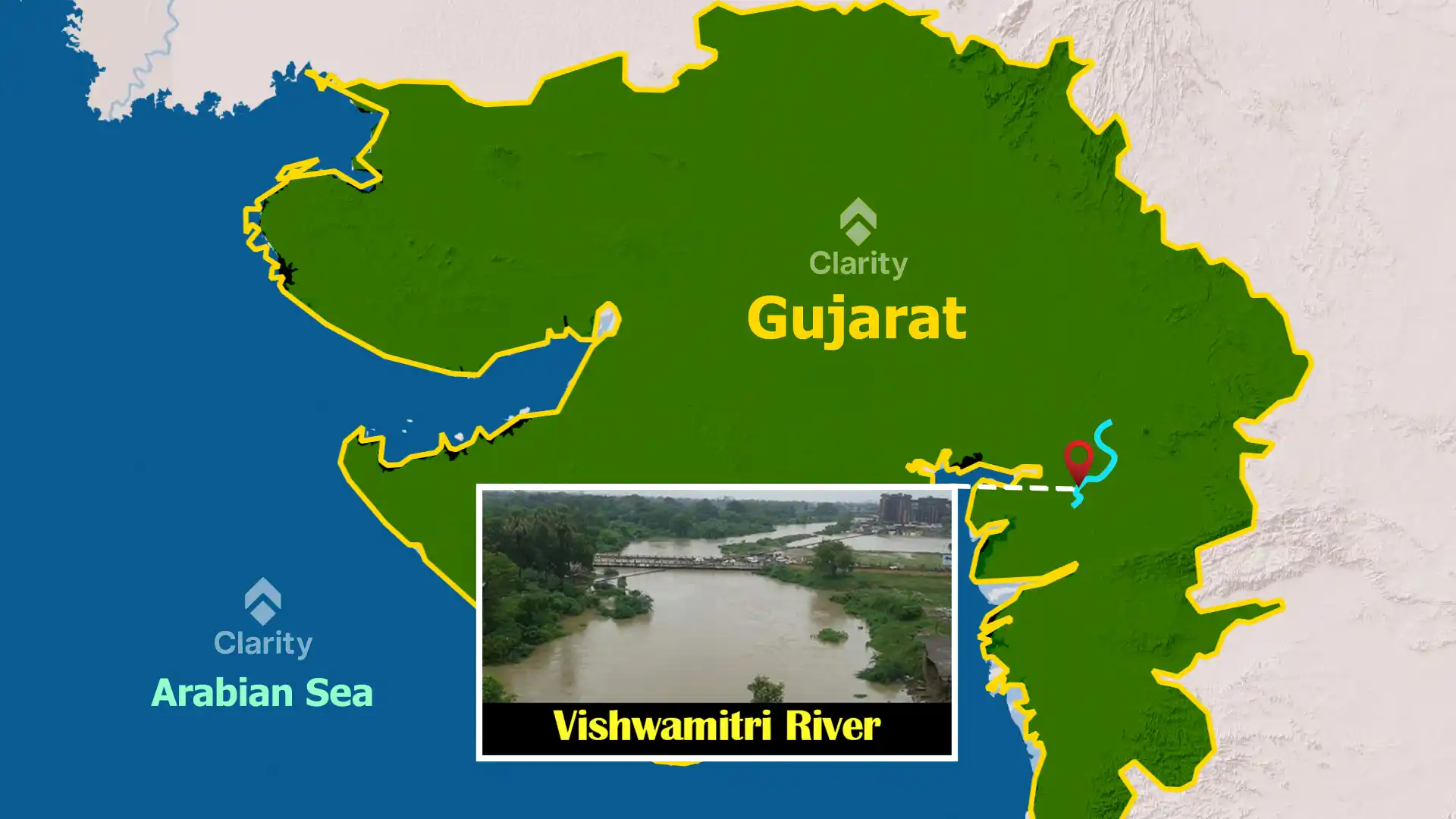
The Vishwamitri River, which flows through Vadodara city in Gujarat, gained attention for its unique urban ecosystem. It supports a large population of mugger crocodiles and other wildlife even as it runs through a densely populated urban landscape. Conservationists emphasise the need to balance urban development with protection of the river’s biodiversity.
Background
Vishwamitri is a non‑perennial river originating from the western and southern slopes of the Pavagadh hills in the Panchmahal district of Gujarat. Human settlements along its banks date back to at least 1,000 B.C., and the river was central to Vadodara’s growth. The name is believed to derive from the sage Vishwamitra. Pollution, encroachment and flooding pose challenges to the river’s health, prompting calls for restoration.
Course and characteristics
- Length: Approximately 200 km long.
- Course: The river rises in the Pavagadh hills and flows westward through Vadodara, receiving the Dhadar and Jambuva tributaries before emptying into the Gulf of Khambhat in the Arabian Sea.
- Catchment: The river lies between the perennial Mahi and Narmada rivers. Dams such as Ajwa and Pratappura reservoirs regulate its flow and provide water to Vadodara.
- Urban ecosystem: The Vishwamitri’s ravines and wetlands are home to animals such as porcupines, civets, jungle cats, snakes, monitor lizards and especially mugger crocodiles. A 2025 census recorded around 442 muggers in a 21‑km stretch within Vadodara. The crocodiles co‑exist with urban residents, earning the river the nickname “India’s Crocodile River”.
Key facts about mugger crocodiles
- Species: The mugger or marsh crocodile (Crocodylus palustris) is one of 24 existing crocodilian species worldwide.
- Distribution: Its range spans southeastern Iran to Bangladesh and from Nepal through India to Sri Lanka. In India it inhabits rivers, lakes and ponds in at least 15 states.
- Habitat: Prefers freshwater environments but can tolerate brackish waters. Adults dig burrows on riverbanks to escape heat.
- Size: Adults typically reach 4–5 metres in length and weigh up to 700 kg. They have broad snouts and rough, muddy brown scales.
- Conservation: Listed as Vulnerable on the IUCN Red List. Threats include habitat loss, pollution and conflict with humans.
Source: Indian Express