

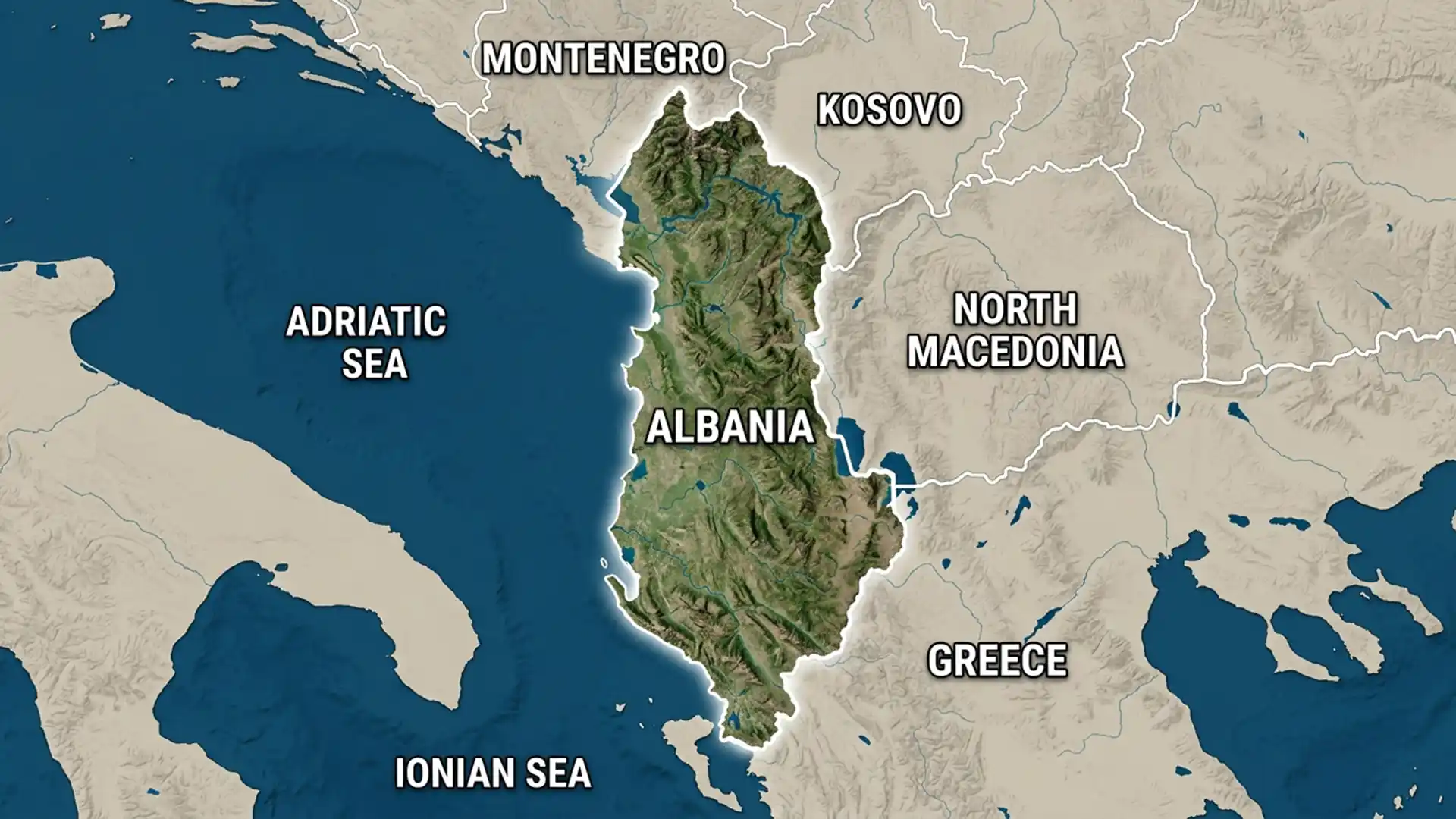
Thousands of Albanians have been protesting in the capital Tirana and other cities. They oppose a US $1.6 billion luxury resort and casino complex planned in the Vjosa–Narta Protected Area on Albania’s coast. The project is linked to international investors and has drawn criticism from environmental groups. Demonstrators carry inflatable flamingos to symbolise the threatened wetlands.
Background
Albania is a mountainous country on the Balkan Peninsula. It lies on the Adriatic and Ionian Seas and borders Montenegro, Kosovo, North Macedonia and Greece. The capital is Tirana, and the country spans about 28,748 km² with a population of around 2.36 million. Roughly three‑quarters of the land is rugged hills and mountains, and the highest peak is Mount Korab at 2,764 m.
The Vjosa–Narta Lagoon is a protected wetland at the mouth of the Vjosa River. It is an important stopover for migratory birds flying between Europe and Africa. Over 200 bird species, including flamingos, the endangered loggerhead turtle and monk seal, depend on this habitat. In 2024 the Albanian parliament removed a ban on construction in protected areas, and the government granted “strategic investor” status to a consortium planning hotels, villas and an international casino near the lagoon.
Protests and concerns
- Environmental impact: Conservation groups warn that building resorts and an airport will destroy habitats of flamingos and other species. The lagoon hosts more than 70 endangered species.
- Lack of transparency: Critics say the government approved the project without proper environmental assessment. They demand that details of the plan and its investors be made public.
- Government position: Prime Minister Edi Rama insists the project will proceed, calling it an opportunity for tourism development. He promises to protect wildlife but says the resort is essential for economic growth.
- Symbol of resistance: Protesters carry inflatable pink flamingos and signs reading “Albania is not for sale.” Demonstrations have continued for weeks, highlighting rising civic activism.
Significance
The controversy pits economic development against environmental protection. Albania aims to attract investment and tourism. At the same time, the Vjosa–Narta area is one of Europe’s few intact coastal wetlands. The protests show growing public awareness of ecological issues and demand for transparency. The outcome will set a precedent for protected areas in the region.
Conclusion
Albania’s Vjosa–Narta dispute highlights the challenge of balancing growth with conservation. Protecting unique ecosystems is vital, but sustainable tourism could also provide jobs and revenue. Open dialogue and sound environmental assessments are necessary before altering fragile habitats.
Sources: IE