

Why in news?
Wildlife experts reported in February 2026 that although breeding among vultures has declined in the Wayanad Wildlife Sanctuary of Kerala, the population remains stable at around 80 birds. The assessment reassured conservationists while highlighting the need to minimise disturbances.
Background
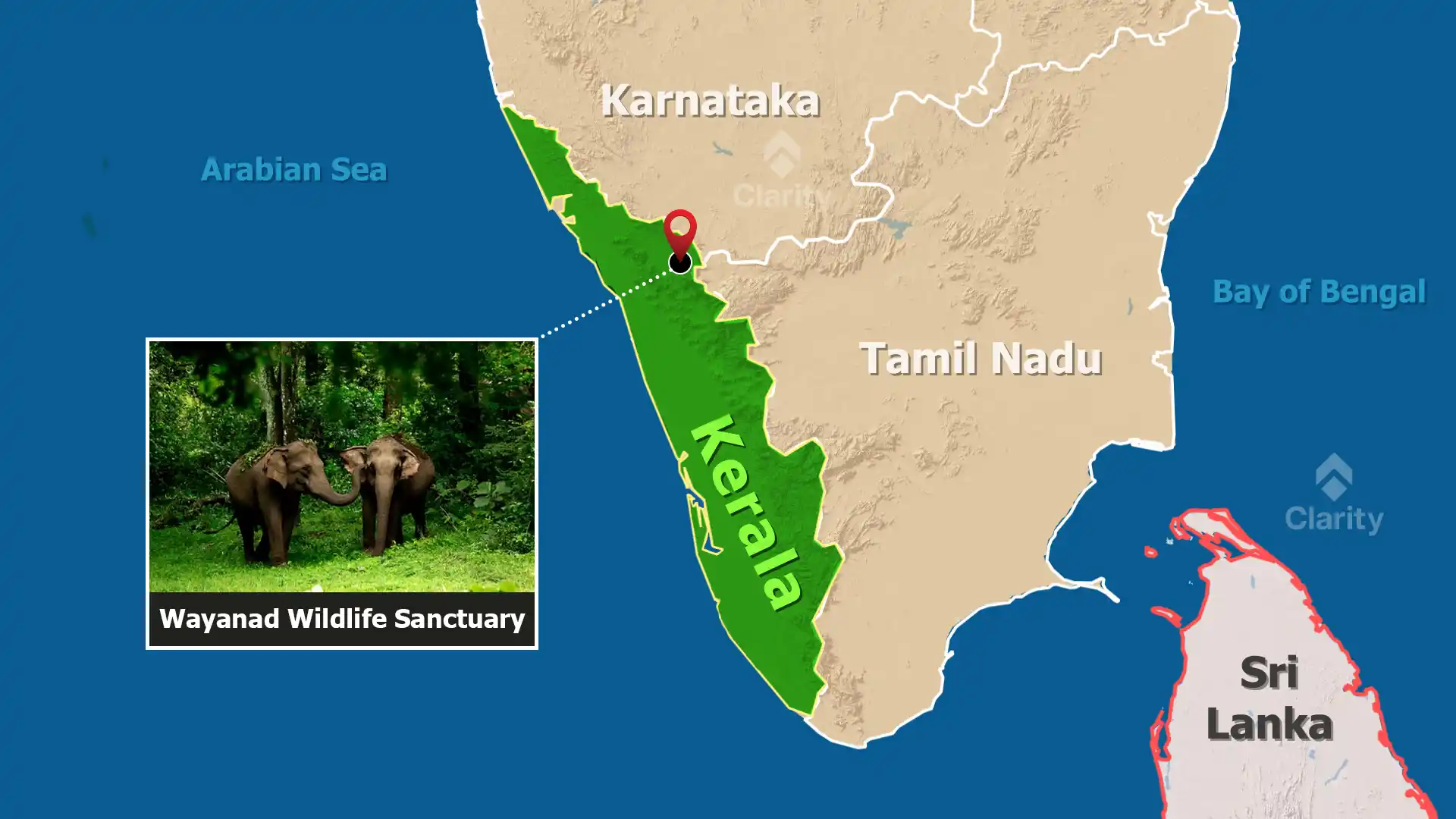
Located in Wayanad district on the southern slopes of the Western Ghats, the sanctuary was established in 1973 and covers about 344 km². It forms part of the Nilgiri Biosphere Reserve, a UNESCO World Heritage Site, and is also known as Muthanga Wildlife Sanctuary. The area is divided into two ranges — Tholpetty in the north and Muthanga in the south — and is bordered by the protected areas of Nagarhole and Bandipur in Karnataka and Mudumalai in Tamil Nadu.
Natural features
- Habitats: The sanctuary is a mosaic of moist deciduous, dry deciduous and semi‑evergreen forests, interspersed with plantations of teak, rosewood, eucalyptus and silver oak. Rivers such as the Kabini, Cherupuzha and Bavali flow through the area, providing water for wildlife.
- Flora and fauna: Wayanad supports one of India’s largest populations of Asian elephants and tigers. Other mammals include leopards, gaur (Indian bison), sambar deer, wild boars, sloth bears and jungle cats. More than 200 bird species have been recorded, including peafowl, Malabar grey hornbill, babblers and woodpeckers.
- Tribal communities: Indigenous groups such as the Paniyas, Kattunaikkans, Kurumas, Ooralis, Adiyans and Kurichiyas live in and around the sanctuary. They play a role in conservation through eco‑development committees.
Conservation significance
As part of Project Elephant and Project Tiger, the sanctuary works to protect endangered species and restore habitats. Conservation programmes include anti‑poaching patrols, habitat restoration and community outreach. Stable vulture numbers are an indicator of ecosystem health, as vultures provide natural sanitation by feeding on carcasses.
Source: The Hindu