

Why in news?
Ornithologists have warned of the precarious status of the white‑rumped vulture after recent counts suggested fewer than 6,000 mature individuals remain. Awareness campaigns seek to draw attention to the species’ ecological role and the urgent need for its protection.
Background
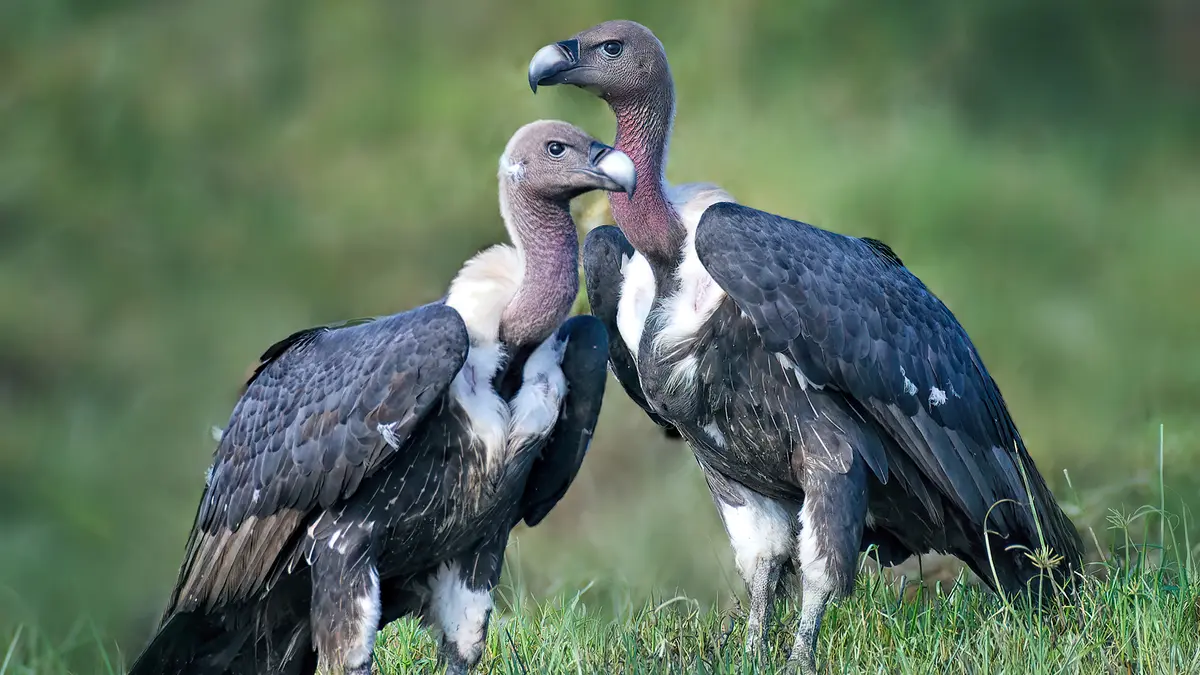
The white‑rumped vulture (Gyps bengalensis) was once one of the most abundant birds of prey in South Asia, soaring over villages and farmlands in India, Nepal and Bangladesh. It is the smallest member of the Gyps vultures but still measures 75–93 cm long with a wingspan up to 2.6 metres. Adults have a dark body with a contrasting white back and rump, a white neck ruff and a bald pink head.
Ecology and behaviour
- Scavenging lifestyle: Like other vultures, it feeds primarily on carcasses, locating them by soaring high on thermals and watching the behaviour of other scavengers.
- Nesting habits: The species nests in colonies on tall trees such as banyan, peepul and arjun near human settlements. Each pair lays a single egg between November and March.
- Social species: White‑rumped vultures often roost and feed in large flocks, cleaning carcasses within minutes and helping to prevent the spread of diseases.
Decline and threats
- Diclofenac poisoning: In the 1990s the veterinary drug diclofenac, used to treat cattle, caused kidney failure in vultures feeding on contaminated carcasses. Populations crashed by more than 95 % within a decade.
- Habitat loss: Felling of large nesting trees, urban expansion and collision with powerlines have further reduced their numbers.
- Slow recovery: Although diclofenac is now banned for veterinary use in India and Nepal, illegal use persists and recovery is sluggish due to the species’ low reproductive rate.
Conservation measures
Breeding centres have been established in India and Nepal to rear chicks in captivity and release them into the wild. “Vulture restaurants,” where safe, diclofenac‑free carcasses are provided, help sustain wild populations. Continued public awareness and enforcement of the veterinary drug ban are vital to ensure the species’ survival.
Sources: The Hindu