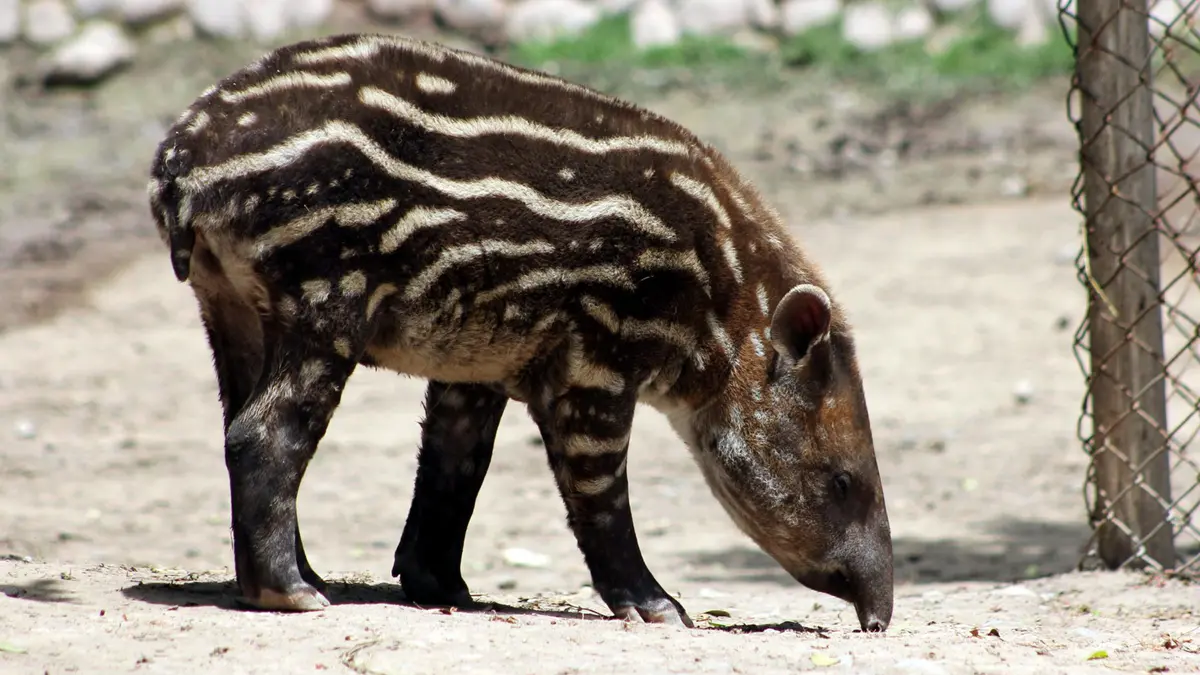
Why in news?
Every year on 27 April conservationists celebrate World Tapir Day. The day aims to raise awareness about the threats facing tapirs and to highlight their ecological importance. Human encroachment into forest habitats has pushed many tapir species towards extinction.
Background
Tapirs are large, plant‑eating mammals. They are sometimes called “living fossils” because they belong to an ancient lineage that has remained relatively unchanged for millions of years. Tapirs have short, flexible snouts that function like miniature trunks. These snouts help them pluck leaves and fruit, and they also make tapirs good swimmers.
Species and distribution
- Malayan tapir (Tapirus indicus): The largest species. Its distinctive black‑and‑white colour helps it hide among rainforest shadows in Southeast Asia. Status: Endangered.
- Baird’s tapir (Tapirus bairdii): Central America’s biggest land mammal, found in tropical forests and near rivers. Status: Endangered.
- Lowland tapir (Tapirus terrestris): Also called the South American tapir, it is the most widespread. It lives in the Amazon basin and other lowland forests. Status: Vulnerable.
- Mountain tapir (Tapirus pinchaque): The rarest species, living in the high Andes. It is adapted to cold, misty cloud forests. Status: Endangered.
Ecological role
- Seed dispersers: Tapirs eat fruits and defecate seeds far from the parent tree. This makes them “gardeners of the forest” and helps maintain healthy plant diversity.
- Habitat requirements: Tapirs need large, undisturbed tracts of forest to maintain genetically diverse populations. When humans cut forests for agriculture or roads, tapirs are often the first to disappear and the last to return.
Conservation challenges
- Habitat loss: Deforestation for farming, logging and development is the main threat. Fragmented habitats make it hard for tapirs to find mates and food.
- Hunting and poaching: In some regions tapirs are hunted for their meat and hide.
- Low reproductive rate: Female tapirs give birth to a single calf after a long gestation of about 13 months. This means populations recover slowly.
Conclusion
World Tapir Day encourages people to learn about tapirs and support habitat protection. Conserving forests in South America, Central America and Southeast Asia will not only save these gentle creatures but also benefit countless other species.
Source: News On AIR