Why in news?
China has completed an 11.18 kilometre underwater section of a high‑speed railway tunnel beneath the Yangtze River as part of the Chongming–Taicang project. The tunnel connects Chongming Island in Shanghai to Taicang in Jiangsu province and will carry next‑generation CR450 bullet trains at speeds of up to 350 km/h. Engineers used a colossal shield‑tunnelling machine nicknamed “Linghang” to bore through clay and silt, making this the longest underwater high‑speed railway tunnel in the world.
Background
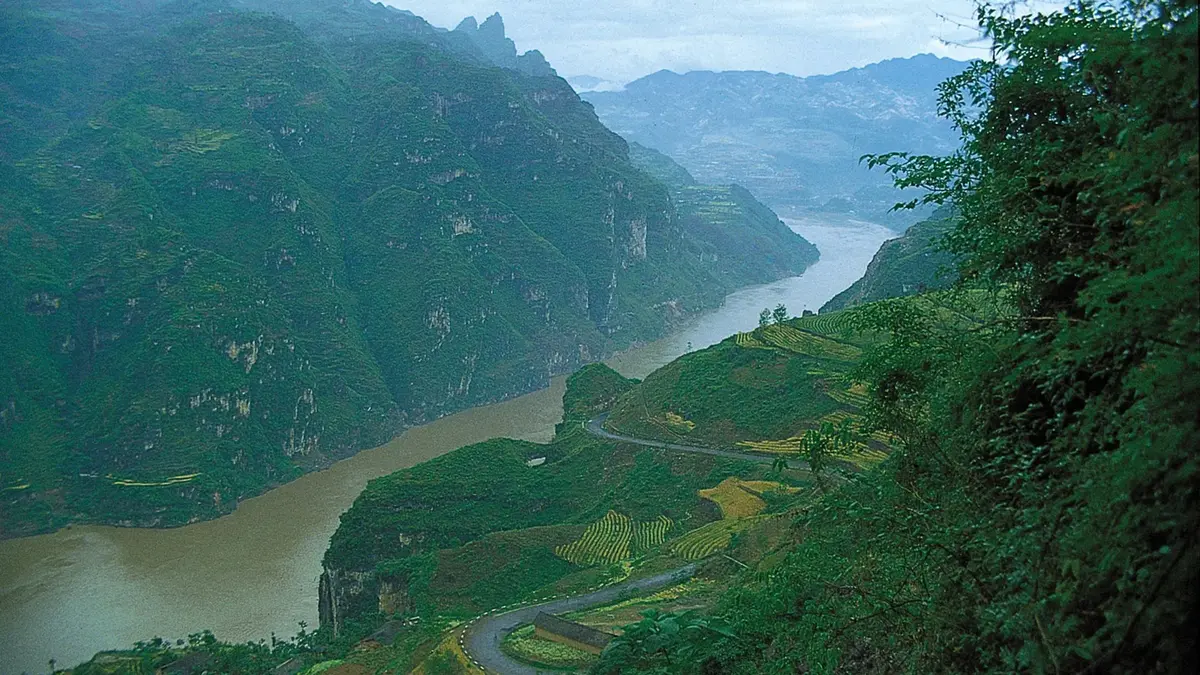
The Yangtze is Asia’s longest river and the world’s third‑longest after the Nile and the Amazon. Rising from glaciers on the Tanggula Mountains in Tibet, it flows east for more than 6,300 km through 11 provinces and regions before emptying into the East China Sea near Shanghai. The river’s basin covers about one‑fifth of China’s land area and supports nearly 400 million people, making it the country’s agricultural and economic heartland. Major cities such as Chongqing, Wuhan, Nanjing and Shanghai line its banks, and the fertile delta is one of China’s most prosperous regions.
Key facts about the Yangtze River
- Length and course: The river stretches roughly 6,300 km from its source at the Jianggendiru glacier near Geladandong Peak on the Tibetan Plateau to its mouth at the East China Sea. It serves as a natural north–south divide in China.
- Drainage basin: Covering about 1.8 million km², the basin includes over 700 tributaries, including the Min, Jialing, Han and Gan rivers. The river passes through dramatic gorges and broad plains.
- Economic importance: Nearly half of China’s crops and fish are produced in the Yangtze basin. The river facilitates transport, irrigation and hydropower; the Three Gorges Dam on the Yangtze is the world’s largest hydroelectric project.
- Environmental challenges: Industrial development, pollution and dam construction have altered the river’s ecology. Species such as the Yangtze river dolphin (baiji) have been declared functionally extinct, prompting greater conservation efforts.
Significance of the underwater tunnel
- Improved connectivity: The Chongming–Taicang link will shorten travel times between Shanghai and northern Jiangsu, integrating the Yangtze River Delta’s transport network.
- Engineering innovation: Building a high‑speed railway through soft riverbed sediments required advanced shield‑tunnelling technology and precise monitoring to prevent collapse.
- Economic development: By providing a direct rail corridor, the project is expected to boost tourism, commerce and urban integration across the delta region.
- Environmental considerations: Tunnel construction reduces the need for large bridges across the main channel, preserving navigational routes for ships and minimising impacts on river ecosystems.
Conclusion
The Yangtze River has shaped China’s history and prosperity for millennia. The completion of an underwater high‑speed railway tunnel under its bed underscores China’s engineering capabilities and the continuing importance of the Yangtze basin to national development. If managed responsibly, such infrastructure can enhance regional integration while respecting the river’s ecological significance.
Sources: Indian Express