

Why in news?
On 3 January 2026, the Southern Transitional Council (STC), a separatist group in southern Yemen, announced a constitutional declaration for a proposed “State of South Arabia”. The move, which envisages a two‑year transitional phase and a subsequent referendum on independence, has heightened tensions in the war‑torn country.
About Yemen
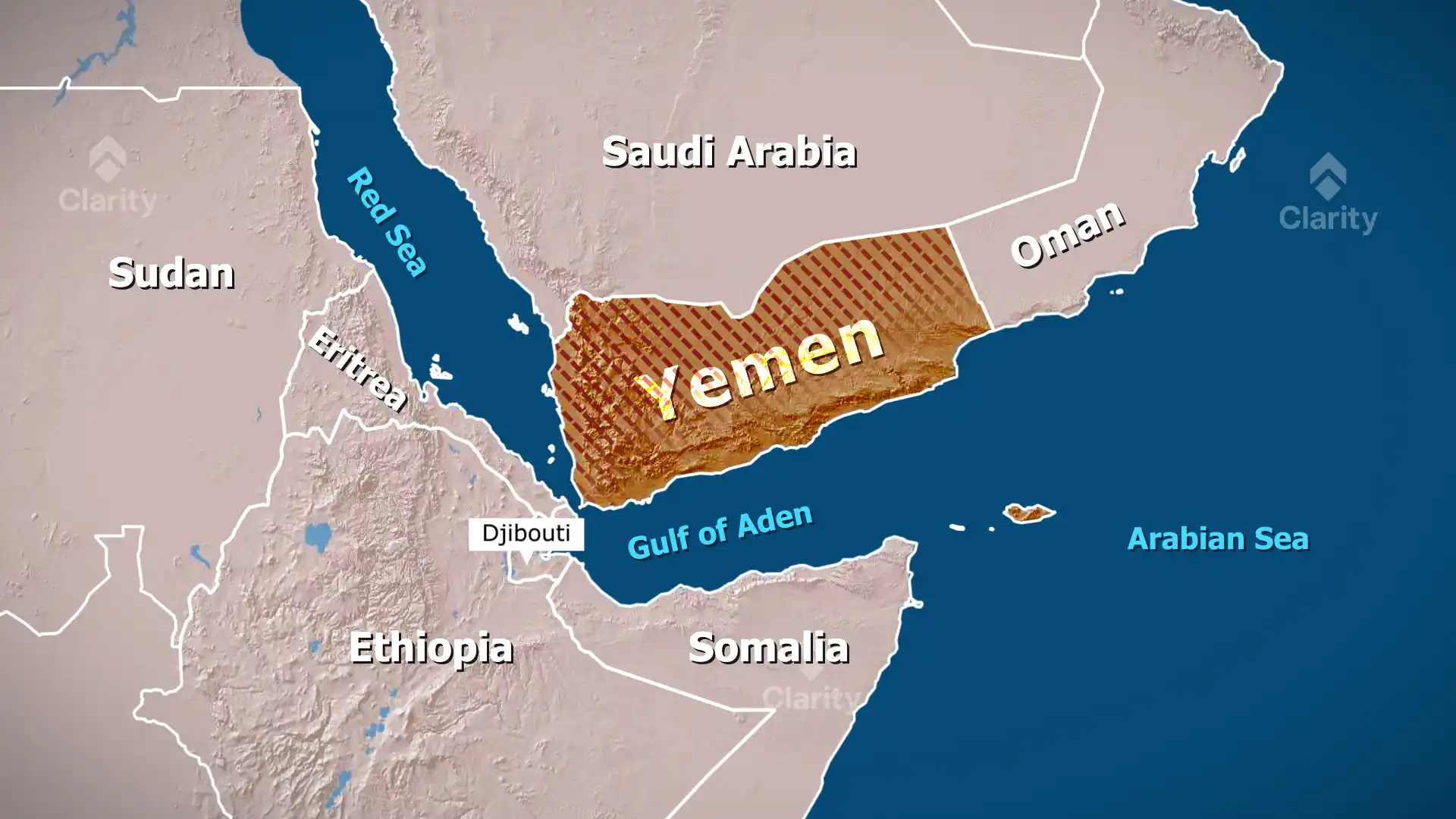
Yemen occupies the south‑western corner of the Arabian Peninsula. It borders Saudi Arabia to the north and Oman to the east, with coastlines along the Red Sea, the Gulf of Aden, the Arabian Sea and the Guardafui Channel. Its location at the Bab el‑Mandeb Strait makes it strategically important for global shipping. The capital is Sana’a, and the highest point is Jabal an Nabi Shu’ayb (3,760 m).
The STC’s constitutional declaration
- Proposed state: The declaration proclaims the “State of South Arabia”, covering the territory of the former People’s Democratic Republic of Yemen (South Yemen), which existed from 1967 to 1990. The capital would be Aden.
- Transitional phase: A two‑year transitional period is envisaged to establish governance structures and prepare for a referendum on self‑determination under United Nations supervision.
- Governance principles: The draft constitution emphasises separation of powers, a civil democratic system based on popular will, rule of law and pluralism. Islamic Sharia is cited as a source of legislation but the document also pledges respect for international human rights norms.
- Economic policy: It proposes a free‑market economy tempered by social responsibilities, protection of public and private property, and review of existing investment contracts to align with national interests.
- Security and rights: The declaration assigns the armed forces the task of defending the state and prohibits private militias. It promises equal rights and duties for citizens without discrimination and pledges to combat terrorism in partnership with regional and international actors.
Regional reaction
- Yemeni government: The internationally recognised government, backed by Saudi Arabia, dismissed the declaration as having no legal value and accused the STC of rebelling against national institutions.
- Saudi Arabia: Riyadh called for all southern factions to attend a dialogue in the Saudi capital, emphasising that the southern issue must be resolved through comprehensive negotiations. It launched airstrikes on STC positions after separatist forces seized territory in Hadramout and al‑Mahra.
- United Arab Emirates: The UAE, which has supported the STC, announced its troop withdrawal from Yemen around the same time. The announcements exposed divisions within the Saudi‑led coalition against Yemen’s Houthi rebels.
Significance
- Two‑state debate: The STC’s declaration revives the idea of a separate South Yemen, challenging the unity of a country already fractured by civil war.
- Regional dynamics: The episode underscores tensions between Saudi Arabia and the UAE over the future of southern Yemen. It also complicates efforts to negotiate a nationwide settlement with the Houthis.
- Humanitarian implications: Prolonged conflict and competing authorities risk worsening Yemen’s humanitarian crisis, with millions already facing food insecurity and displacement.
Conclusion
The Southern Transitional Council’s constitution for a “State of South Arabia” is a bold bid for secession. Its success depends on negotiations with other Yemeni factions and the stance of regional powers. Whether symbolic or substantive, the move adds a new layer of complexity to Yemen’s protracted crisis.
Source: TH