

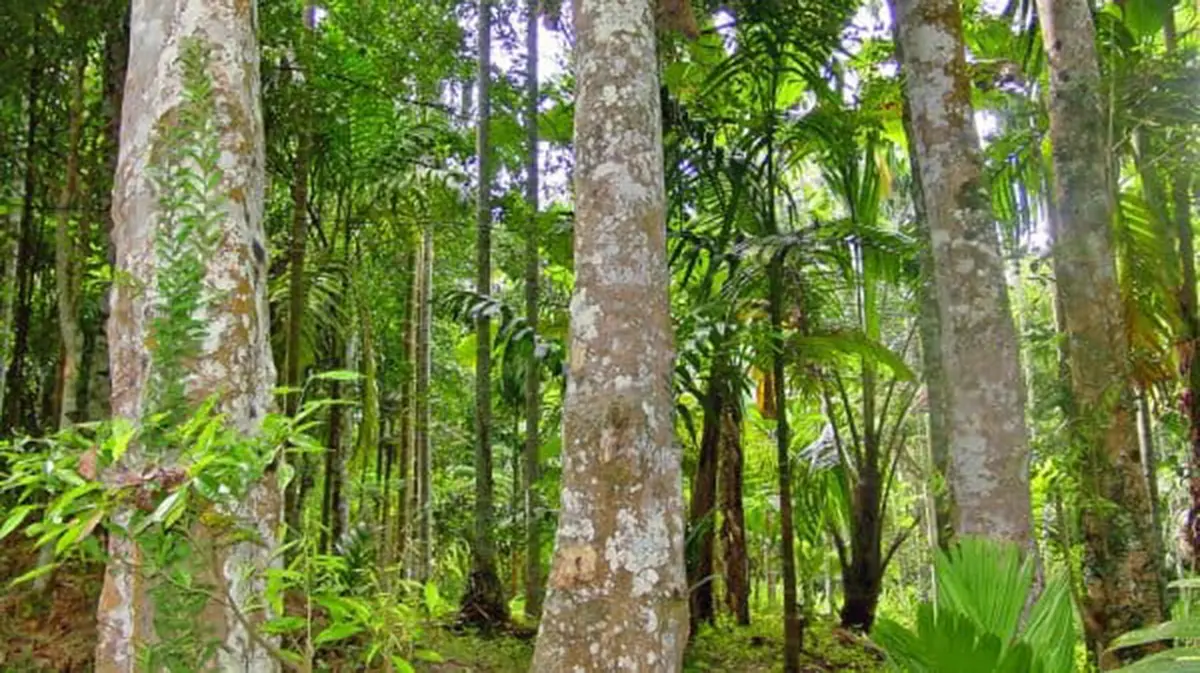
Why in news?
Assam shipped its first legal consignment of agarwood chips—100 kilograms to Saudi Arabia and 12 kilograms to the United Arab Emirates—under full statutory approvals. Valued at about ₹2.35 crore, the export marks a milestone because agarwood trade had been largely informal due to stringent regulations. This success is expected to open a lucrative market for farmers cultivating Aquilaria trees in northeastern India.
Background
Agarwood, also called oud, is a fragrant resinous wood formed when Aquilaria trees are infected by a fungus or undergo injury. Over time the tree produces dark resin in response to the infection, and sections of the trunk become highly aromatic. The resin is distilled into essential oil used in perfumes and incense across West Asia and East Asia. Due to overharvesting and illegal logging, Aquilaria species are listed under Appendix II of the Convention on International Trade in Endangered Species (CITES), requiring permits for export. India allows limited and regulated trade only from cultivated sources.
Key points
- Legal framework: The export was authorised through a restricted export licence and a CITES permit, ensuring that the wood came from cultivated trees and not wild populations.
- Economic potential: Agarwood is one of the world’s most valuable commodities; premium grades can fetch millions of rupees per kilogram. Officials estimate that regulated exports could earn Assam up to ₹50,000 crore annually if cultivation scales up.
- Benefits to farmers: The trade provides a legal avenue for smallholders who have been growing Aquilaria trees for decades but could not sell legally. Higher prices could raise farm incomes and encourage sustainable agroforestry.
- Conservation and sustainability: By certifying only cultivated agarwood, India aims to reduce pressure on wild Aquilaria populations and promote plantations under agroforestry schemes.
Conclusion
Assam’s first legal shipment of agarwood signals a shift towards regulated and sustainable trade. If properly managed, agarwood exports could transform the region’s economy while protecting endangered tree species.