

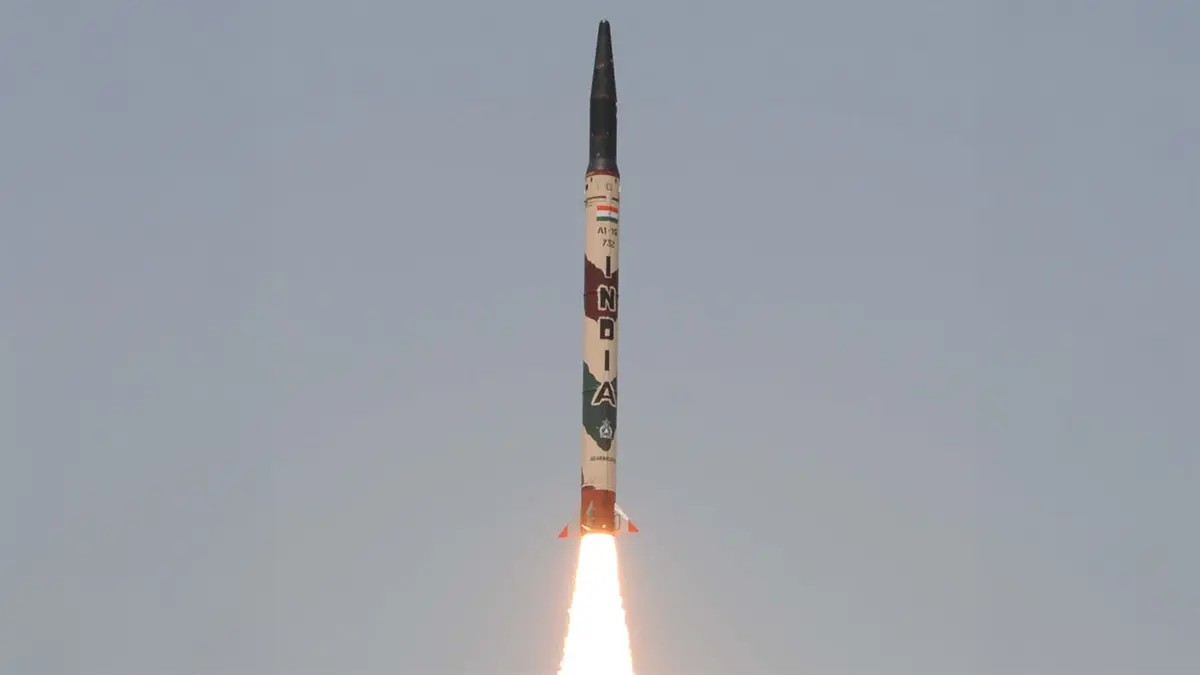
Why in news?
On 22 May 2026 India conducted a successful flight test of the Agni‑1 short‑range ballistic missile from the Integrated Test Range at Chandipur, Odisha. The test, carried out by the Strategic Forces Command, validated the missile’s operational readiness and strengthened India’s nuclear deterrent.
Background
The Agni series of ballistic missiles emerged from India’s Integrated Guided Missile Development Programme (IGMDP) launched in 1983. The original Agni technology demonstrator was tested in 1989 to prove re‑entry vehicle technology. Engineers later reconfigured it into a single‑stage missile known as Agni‑1. The missile underwent its first successful flight in January 2003 and entered service with the Indian Army’s Strategic Forces Command around 2007. Regular tests since then ensure reliability and crew training.
Specifications
- Class: Short‑range ballistic missile (SRBM).
- Origin: India; developed by the Defence Research and Development Organisation (DRDO).
- Dimensions: Length about 15 metres; diameter about 1 metre.
- Range: 700 to 1,200 kilometres depending on payload.
- Payload: Up to 1,000 kg, capable of carrying conventional or nuclear warheads.
- Propulsion: Single‑stage solid‑fuel rocket. Uses a strapdown inertial guidance system with thrust vector control.
- Basing: Road‑ and rail‑mobile transporter erector launchers enable quick deployment and increased survivability.
Significance
Agni‑1 fills the gap between the shorter‑range Prithvi missiles and the longer‑range Agni‑II and Agni‑III systems. Its mobility and relatively short flight time make it a key component of India’s credible minimum deterrence. Successful tests reassure military planners that the missile can perform as intended when required. They also demonstrate India’s technological self‑reliance and adherence to safety procedures.
Conclusion
The May 2026 test of Agni‑1 reinforces India’s commitment to maintaining a secure and reliable deterrent while advocating a no‑first‑use nuclear policy. Continued development and modernisation of the Agni family illustrate the country’s advancements in missile technology.