Why in news?
A scientific paper published in May 2026 analysed the landslide‑triggered tsunami that struck Alaska’s Tracy Arm fjord on 10 August 2025. The tsunami reached a run‑up height of about 480 metres, making it one of the highest ever recorded. Satellite images showed stripped forests and massive deposits of rock, bringing global attention to the hazards posed by unstable slopes in glaciated fjords.
Background
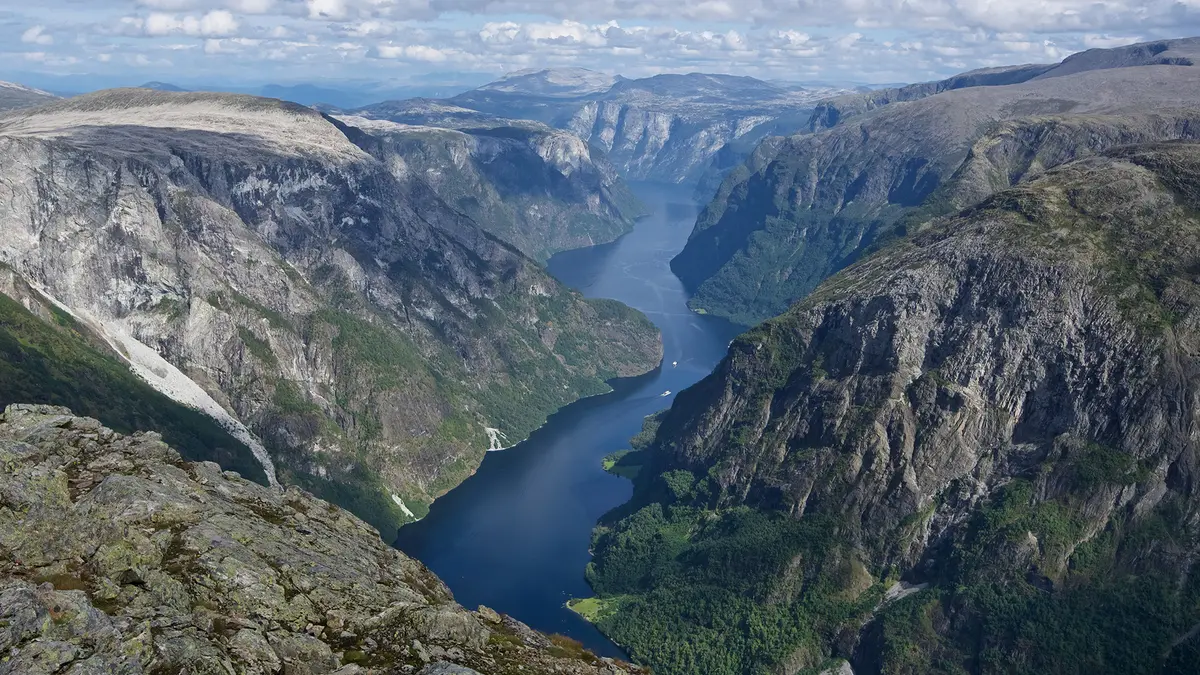
Fjords are long, narrow sea inlets bordered by steep cliffs. They form when glaciers carve U‑shaped valleys into coastal mountains during ice ages. As the glaciers retreat, seawater floods the valleys, creating deep bays with calm waters. Fjords are common along the coasts of Norway, Chile, New Zealand, Greenland and Alaska. Many fjords contain coral reefs and small rocky islands called skerries.
The Tracy Arm event
- Cause: Rapid retreat of the South Sawyer glacier exposed unstable rock slopes high above the fjord. On 10 August 2025, an estimated 64 million cubic metres of rock collapsed into the water. The impact generated a tsunami that stripped trees from the opposite shore up to 1,578 feet (about 481 metres) above sea level.
- Aftermath: Landsat satellites captured images before and after the event, showing a bright landslide scar and a “bathtub ring” of deforested slopes. Islands several kilometres away also lost vegetation. Scientists observed that the fjord oscillated for over a day in a seiche (standing wave) after the tsunami.
- Impacts: No fatalities were reported, but kayakers and cruise passengers experienced chaotic currents. The event prompted cruise lines to suspend tours to Tracy Arm due to ongoing slope instability. It underscored that melting glaciers can expose new hazards in popular tourist destinations.
- Lessons: Monitoring glacier retreat and slope stability is essential to forecast future hazards. Similar megatsunamis occurred in Alaska’s Lituya Bay in 1958 and Taan Fjord in 2015. Fjords can transmit huge waves down their length, so early warning systems and visitor awareness are crucial.