

Why in news?
Environmental workers in Himachal Pradesh alleged rising glyphosate use to clear natural vegetation for seasonal pea cultivation. Reports identified forest and common lands in districts including Kullu, Mandi, Shimla and Chamba. The issue concerns more than one herbicide. It involves suspected encroachment, chemical exposure and cultivation on steep Himalayan slopes.
Forest officials were asked to inspect affected areas and consider legal action where evidence supported the allegations. A field inquiry must establish who sprayed, where and under which product label. Photographs or dead vegetation alone cannot identify every chemical. The response therefore needs sampling, land records and documented enforcement rather than broad assumptions.
What is glyphosate?
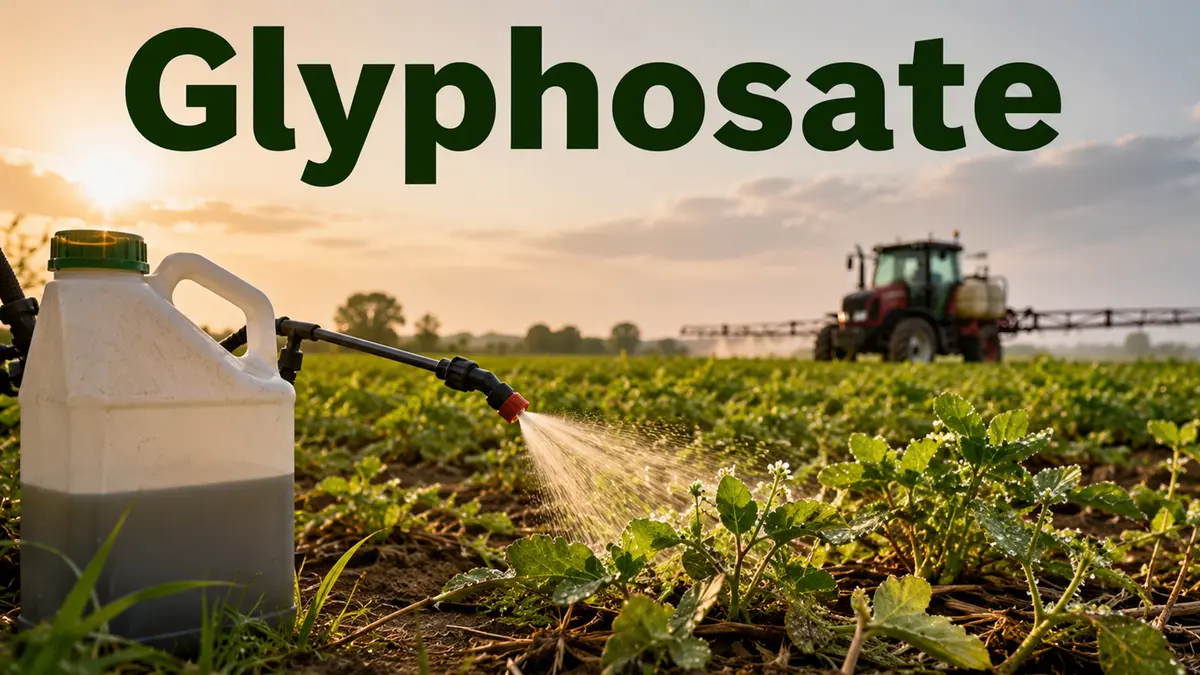
Glyphosate is a broad-spectrum systemic herbicide. Plants absorb it mainly through green leaves and move it towards growing tissues. It blocks 5-enolpyruvylshikimate-3-phosphate synthase, or EPSPS. This enzyme helps plants make certain aromatic amino acids. Growth stops because the affected biochemical pathway cannot function normally.
The herbicide is non-selective, so it can injure many plants that receive an active dose. Product formulations contain other ingredients that affect handling and performance. Risk depends on the formulation, dose, exposure route and application conditions. A registered product must be used only for approved crops, doses and precautions on its label. Forest clearing falls outside ordinary crop management.
Why the Himalayan setting matters
Himachal Pradesh lies within the western Himalaya. Kullu and Mandi occupy valleys around the Beas system, while Shimla includes Sutlej-side mountain terrain. Chamba extends across the Ravi and upper mountain catchments. Steep slopes, thin soils and intense monsoon rain make disturbed land prone to erosion. Runoff can carry soil and farm chemicals into small streams.
Peas and other off-season vegetables can bring valuable cash income in upland districts. Their short growing season encourages rapid land preparation before rain. Pressure rises when cultivators extend plots into commons or forest edges. Removing grasses and shrubs exposes soil before heavy showers. The resulting erosion can affect springs, roads and downstream farms.
Health evidence requires careful language
The International Agency for Research on Cancer classified glyphosate as “probably carcinogenic to humans” in 2015. This is a hazard classification. It identifies the strength of evidence that an agent can cause cancer under some conditions. It does not calculate the risk from every actual exposure. Dose, route, duration and protective measures influence real-world risk.
A Joint Food and Agriculture Organization–World Health Organization expert meeting reached a narrower dietary conclusion in 2016. It considered glyphosate unlikely to pose a carcinogenic risk through anticipated dietary exposure. These findings answer different questions and should not be presented as a simple contradiction. Occupational spraying and food residues involve different exposure patterns.
Workers can still face immediate danger through poor mixing, drift or lack of protective equipment. Eye and skin contact must be avoided. Labels govern re-entry, application rates and first aid. Medical advice should follow suspected poisoning or severe exposure. Public discussion should support precaution without inventing a specific illness from an untested local event.
India’s regulatory position
Pesticides are regulated under the Insecticides Act, 1968 and related rules. The Registration Committee evaluates products and approves labelled uses and precautions. The Union Government stated in December 2022 that glyphosate products had not been completely banned. Legal disputes have also affected attempts to restrict application. Users should therefore check current central and state directions before purchase or spraying.
Registration for some uses does not authorise spraying on forest land. Forest law, land tenure and local orders remain relevant. An investigation must first identify the legal status of each plot. Authorities should trace sellers, bills and product batches where possible. Enforcement becomes stronger when it proves both the land violation and the chemical used.
Environmental concerns beyond toxicity
Clearing all ground vegetation removes cover that protects mountain soil. Non-target plants may provide fodder, pollinator resources and habitat. Repeated treatment can simplify field margins and increase dependence on chemicals. Rain soon after spraying may move residues and sediment downslope. The exact environmental effect varies with soil, weather and formulation.
Damage also occurs when cultivation fragments forest edges. Roads, fencing and repeated human entry may disturb wildlife movement. Pea farming itself is not the problem when practised lawfully on suitable land. The concern is conversion of protected or common land without safeguards. Policy must distinguish legitimate farmers from organised encroachment and unsafe sales.
A practical response
Forest and agriculture departments should conduct joint field inspections. Laboratories should analyse soil or plant samples using a documented chain of custody. Remote sensing can identify sudden vegetation loss, while ground teams establish cause. Retailers need clear instructions on legal sales and label uses. Repeated violations should face proportionate action supported by evidence.
Farmers also need workable alternatives. Mulching, manual or mechanical clearing and crop rotations can reduce herbicide demand in some settings. Integrated weed management combines methods rather than depending on one product. Extension services should compare labour, cost and erosion outcomes. Support is more effective than a warning that leaves cultivators without practical choices.
Allegation is not laboratory confirmation
The reported forest damage requires urgent inspection. Visible clearing does not identify the chemical by itself. Sampling and land records can establish what happened. Enforcement should identify the product, user and legal breach through evidence before assigning responsibility.
Conclusion
The Himachal allegations reveal a linked land and farming problem. Chemical misuse can harm workers and non-target vegetation, while clearing weakens steep slopes. A credible response must combine investigation, forest protection and farm advice. Blanket claims about health will not improve enforcement. Accurate sampling and land records will.
High-value mountain farming must remain compatible with watershed security. Farmers need income, but forests and commons protect water and soil for everyone. State agencies should publish inspection findings and follow-up action. Safer weed control should be affordable and locally tested. The goal is not only less spraying, but lawful and resilient land use.