
Why in news?
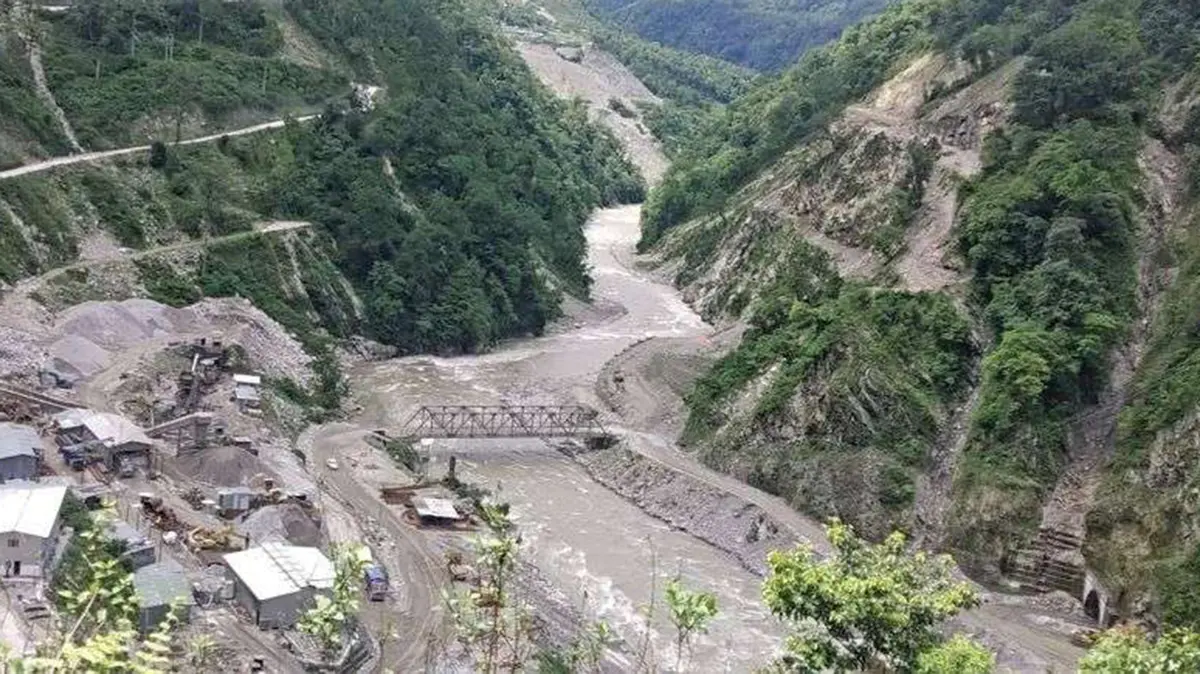
India’s Power Secretary reviewed the Arun-3 project in Nepal. The project will have 900 megawatts of installed capacity. Officials inspected its underground powerhouse and dam sites. They stressed timely work, safety, quality and environmental responsibility.
Background
Arun-3 is a large run-of-river hydroelectric project in eastern Nepal.
It is being built on the Arun River in Sankhuwasabha district.
The Arun is an important tributary of the Koshi river system; it rises in Tibet and flows through Nepal.
Satluj Jal Vidyut Nigam Limited was the company’s earlier name; its shortened form became SJVN.
The company is now legally named SJVN Limited; it is developing the project.
SJVN is a listed public-sector power company under India’s Ministry of Power.
India’s Union government and the Himachal Pradesh government established it as a joint venture in 1988.
The project company is SJVN Arun-3 Power Development Company Private Limited.
Its shortened name is SAPDC; it is a wholly owned subsidiary of SJVN.
Do not mix the projects: Arun-3 has 900 megawatts of capacity; Lower Arun and Arun-4 are separate proposals.
How did the project develop?
- Nepal selected SJVN through international competitive bidding.
- SJVN and Nepal signed a memorandum on 2 March 2008.
- SAPDC was registered in Nepal on 25 April 2013.
- India’s Central Electricity Authority vetted the project report on 9 June 2014.
- The project agreement with Nepal was signed on 25 November 2014.
- Nepal approved the environmental assessment on 12 August 2015.
- The two Prime Ministers jointly laid the foundation stone on 11 May 2018.
- The project achieved financial closure on 6 February 2020.
- Construction later advanced at the dam, tunnel and powerhouse sites.
- The Power Secretary reviewed progress on 16 July 2026.
A memorandum of understanding records shared intentions; a project development agreement creates more detailed rights and obligations.
What does run-of-river mean?
A run-of-river plant mainly uses the river’s continuing flow to generate power.
It usually stores less water over long periods than a large storage project.
However, it can still include a dam, intake, tunnel and short-term water regulation.
Common confusion: “Run-of-river” does not mean “no dam”; Arun-3 includes an 80-metre concrete gravity dam.
How will Arun-3 generate electricity?
- The dam will divert part of the Arun River’s flow.
- Intakes will guide water into a head-race tunnel.
- The tunnel will carry water towards the underground powerhouse.
- Pressure shafts will direct water onto four turbines.
- Each generating unit will produce up to 225 megawatts.
- Used water will return to the river through a tail-race tunnel.
The four units together provide 900 megawatts of installed capacity.
The circular head-race tunnel is about 11.837 kilometres long; its internal diameter is about 9.5 metres.
The underground powerhouse will use vertical Francis turbines; these suit medium-head hydropower conditions.
The gross hydraulic head is 308 metres; this measures the broad height difference available for power generation.
The design output is 4,018.87 gigawatt-hours in a 90-per-cent dependable year.
This benchmark uses river-flow conditions expected in nine out of ten years.
What is the ownership model?
The project follows the build, own, operate and transfer model, shortened to BOOT.
SAPDC will build, own and operate the project during the agreed period.
The operating period is 25 years after commissioning; the project must then transfer to Nepal.
Prelims point: Arun-3 is located in Nepal, but an Indian public-sector company is developing it on a BOOT basis.
How will power leave the project?
A 400-kilovolt double-circuit transmission line is associated with the project.
The Nepal section runs about 217 kilometres from Arun-3 to Bathnaha near the Indian border.
The wider corridor links the project with India’s electricity network through Sitamarhi.
Cross-border lines allow electricity contracts to connect generation in Nepal with users in India.
What happened during the July review?
Power Secretary Pankaj Agarwal led the Indian delegation.
Officials first inspected the underground powerhouse at Pukhuwa; they reviewed civil and electromechanical work.
They later visited the dam site at Phaksinda; the review covered the dam, intake and related infrastructure.
SAPDC also explained rehabilitation, resettlement, community programmes and environmental management.
The delegation asked the project team to maintain quality and safety while meeting the target schedule.
Why is the project important?
- It can add substantial renewable electricity to the regional grid.
- It deepens long-term energy cooperation between India and Nepal.
- It supports cross-border transmission and electricity trade.
- Construction can create roads, employment and local economic activity.
- Nepal will receive the asset after the agreed operating period.
What concerns require attention?
Hydropower has low operational carbon emissions, but it is not impact-free.
Dams and tunnels can change river flow, aquatic habitat and sediment movement.
Construction can affect land, forests and local livelihoods; Himalayan geology also creates landslide and earthquake risks.
Therefore, environmental safeguards, worker safety, resettlement and benefit-sharing remain essential.
Conclusion
Arun-3 joins engineering with cross-border diplomacy; timely completion must remain balanced with safety, ecology and community rights.