

Why in news?
Chhattisgarh prepared a new recovery plan for its wild buffaloes. The proposal includes moving animals from Assam into protected enclosures. Officials hope to rebuild tiny, isolated central Indian populations. Any release will require disease and genetic safeguards.
Background
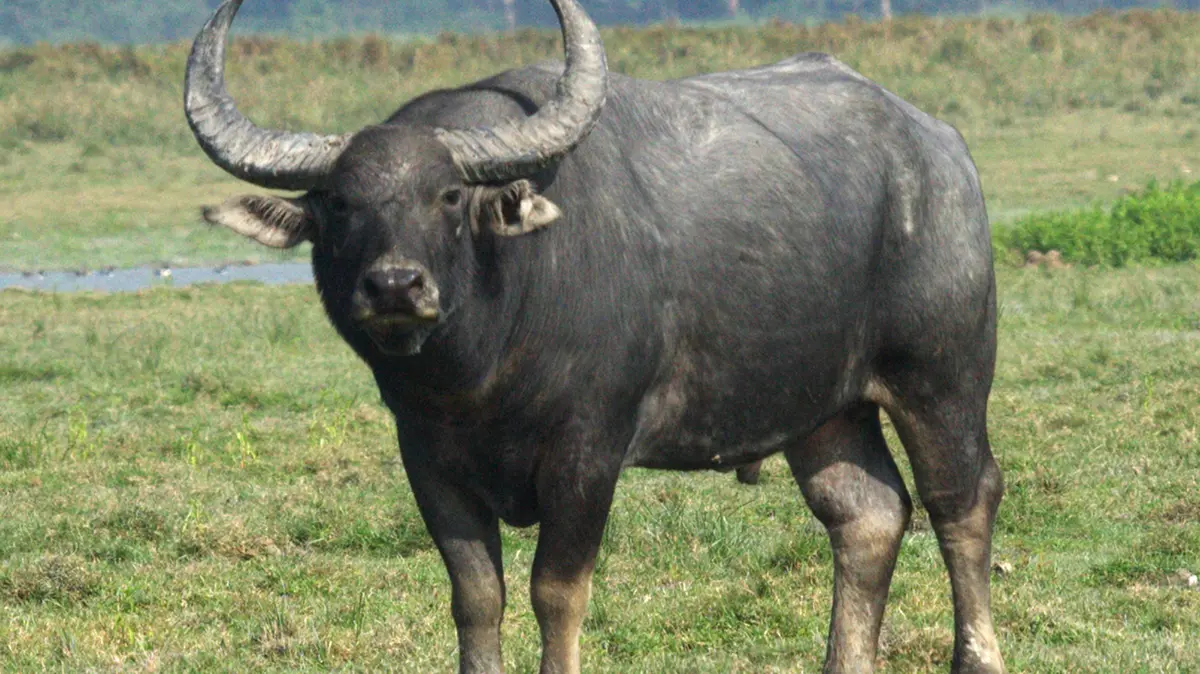
The Asiatic wild buffalo has the scientific name Bubalus arnee. It once occupied extensive grasslands and floodplains across South and Southeast Asia. Hunting, habitat loss and mixing with domestic buffaloes reduced that range dramatically.
India retains most surviving animals, particularly in Assam and nearby states. Central India supports smaller groups; Chhattisgarh declared the wild buffalo its state animal during 2001.
A 2005 field assessment estimated 39–47 animals across three Chhattisgarh landscapes: Udanti-Sitanadi, Indravati and Pamed. Recent official estimates place the surviving total around 12–16, although insecurity restricts surveys.
The recovery effort in sequence
Conservationists first strengthened monitoring and captive management around Udanti. A genetically important female, commonly called Asha, became central to breeding efforts. However, very small founder numbers limited genetic recovery.
Chhattisgarh then sought animals from Assam; six buffaloes reached Barnawapara Wildlife Sanctuary in two phases. One male and one female arrived during 2020, followed by four females during 2023.
The Barnawapara group grew to eleven; the newer proposal considers shifting three females towards Udanti-Sitanadi. An ageing pure wild male reportedly remains there without a viable local breeding group.
The broader plan also covers Pamed and Indravati Tiger Reserves. Proposed measures include protected enclosures, grassland improvement and reliable waterholes. Anti-poaching, veterinary surveillance and genetic management form other essential components.
Why translocation is difficult
Moving a large wild bovine involves capture, sedation, transport and acclimatisation risks. Animals from different regions may also carry unfamiliar pathogens. Health screening and quarantine must therefore precede any release.
Genetic purity presents another challenge because wild and domestic buffaloes can interbreed. Appearance cannot always detect mixed ancestry; genetic testing helps select founders while avoiding excessive relatedness.
Suitable habitat needs grass, water and safe routes; nearby livestock require vaccination and controlled contact. Local residents also require protection from crop damage and dangerous encounters.
Conservation status and factual cautions
The International Union for Conservation of Nature classifies the species as Endangered. Its older assessment estimated fewer than 4,000 animals globally. India protects it under Schedule I of the Wildlife (Protection) Act, 1972.
Global estimates are assessment figures, not a fresh 2026 census. The Chhattisgarh proposal is also a plan, not evidence of completed release. Outcomes should be judged through survival, breeding and genetic diversity over many years.
Ecological role and landscape management
Wild buffaloes maintain grasslands through grazing, while their wallows create wet habitats for other organisms. Herds also redistribute nutrients, producing effects unlike intensive grazing by unmanaged domestic livestock.
Central Indian populations inhabit conflict-affected landscapes, where survey teams may struggle to reach Indravati and Pamed. Remote cameras and dung genetics can improve monitoring when weak information obscures population and disease trends.
Enclosures can protect founders during breeding, but they should not permanently substitute for functioning wild habitat. Managers need release and genetic-exchange criteria, while independent review can assess welfare and conservation goals.
Recovery planning must include pastoralists, and livestock vaccination should reduce shared disease risks. Prompt compensation and community employment can address local losses while creating practical incentives for coexistence.
Conclusion
Translocation can rescue Chhattisgarh's dangerously small buffalo populations. It will succeed only alongside habitat restoration, disease control and long-term community support.