

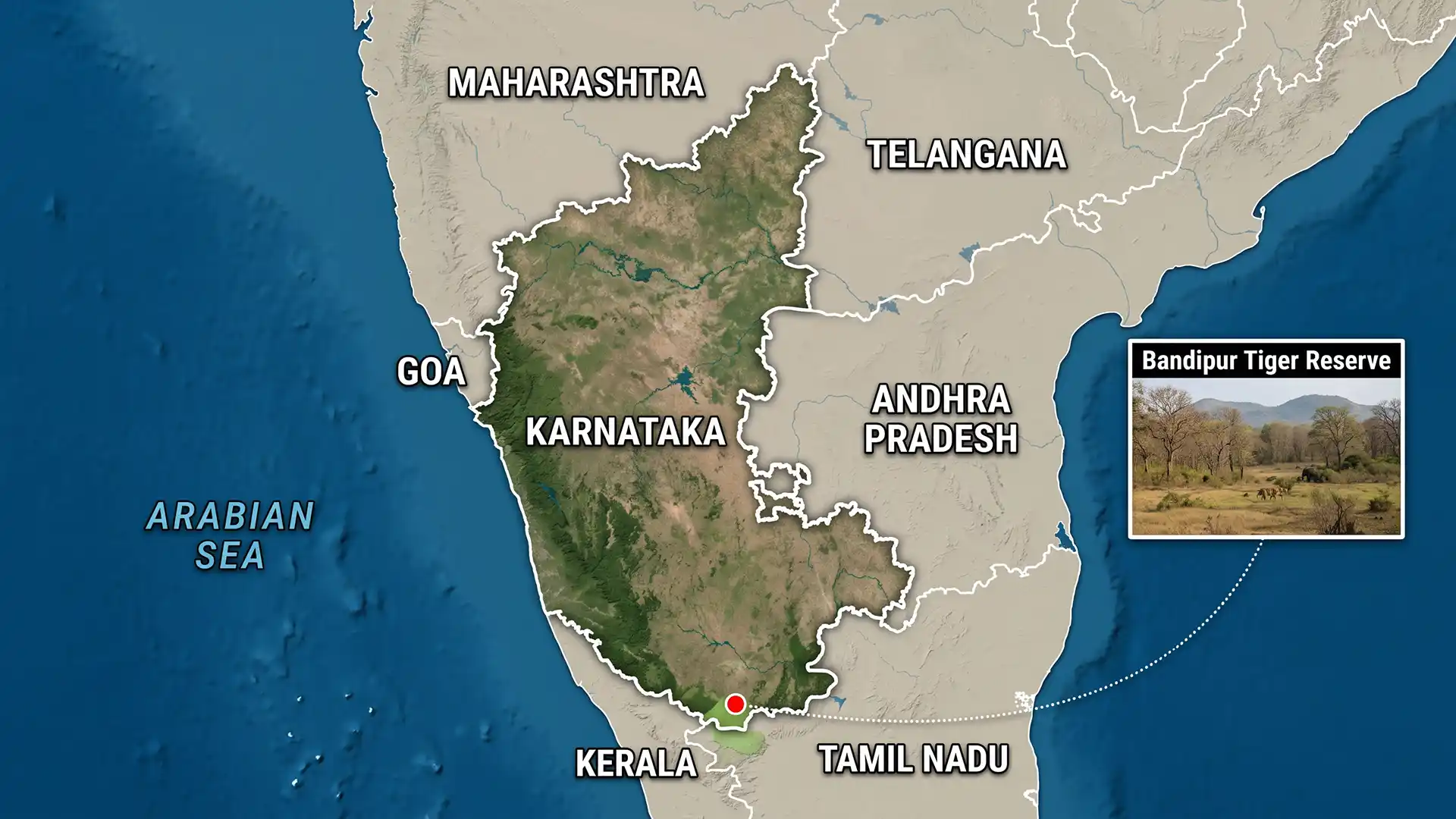
Why in news?
The Karnataka government ordered a study on the carrying capacity of Bandipur Tiger Reserve after tiger numbers increased significantly. By 2026 the reserve housed around 175 tigers compared with just 12 in 1972. Recent human‑wildlife conflicts, including fatal attacks on villagers, led authorities to temporarily halt tourist safaris. Conservationists hope the study will balance wildlife protection with local livelihoods.
Background
Bandipur Tiger Reserve lies in the Mysuru and Chamarajanagar districts of Karnataka. It was one of the first nine reserves created under Project Tiger in 1973. Covering about 874 square kilometres, it forms part of the Nilgiri Biosphere Reserve along with Mudumalai and Wayanad sanctuaries. The reserve’s landscape includes dry deciduous and moist forests with sandalwood, teak and bamboo. Rivers such as the Kabini, Moyar and Nugu flow through, providing water for wildlife.
Flora and fauna
- Tiger population: The number of tigers rose from 12 in 1972 to about 175 by 2026. Conservation efforts have improved habitat and protection.
- Other mammals: The reserve hosts Asian elephants, gaurs (Indian bison), leopards, sloth bears, dholes (wild dogs), chital and sambar deer.
- Birdlife: More than 200 species of birds live here, including peafowl, crested serpent eagles and the Malabar pied hornbill.
- Vegetation: Dominant trees include Indian rosewood, teak, sandalwood and a mix of grasses that provide grazing for herbivores.
Current issues
- Carrying capacity: Rising tiger numbers put pressure on prey populations and increase encounters with humans. Officials are assessing whether the habitat can support so many carnivores.
- Human–wildlife conflict: In 2025–26 several villagers were killed by tigers near the reserve, leading to protests and a temporary ban on jeep safaris.
- Habitat fragmentation: Development around the park’s periphery reduces available territory for wildlife, increasing the risk of conflict.
Conclusion
Bandipur Tiger Reserve is a conservation success story, but its rising tiger population poses new challenges. The carrying capacity study will inform management actions to protect both wildlife and local communities. Ongoing habitat protection and community engagement remain essential.