

Why in news?
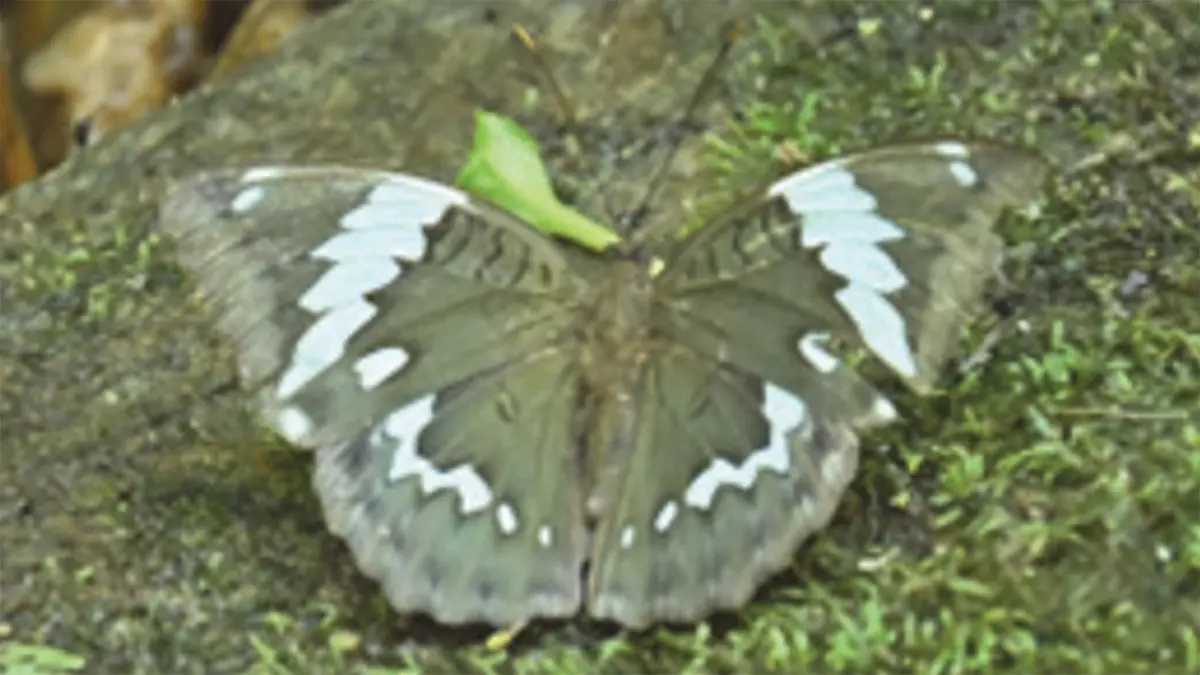
Researchers recently described a new butterfly species from the forests of Arunachal Pradesh. Named the Basar Duke, or Euthalia zubeengargi, the species was discovered in the Basar region of Lepa Rada district. Only two specimens have been recorded so far, making it one of India’s rarest butterflies. The insect is named in honour of Assamese singer Zubeen Garg for his contribution to regional culture.
Background
The Basar Duke belongs to the family Nymphalidae and subfamily Limenitidinae. It inhabits semi‑evergreen forests at elevations of about 600–700 metres. Adult butterflies are active mainly in the late morning and early afternoon, gliding slowly among the foliage rather than flitting quickly. They feed on tree sap, rotting fruit and minerals on damp soil rather than on flowers. Key characteristics include:
- Colouration: Wings are olive‑brown with white patches and faint turquoise or violet iridescence on the underside.
- Body size: Similar in size to other Euthalia species, with broad wings and rounded margins.
- Rare sightings: Only two male specimens have been collected so far; the female remains unknown.
The name zubeengargi celebrates Zubeen Garg, whose music is popular across Assam and the North‑East. By naming the species after a cultural icon, researchers hope to raise awareness about the region’s rich biodiversity.
Ecological significance
- Indicator of healthy forests: Butterflies are sensitive to habitat changes. The presence of the Basar Duke suggests that parts of the Eastern Himalayas still harbour intact forest ecosystems.
- Highlighting endemic diversity: The species underscores how little is known about insects in the region. Many more butterflies and moths are likely to await discovery in remote valleys.
- Conservation concern: Because only a few individuals are known, any habitat loss could threaten the species. It has not yet been assessed by the IUCN but would likely qualify for a threatened category.
Conclusion
The discovery of Euthalia zubeengargi is a reminder that India’s North‑Eastern forests still harbour species unknown to science. Protecting these habitats not only preserves wildlife but also celebrates the cultural and natural heritage of the region.
Source: NDTV