

Why in news?
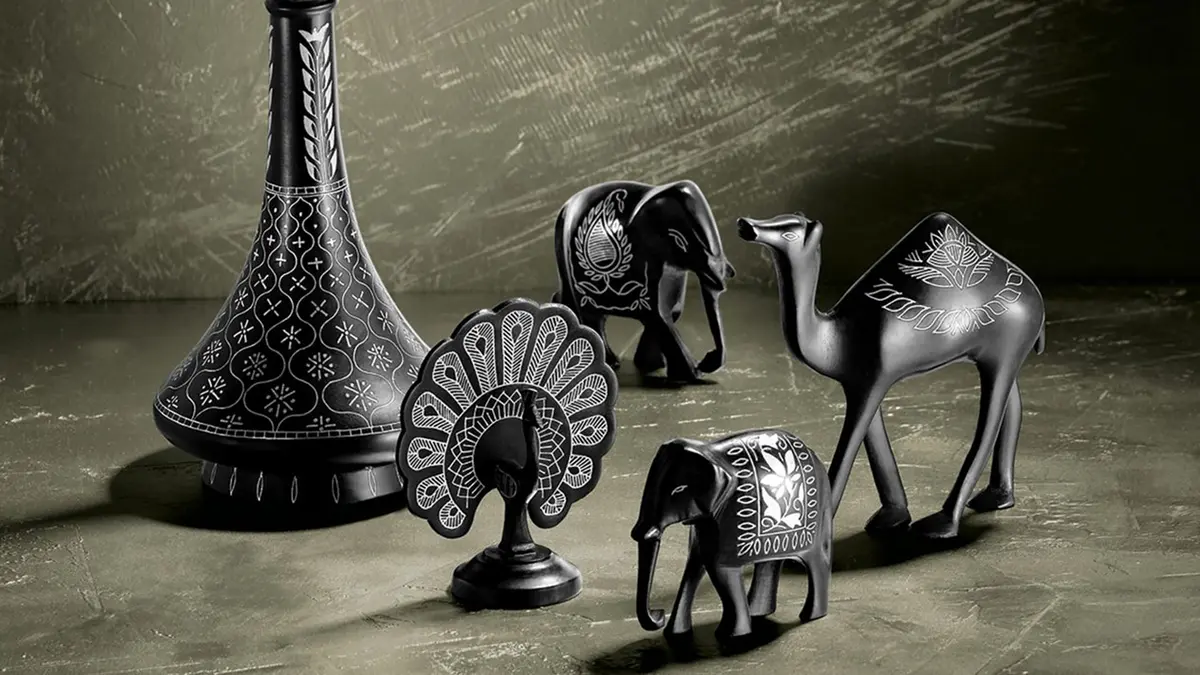
Bidriware artisans in Karnataka are facing pressure from rising metal costs and weaker demand, according to The Hindu's 20 September report. The craft combines a dark metal surface with contrasting silver inlay and is closely associated with Bidar. Artisans told the newspaper that dearer silver, copper and zinc were increasing production costs, while customers resisted higher prices. They also raised concerns about younger workers entering an occupation with uncertain earnings. The issue is therefore more than a temporary change in decorative-goods prices. It concerns whether a demanding inherited skill can provide sustainable livelihoods while retaining the workmanship that gives Bidriware its identity.
Why Bidar matters to the craft
Bidriware takes its name from Bidar in northern Karnataka. The district's plateau setting and historic fort form the geographical background to a craft shaped by the Deccan's cultural exchanges. Government accounts associate its development with the Bahmani period. Persian influences are part of that history. Local materials, techniques and generations of practice shaped the distinctive metalwork now associated with Bidar.
The tradition includes ornamental vessels, boxes and decorative objects, with surfaces designed to display finely worked patterns. Such objects join artistic expression to material knowledge: makers must understand both the design and how different metals behave. Bidriware's continuity therefore depends on practical skills passed between generations. Its workshops turn a regional inheritance into objects that people can use, display and buy in changing markets.
How the black-and-silver contrast is produced
The main body is a zinc-rich alloy containing copper. After casting, the surface is finished and the design is marked. Grooves are cut into the metal, and silver is carefully inserted into them. The surrounding surface is then darkened through a finishing process known as patination. This creates the contrast between the black body and bright inlay. The appearance depends on both material properties and precise manual work.
Inlay is different from painting a silver pattern onto a dark object. The decorative metal is worked into prepared recesses. The maker must control the depth and shape of the pattern, secure the inlay and finish the surface without destroying the design. Floral and geometric arrangements are common, but their quality depends on proportion, accuracy and finish. Fine workmanship cannot be measured simply by how much silver an object contains.
Traditional accounts describe the use of soil associated with Bidar Fort during the blackening process. This is a specialised treatment, not the simple act of covering a vessel with ordinary dirt. The darkening of the base and the contrasting inlay create the characteristic finish. Different workshops and objects need not use an identical alloy ratio. A single reported recipe should therefore not become a universal specification for every genuine piece.
Why higher metal prices affect more than the final bill
An artisan must obtain materials before recovering their cost through a sale. Rising input prices can therefore increase the money tied up in unfinished work. Detailed engraving also takes time, so the cost of a piece includes labour and skill as well as metal. If customers will not accept the higher price, the maker's margin narrows. Producing more items is not an easy solution when each one requires careful handwork.
The newspaper's interviews describe makers considering smaller pieces, less silver or simpler patterns. It also records their demand for training support. These observations come from interviewed artisans and shopkeepers, not a complete statistical census of the industry. Nevertheless, they identify a recognisable difficulty: changes that make an object cheaper may also reduce the craftsmanship customers associate with it. Preserving the craft means sustaining viable skilled work, not merely keeping its name in circulation.
What geographical-indication protection contributes
Bidriware is recognised as a geographical indication (GI). A geographical indication connects a product's reputation, qualities or characteristics to its place of origin. India's registration system provides legal protection against unauthorised use of a registered indication. For a traditional craft, that can help distinguish the recognised product from goods using its reputation without meeting the relevant requirements. The protection concerns identity and origin, not a promise that every producer will earn a profit.
Registration is therefore one part of a wider livelihood system. Buyers still need trustworthy information about materials, workmanship and the maker. Artisans need access to customers and the resources required to produce their work. A protected name cannot by itself offset rising silver prices or ensure regular orders. Its economic value is stronger when authentic production can be recognised and when the resulting demand reaches the people maintaining the skill.
Keeping a tradition alive without freezing it
New designs and contemporary uses do not necessarily weaken a traditional craft. The more important question is whether they retain the defining skills and honest descriptions of materials. Training can pass on those skills, but learners also need a reasonable prospect of paid work. Marketing and design support are consequently connected to preservation. A workshop that survives commercially has more opportunity to teach than one struggling to purchase its next batch of metal.
Conclusion
Bidriware's current difficulty joins a material-cost problem to a longer question about the transmission of skill. Its regional identity and legal recognition provide a foundation, but they cannot replace dependable livelihoods. Support that links training, authentic production and access to buyers would address the craft as living work. The objective is not simply to preserve attractive objects, but to sustain the knowledge and people capable of making them.