

Why in news?
Wildlife officials in Chhattisgarh announced that the population of blackbucks in Barnawapara Wildlife Sanctuary now exceeds 200 individuals—up from just 77 animals reintroduced in 2018. The success, highlighted by the Prime Minister in his radio programme, is India’s first major rewilding of blackbucks, a species once locally extinct in the area.
Background
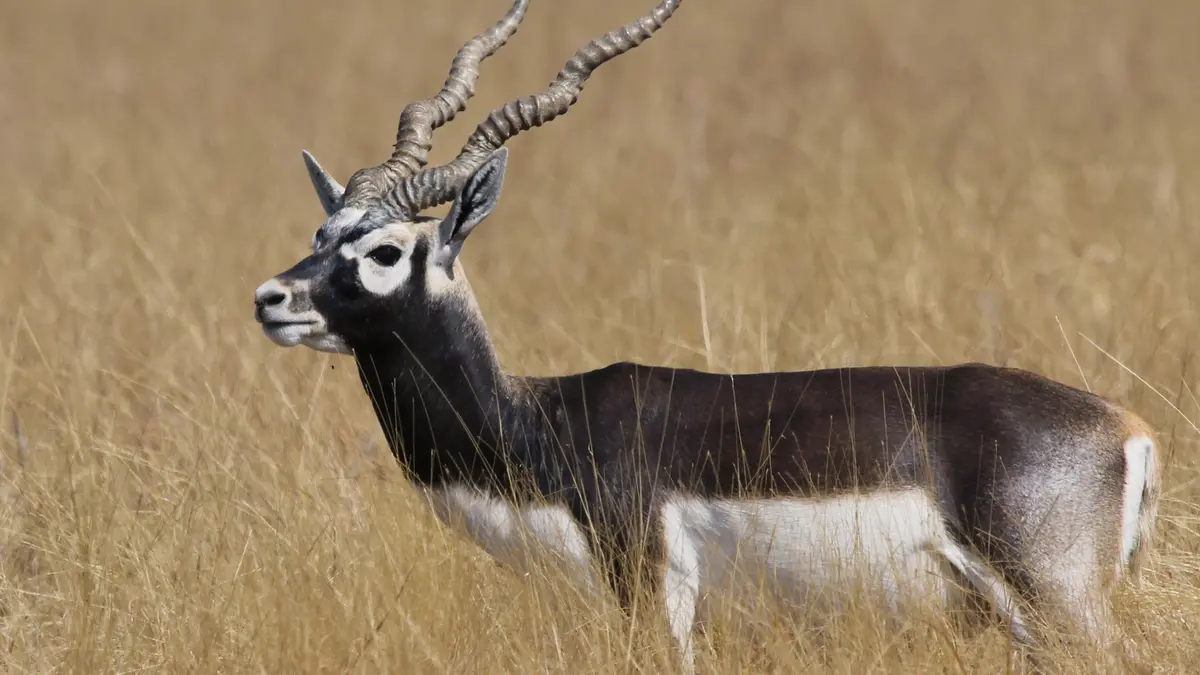
The blackbuck (Antilope cervicapra) is a medium‑sized antelope native to the Indian subcontinent. Males have striking spiralled horns and dark brown coats; females are lighter and usually hornless. These graceful animals inhabit open grasslands and semi‑arid plains. Historically abundant, their numbers declined due to hunting and habitat loss. The species is listed as “Least Concern” on the IUCN Red List but is protected under Schedule I of India’s Wildlife Protection Act.
The reintroduction programme
- Initial release: In 2018, the Chhattisgarh forest department translocated 27 blackbucks from Kanan Pendari Zoological Garden near Bilaspur and 50 from the National Zoological Park in Delhi to Barnawapara Sanctuary. A four‑hectare enclosure allowed the animals to acclimatise under supervision.
- Soft release: Over two years, forest officials gradually opened the enclosure gates, allowing the blackbucks to explore adjacent grasslands. The animals adapted well, with high survival and breeding success.
- Population growth: By early 2026, the herd numbered more than 200 individuals, including many fawns born in the wild. The animals now roam freely within the 245‑square‑kilometre sanctuary.
- Future plans: Officials plan to relocate about 40 blackbucks to Gomarda Wildlife Sanctuary and later to Achanakmar Tiger Reserve to restore historical ranges and diversify genetic stock.
Significance
The Barnawapara success story demonstrates that rewilding can reverse local extinctions when habitat quality is restored and human disturbances are managed. It also shows how collaboration between zoos and forest departments can bolster wild populations. Public awareness generated by the reintroduction encourages local communities to protect grasslands and reduces poaching.
Source: Hindustan Times