

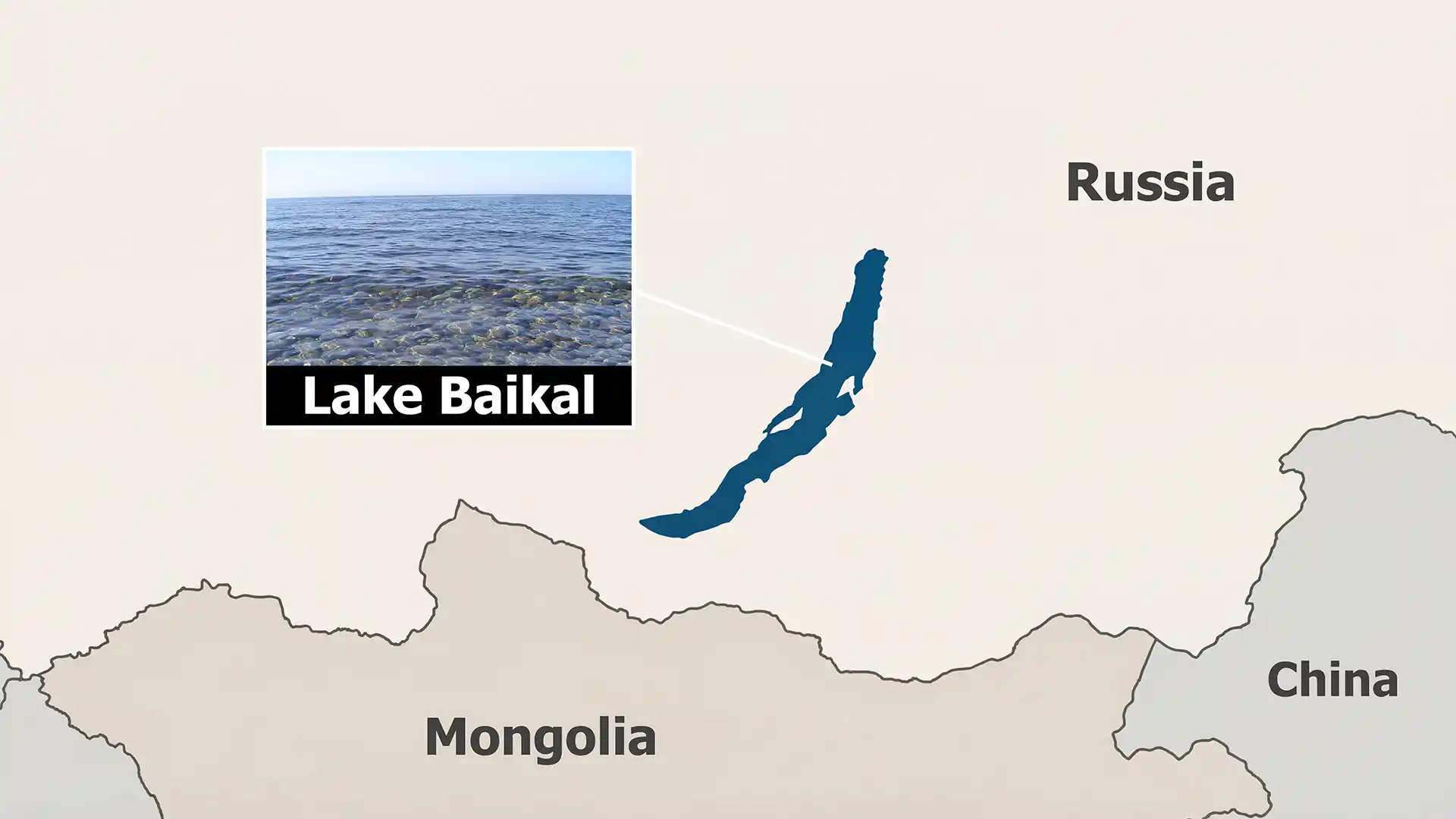
Why in news?
On 20 February 2026 a tour bus carrying eight Chinese tourists and a Russian driver plunged through the ice while crossing Lake Baikal in eastern Siberia. Seven bodies were recovered from a depth of about 18 metres and one passenger survived. The incident has raised concerns about the safety of driving on frozen lakes.
Background
Lake Baikal is the world’s oldest and deepest freshwater lake, estimated to be 20–25 million years old. Situated in Russia’s Siberia region, it stretches about 636 km in length and averages 48 km in width. Its maximum depth is approximately 1,620 m, making it the deepest lake on Earth. Baikal holds roughly one‑fifth of the world’s fresh surface water and is fed by over 330 rivers and streams; its only outlet is the Angara River. The lake and surrounding mountains harbour thousands of plant and animal species, including the endemic Baikal seal.
Key points
- Tourism boom: Following a visa‑free regime between Russia and China, Lake Baikal has seen a surge in Chinese tourists seeking winter adventures on the frozen lake. Ice roads are commonly used to access islands and remote villages.
- Safety concerns: Driving on frozen lakes requires strict adherence to ice‑thickness regulations and established routes. Warm spells or late‑season travel can weaken the ice. Authorities advise travellers to use authorised vehicles and guides.
- Environmental significance: As the world’s largest reservoir of fresh surface water, Baikal is crucial to global hydrological cycles and biodiversity conservation.
Conclusion
The tragic accident on Lake Baikal is a reminder of the risks of adventure tourism. Protecting both visitors and this unique ecosystem requires stronger regulations, better public awareness and respect for the natural environment.
Sources: NDTV