

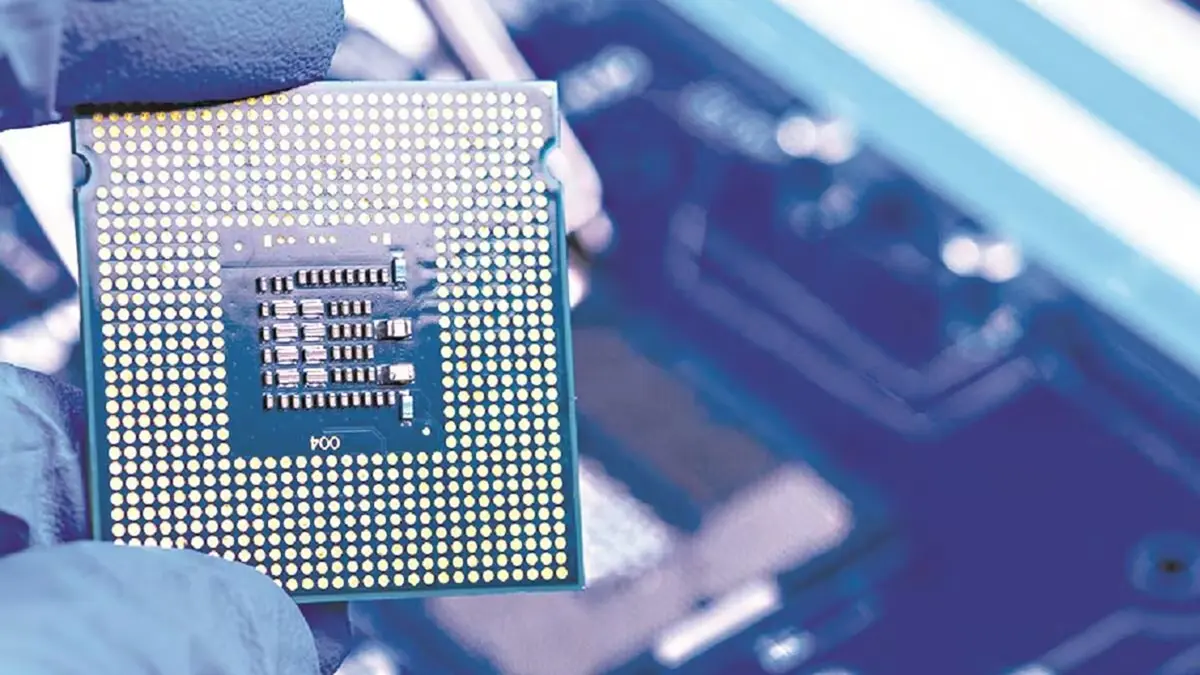
Why in news?
New programme data highlighted wider access to advanced chip-design tools and hands-on semiconductor training across Indian institutions.
Programme design
The Ministry of Electronics and Information Technology launched Chips to Start-up in 2022. Its original five-year outlay was ₹250 crore.
The programme provides shared access to Electronic Design Automation tools. Such software supports chip architecture, verification and physical design.
Participating institutions can develop Application-Specific Integrated Circuits and Systems-on-Chip. They can also create reusable intellectual-property cores.
Shared access matters because commercial design tools and fabrication runs are expensive. Smaller institutions often cannot procure them independently.
Progress and data
A July 2026 Cabinet release reported access across 320 institutions. It said more than 68,000 people had received training.
A January update had reported six shared wafer-fabrication runs and 56 student-designed chips. It also cited 75 patents. The same update reported more than 500 reusable intellectual-property cores. Such blocks can shorten later design cycles.
The figures describe different reporting dates and categories. They should not be combined as one single snapshot.
The government plans expansion towards 500 institutions under India Semiconductor Mission 2.0.
Design is only one layer
A strong semiconductor ecosystem also needs fabrication, packaging, testing, materials, reliable power and specialised manufacturing equipment.
Why implementation quality matters
Classroom enrolment alone cannot demonstrate capability. Tape-outs, verified designs and industry-ready projects offer stronger evidence.
Faculty support is equally important. Complex tools have limited value without continuing instruction and technical maintenance.
Training should include analogue, digital, radio-frequency and embedded-system design. India’s industrial needs span several chip categories.
Regional access can widen the talent pool beyond established engineering centres. It may also support specialised local start-ups.
Industry partnerships should protect academic independence and intellectual property. Clear licensing rules can help public research reach commercial use.
Measure usable capability
The strongest indicators are completed designs, fabricated chips, reliable testing and sustained employment.
Conclusion
Chips to Start-up addresses a real design bottleneck. Its long-term value will depend on deep skills and repeated fabrication experience.