

Why in news?
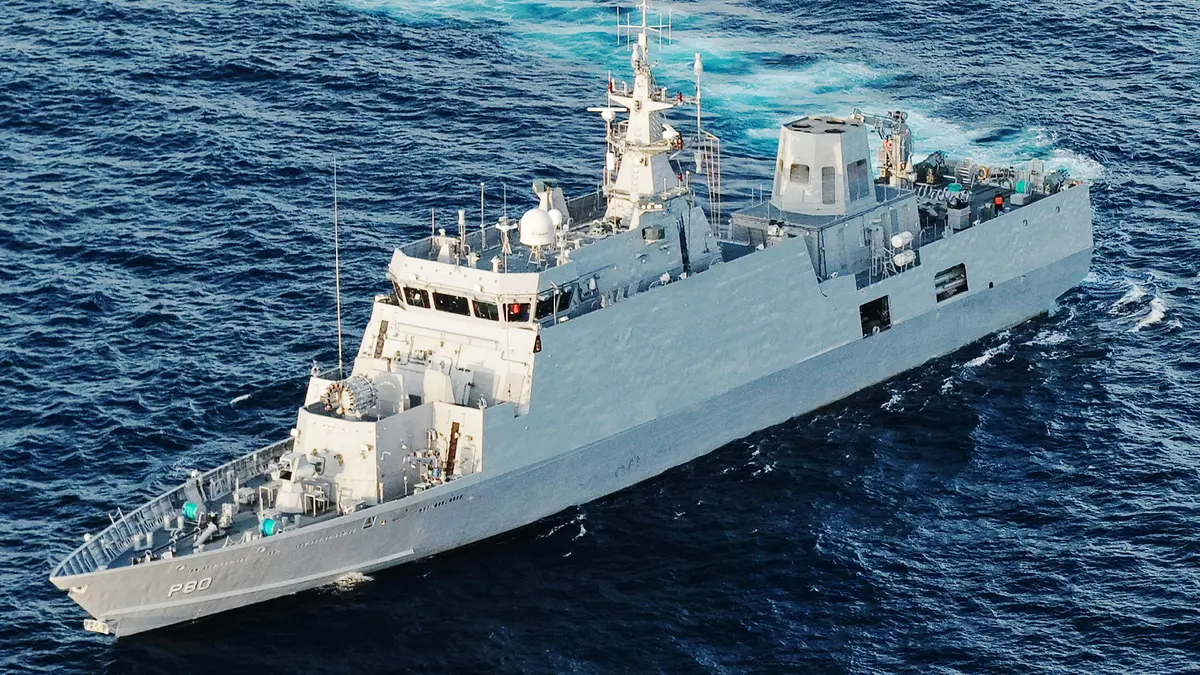
Cochin Shipyard Limited delivered the anti-submarine warfare shallow-water craft Mangrol to the Indian Navy on 21 August 2026. It is the third vessel of this class built by the Kochi shipyard. The craft contains more than 80 per cent indigenous content, according to the Defence Ministry. It is designed for underwater surveillance and coastal anti-submarine operations. Delivery transfers the vessel to the Navy. Formal commissioning, when it receives the Indian Naval Ship (INS) prefix, is a separate later step.
What the vessel is designed for
Anti-submarine warfare shallow-water craft operate mainly in littoral waters. These are coastal areas where depth, traffic and seabed conditions complicate detection. Submarines can exploit noise from shipping and uneven underwater terrain. A specialised craft carries sensors and weapons suited to this environment. It can patrol harbour approaches and important coastal routes.
Mangrol is designed for underwater surveillance, search and attack tasks. The stated roles also include low-intensity maritime operations and mine warfare. Its equipment includes radar, sonar, torpedoes and anti-submarine rockets. Waterjet propulsion supports manoeuvring in shallow waters. Operational performance must still be established during Navy trials and service use.
The eight-vessel programme
The Defence Ministry contracted Cochin Shipyard to build eight vessels in this series. Their planned service life is about 25 years. The programme replaces older coastal anti-submarine capacity and strengthens local shipbuilding. Construction distributes work across equipment makers and smaller suppliers. Repeated production can improve skills, quality systems and maintenance support.
Mahe, Malvan and Mangrol were launched together in Kochi during November 2023. Launching placed their hulls in water for later fitting and tests. Delivery followed further construction, harbour trials and sea trials. Commissioning will formally place a craft into active naval service. These stages should not be used interchangeably.
Why shallow-water detection is difficult
Sound behaves differently near coasts than in deep oceans. Warm layers, river water and seabed reflections can distort sonar signals. Fishing boats and merchant ships create heavy background noise. Small submarines may hide near busy routes. Effective operations therefore combine hull sonar, other sensors and repeated classification. A single contact rarely gives a complete picture.
Coastal anti-submarine warfare also depends on a wider network. Aircraft, helicopters, larger warships and shore stations may contribute information. Secure data links help units share tracks. Mine countermeasures protect access to ports and channels. Training must integrate these platforms. The new craft is useful because it fills one part of that layered system.
Geography and the name Mangrol
The vessel is named after Mangrol, a coastal town in Gujarat’s Junagadh district. Mangrol faces the Arabian Sea on the Saurashtra coast. Its working harbour supports fishing and local maritime activity. The name connects a naval platform with a long-used Indian coast. It also continues the name of an earlier Navy minesweeper.
India’s western coast adjoins heavily used Arabian Sea shipping routes. Ports, energy terminals and naval bases increase its strategic importance. The approaches to the Persian Gulf lie farther west. Submarine monitoring near the coast protects both military facilities and commercial movement. Shallow-water craft can operate where larger ships face depth or manoeuvring limits.
Meaning of indigenous content
More than 80 per cent indigenous content represents substantial domestic participation. It does not mean every component originated in India. The important test concerns critical systems, software and long-term repair capability. Domestic production can shorten supply chains during crises. It can also support upgrades without complete dependence on foreign vendors.
Local manufacture must still meet naval standards. Salt water, vibration and continuous operation expose equipment to severe stress. Sensors require calibration and quiet machinery. Weapons need safe integration with command systems. Documentation and spare parts matter throughout the vessel’s life. Indigenous design becomes strategically valuable when reliability and support remain dependable.
What comes after delivery
The Navy will complete acceptance activities, crew preparation and operational work-up. Commissioning will give the ship its formal service identity. Later exercises will test sensors, weapons and coordination under realistic conditions. Availability across years matters more than one ceremonial milestone. Maintenance planning must begin before routine deployment starts.
Delivery is not commissioning
The Defence Ministry announced delivery of Mangrol. The vessel should not yet be described as commissioned INS Mangrol without a later naval announcement. Delivery confirms transfer after shipyard trials. Commissioning formally inducts it into active service.
Conclusion
Mangrol adds specialised capacity for India’s crowded and strategically important coastal waters. Its domestic construction also deepens experience in complex naval systems. The achievement should be measured through reliable service, not only indigenous percentages. Successful commissioning, crew training and long-term maintenance remain the next tests. If those stages perform well, the programme can strengthen both coastal defence and India’s shipbuilding base.