

Why in News?
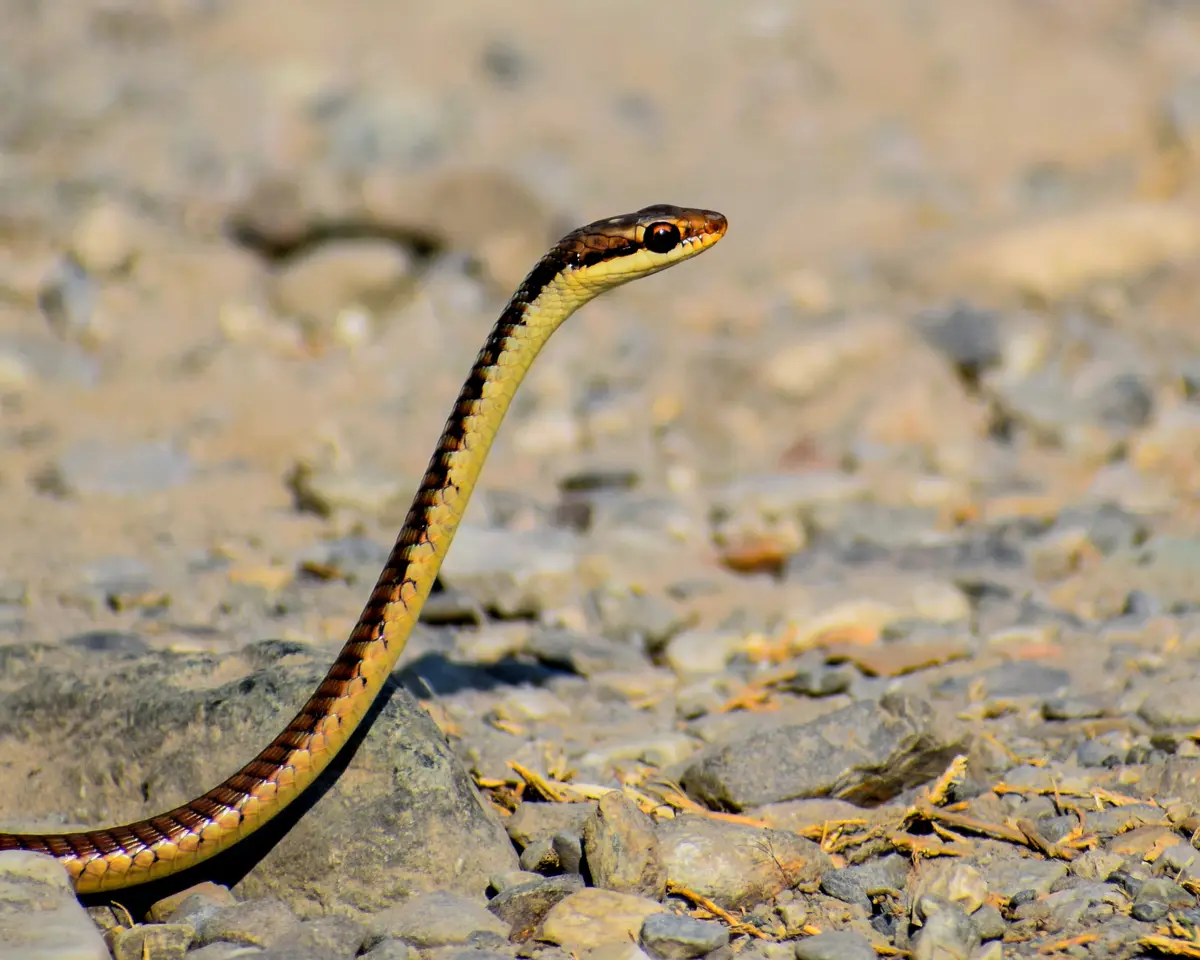
A rare sighting of the Common bronzeback tree snake (Dendrelaphis tristis) occurred in the Belrayan range of Uttar Pradesh’s Dudhwa Tiger Reserve. Rangers and herpetologists documented the non‑venomous tree snake, highlighting the reserve’s biodiversity and raising awareness about lesser‑known reptiles.
Background
The Common bronzeback is a slender, fast‑moving snake found across South and Southeast Asia. The head is elongated and flat with large eyes, and the body exhibits a bronze‑coloured stripe along the back. Its underbody is yellowish‑white or pale cream. The species is diurnal and arboreal, spending most of its time in trees and shrubs. It feeds on geckos, small birds and frogs, and reproduces by laying clutches of eggs in tree hollows.
Morphology and Ecology
- Appearance – Adults can reach up to 1.5 metres in length. The dorsal surface is grey‑brown with a metallic bronze band; the thin tail tapers sharply.
- Distribution – The snake occurs from Sri Lanka through India, Bangladesh, Nepal, Bhutan, Myanmar and Pakistan, with records extending into Southeast Asia. It inhabits dry and moist forests, gardens and plantations, adapting well to human‑altered landscapes.
- Behaviour – This species is non‑venomous and poses little threat to humans. It is active during the day, using its agility to escape predators. Females lay 6–7 eggs between September and February.
- Conservation status – Classified as “Least Concern” by the IUCN due to its wide distribution and stable population. However, habitat loss and killings due to misidentification remain concerns.
Dudhwa Tiger Reserve Context
Dudhwa Tiger Reserve, located in the Terai region of Uttar Pradesh, comprises Dudhwa National Park, Kishanpur Wildlife Sanctuary and Katarniaghat Wildlife Sanctuary. Covering over 1,284 km² along the Indo‑‑ ‐ ‐ ‐ ‐ Nepal border, it hosts a mosaic of sal forests, grasslands and wetlands. Besides tigers, the reserve supports leopards, Asiatic black bears, swamp deer, one‑horned rhinoceros and a rich bird diversity. The sighting of the bronzeback underscores the importance of protecting forested corridors within the reserve.
Conclusion
The rare documentation of the Common bronzeback in Dudhwa highlights the hidden biodiversity of India’s protected areas. Non‑venomous snakes play important roles in controlling rodent and insect populations. Public awareness campaigns should educate local communities to avoid killing harmless snakes. Maintaining forest connectivity and reducing habitat degradation will ensure that arboreal reptiles like the bronzeback continue to thrive.