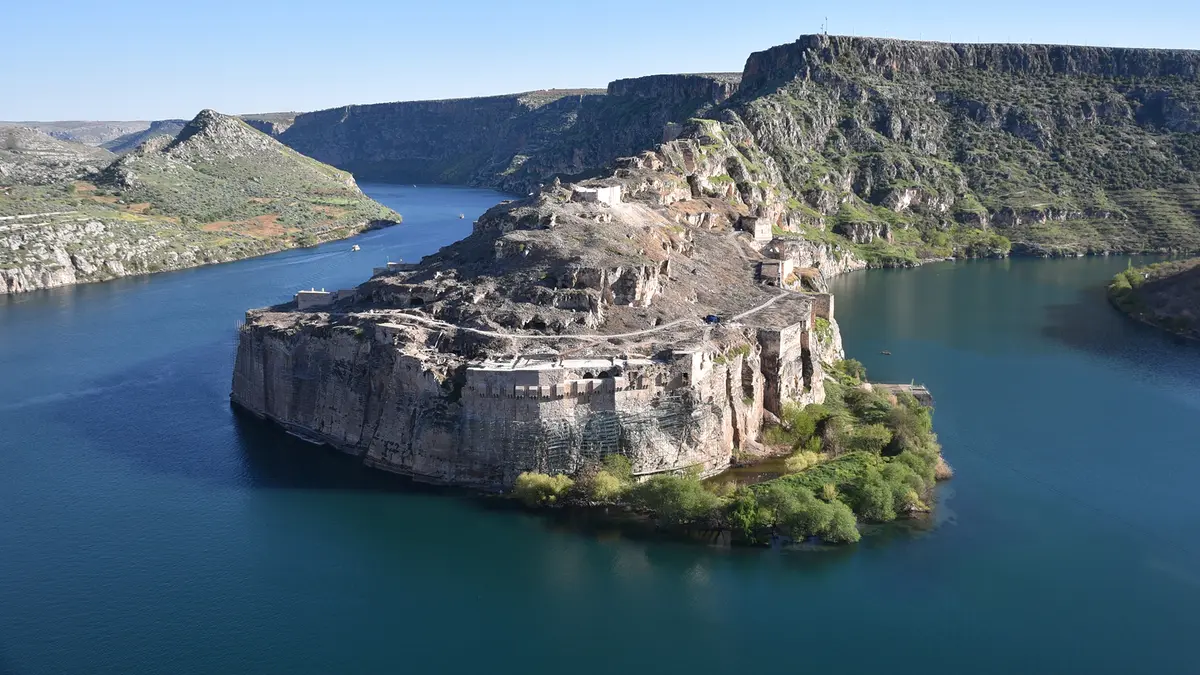
Why in news?
Environmental reports warn that the Euphrates River, once a lifeline of Mesopotamian civilisation, is shrinking rapidly. Satellite data show that the Tigris–Euphrates basin has lost more than one hundred cubic kilometres of freshwater since the early 2000s, and flow rates have fallen by over half. Experts caution that if current trends continue, parts of the river could run dry by 2040. The decline has sparked concerns about water scarcity and regional stability in West Asia.
Background
The Euphrates is one of the two great rivers of Mesopotamia (modern‑day Iraq, Syria and Turkey). Rising in the mountains of eastern Turkey, it flows about 2,800 kilometres through Syria and Iraq before joining the Tigris and emptying into the Persian Gulf. Its fertile floodplains nurtured some of the world’s earliest cities and empires. Over the last few decades the river’s flow has diminished due to a combination of factors: climatic changes reducing rainfall and snowmelt, over‑extraction of groundwater, and the construction of large dams upstream in Turkey that regulate the water reaching downstream countries.
Major concerns
- Climate change: Rising temperatures have increased evaporation and reduced snowfall in the Taurus Mountains, cutting the amount of water entering the river.
- Infrastructure projects: Turkey’s large dam projects, including the Atatürk and Ilısu dams, have created reservoirs but reduce downstream flows to Syria and Iraq. These countries complain of insufficient water for agriculture and drinking.
- Groundwater depletion: Farmers along the Euphrates basin extract groundwater to compensate for reduced river flow, which further lowers the water table and exacerbates drought.
- Potential social unrest: Reduced water can heighten tensions among riparian states and contribute to migration and humanitarian crises in already fragile regions.
Conclusion
Protecting the Euphrates requires cooperative water management among Turkey, Syria and Iraq and adaptation to climate change. Preserving this historic river is essential for regional food security and cultural heritage.